THE HIVE MAY 2026
Dune plants at Playa Santa Inés & Punta Chivato, BCS — Nov. 2025 & Jan. 2026
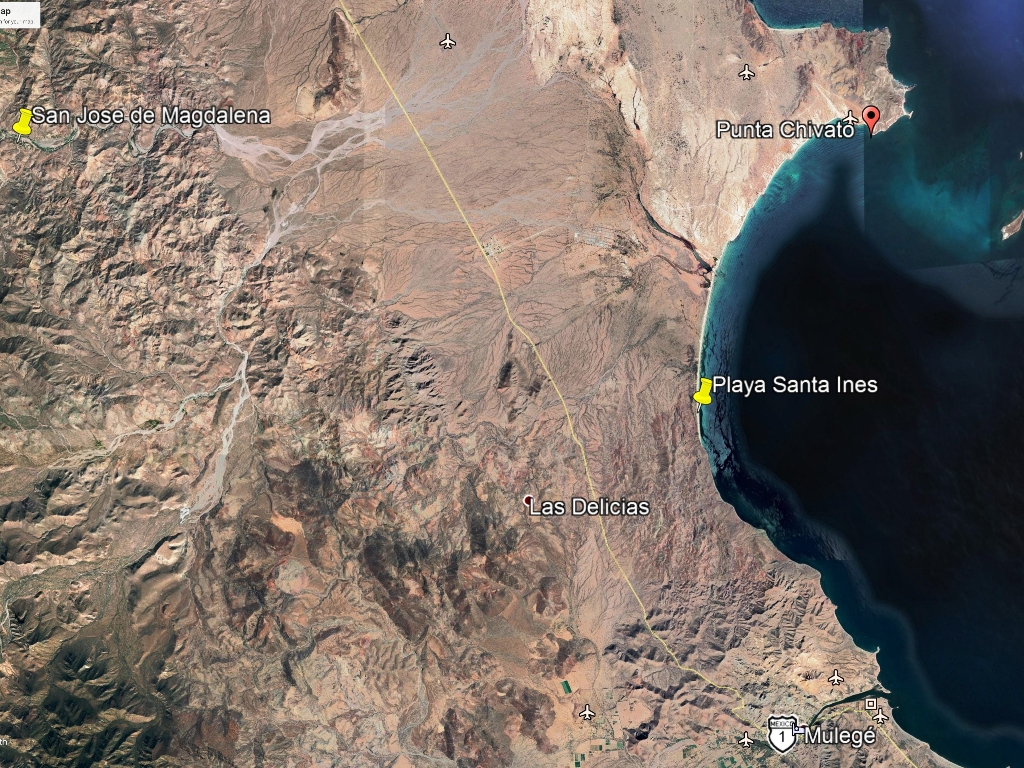
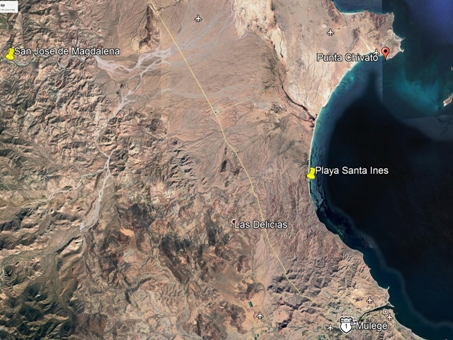 This month, I return once again to the Punta Chivato promontory and a nearby beach. It is unique for the Mulegé area because of the presence of large dune fields, much of it with limited access and use, and this provides habitat for a wide variety of dune and halophytic plants.
Playa Santa Inés (PSI) is at the southern end of the beach strand that runs from Punta Cacarizo on the SE side of the Punta Chivato (PC) promontory approximately 19.5 km to Punta Colorado.
While my friends spent their time walking along the beach looking for treasures, I found more terrestrial ones botanizing in the dunes. I often lose time while wandering in the field, especially in the dense and extensive dunes at Playa Santa Inés where sometimes I will hardly cover 50 meters in any direction in a few hours because of the species richness.
What follows is from two short field trips, one in late November to Playa Santa Inés and the other on a cool mid December day to Punta Chivato.
For previous posts about Punta Chivato, see: Mulegé Flora Project Locations and May 2025 (plant/geology walk). For previous posts about Playa Santa Inés, as well as other dunes in the Mulegé areas, see: Feb 2018, Jun 2021 and Mulegé Flora Project Geomorphic Formations.
For a full list of this month's plants and other organisms (with family, latín name and common names in both English and Spanish), visit this page.
Playa Santa Inés
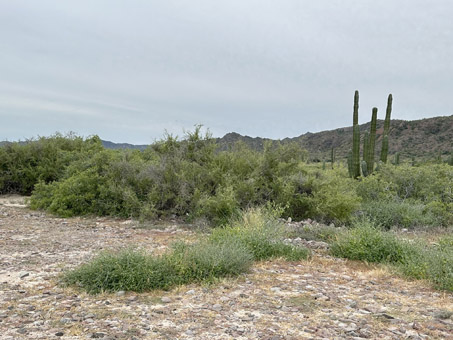
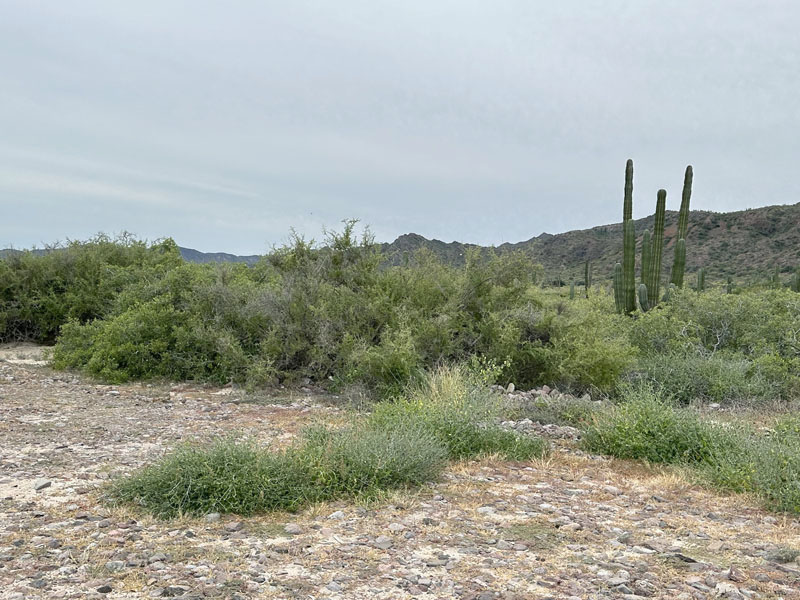
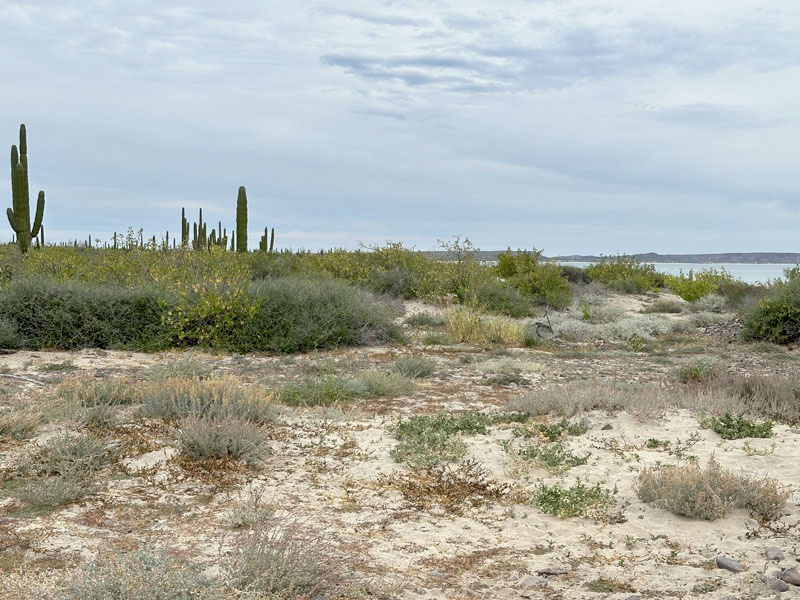
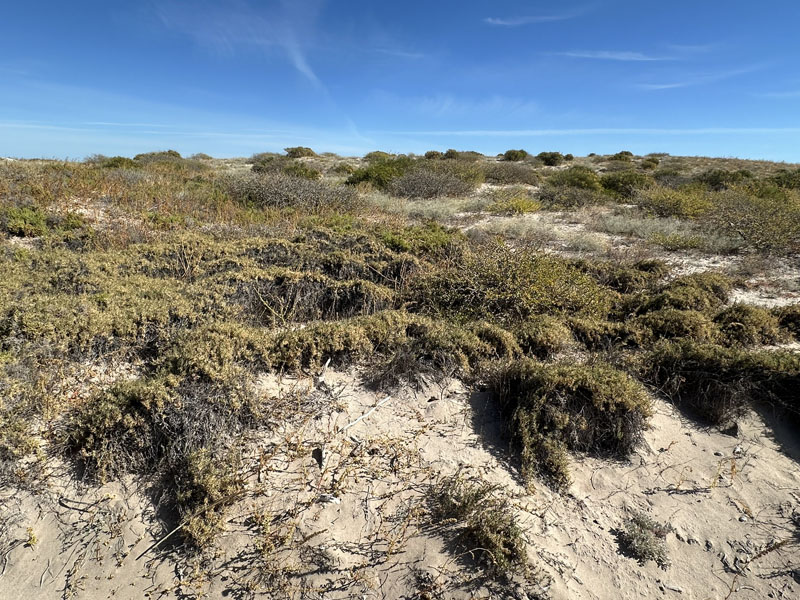
A wide gravel parking area was created by cutting through the dunes years ago. Now it provides for an excellent cross-sectional view.
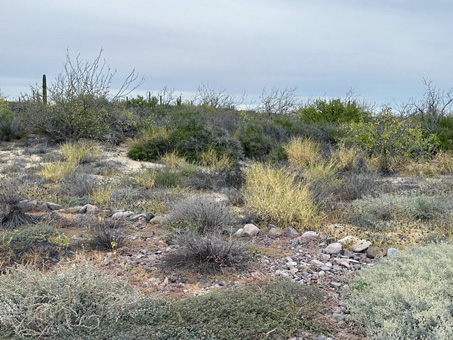
Perennials and shrubs in the parking area and rear dunes behind, as well as the invasive, exotic Buffelgrass (Cenchrus ciliaris) mid-photo.
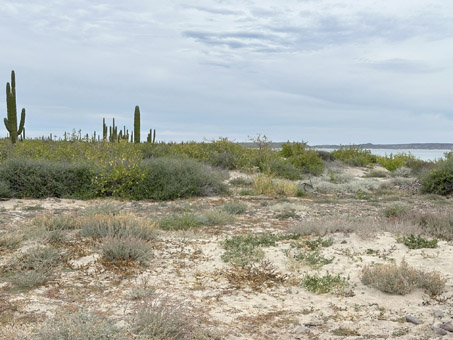
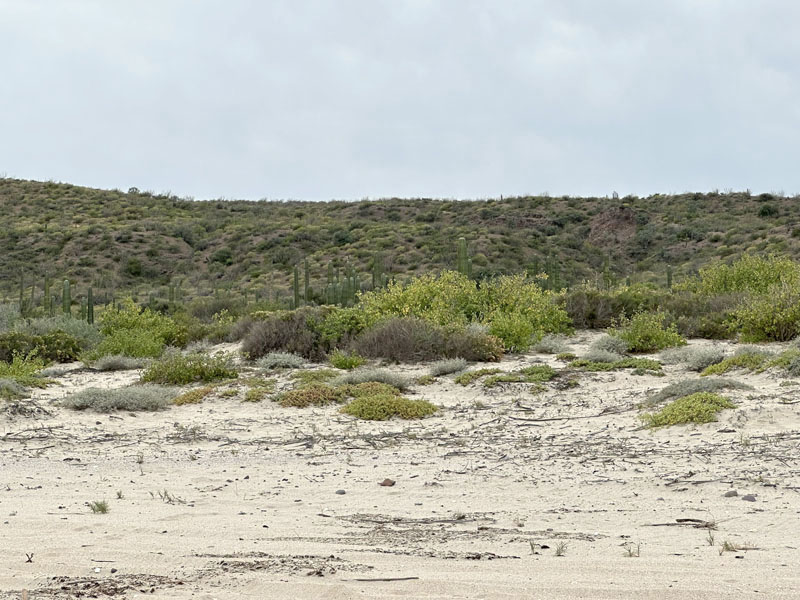
I'm standing at the edge of the foredunes which are in front of me & at right. The rear dunes start at upper center and go to the left.
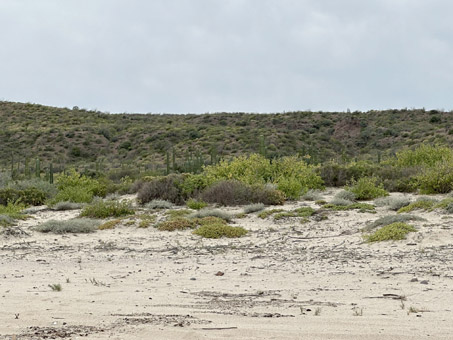
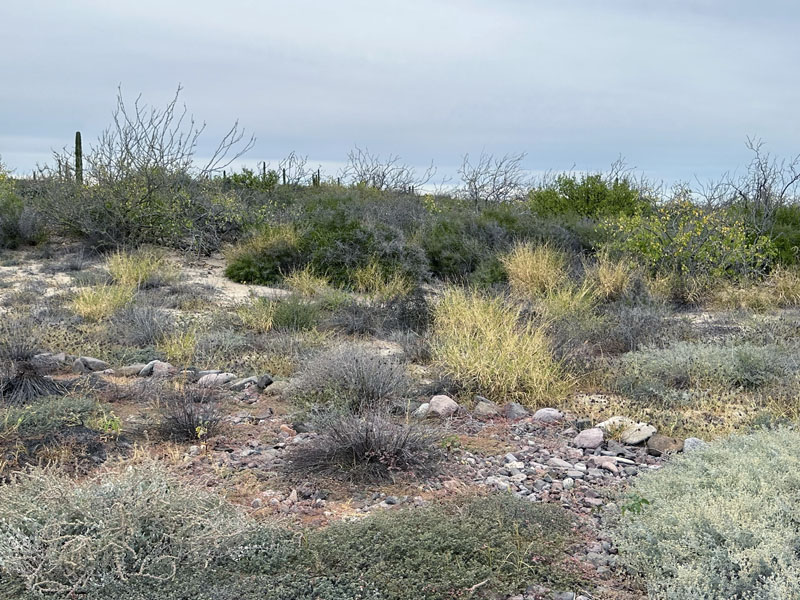
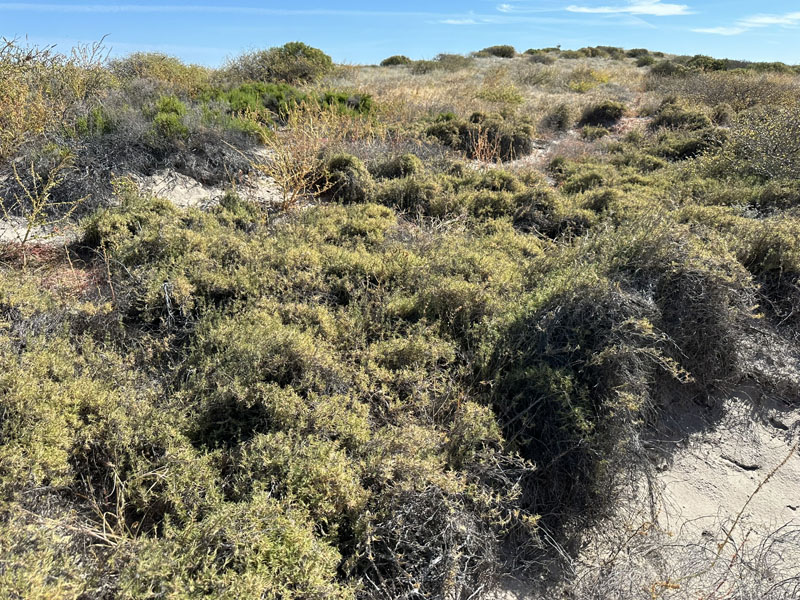
The view of the fore & rear dunes from the beach. The rear dunes transition into desert scrub, seen on the rise farther behind.
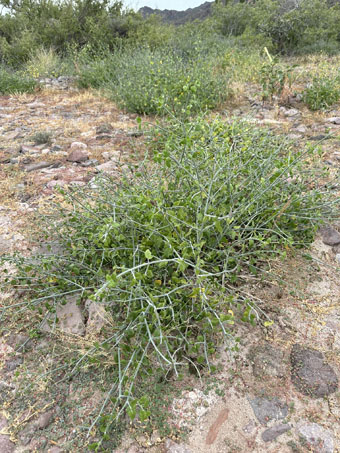
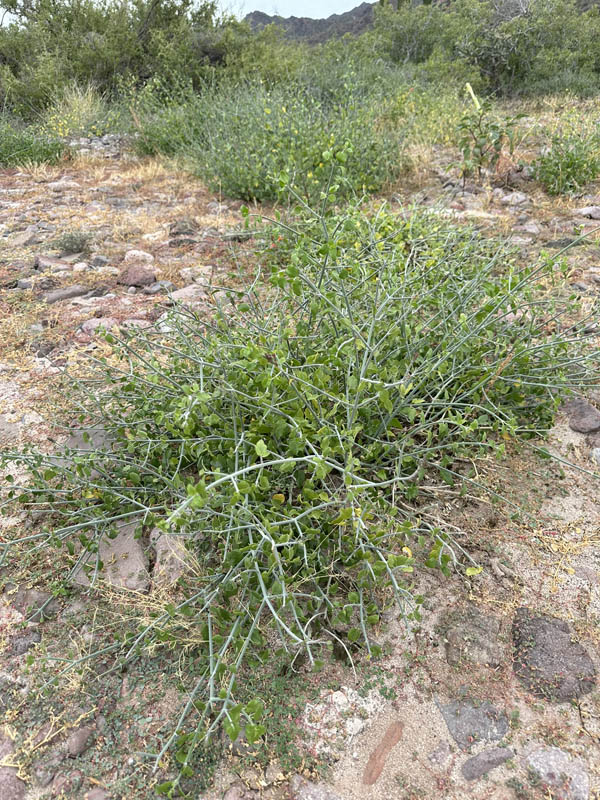
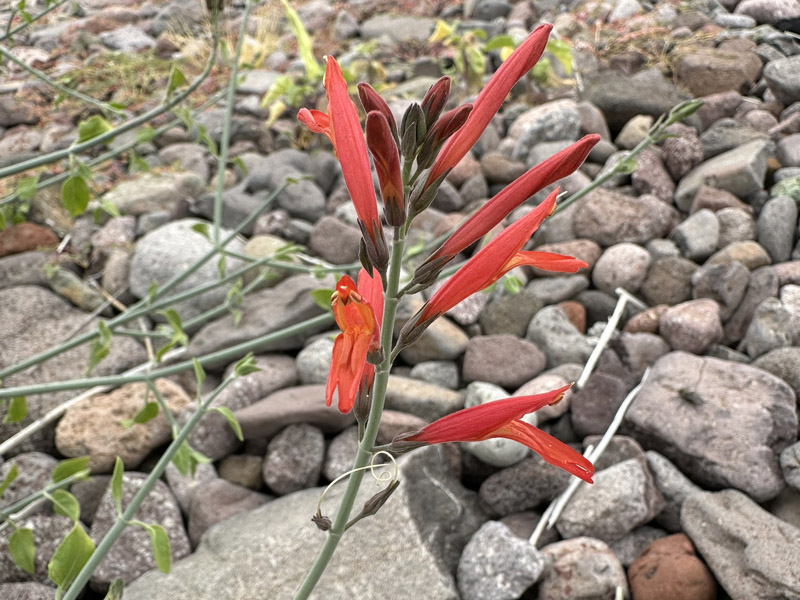
Hummingbird Plant (Justicia californica) is very common here in the dunes. Almost all the plants I saw were very leafy.
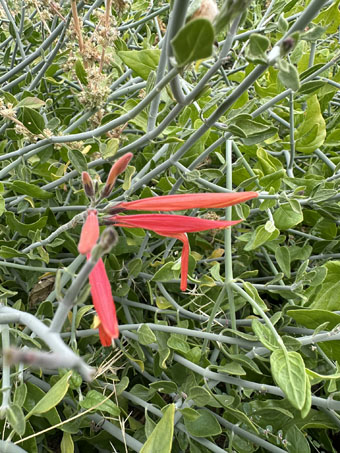
Hummingbird Plant is densely hairy. Drought deciduous, the plant spends much of the year as a cluster of bare, silvery branches.
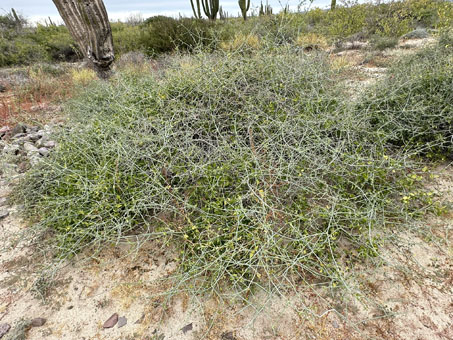
Hummingbird Plant between bare branches and leafing out. In the dunes, the plants are gen. ≤1 m H but may be 1-2 m D.
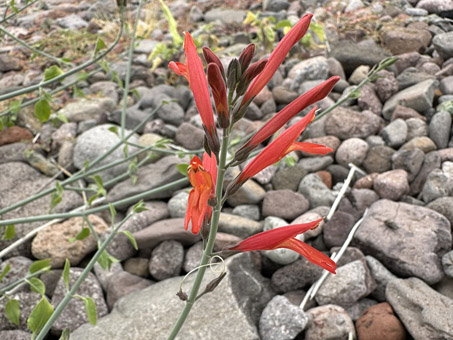
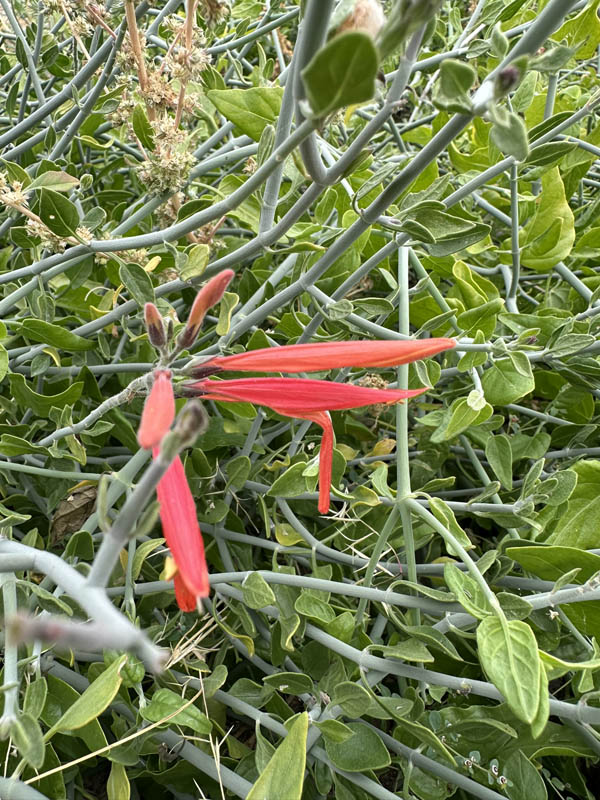
Hummingbird Plant flowers are 2-4 cm L, 2-lipped with 5 lobes. Lips are 1-2 cm L
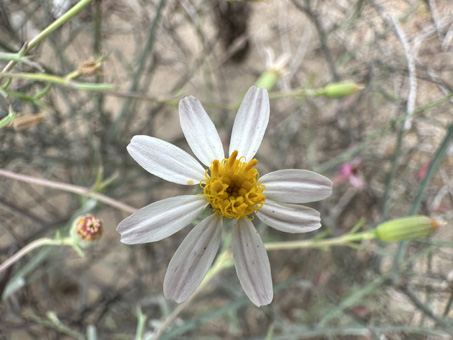
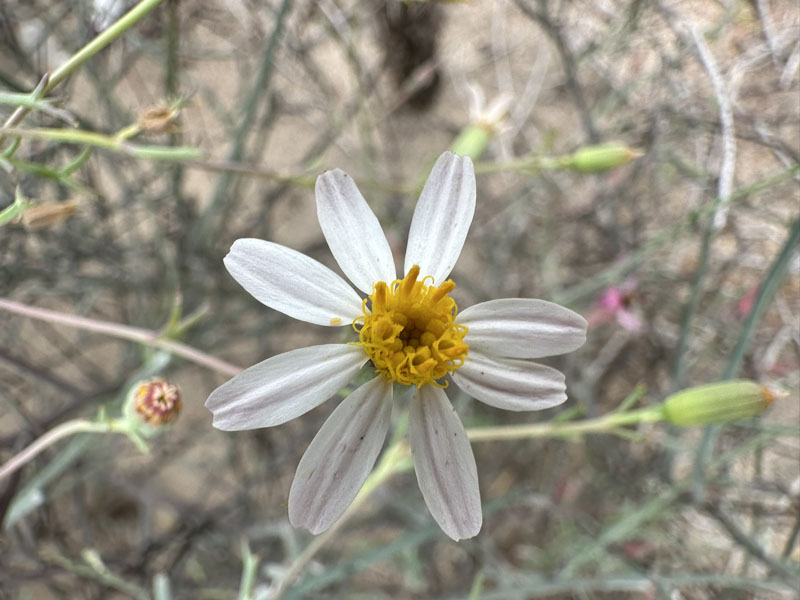
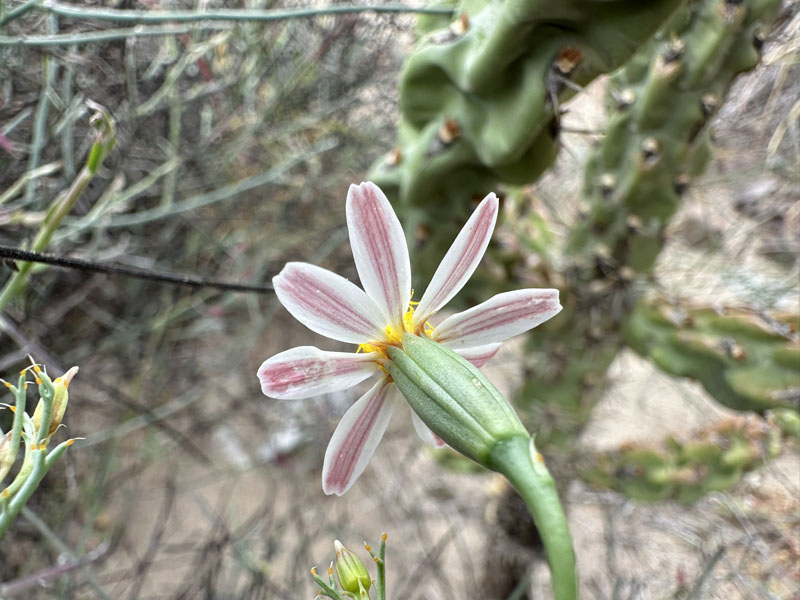
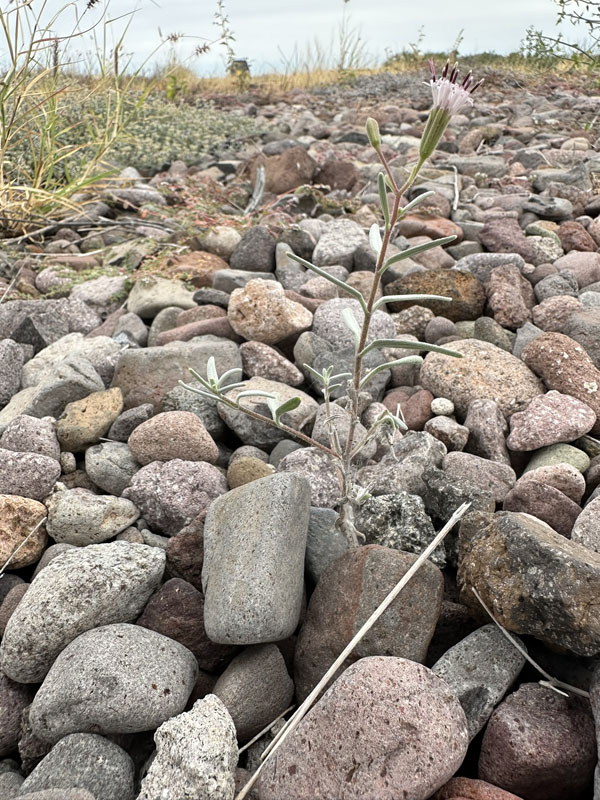
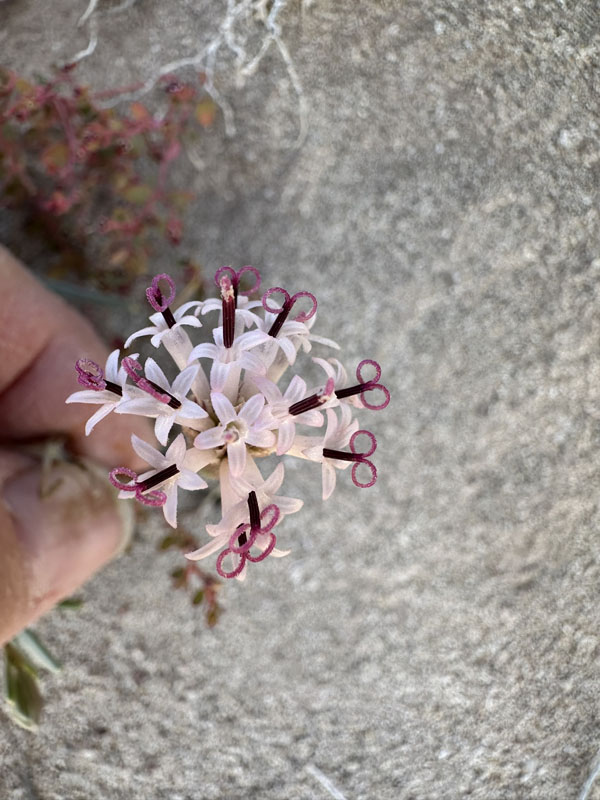
Baja California Nicolletia (Nicolletia trifida) is easy to identify: the pungent plant is slender with glabrous stems & pinnatifid leaves, each having 3 narrow, gland-tipped lobes.
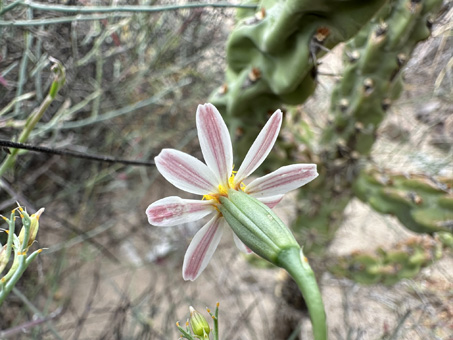
The composite head is 2-2.5 cm D with white ligules that have a broad pink stripe on the underside. Baja Calif. Nicolletia is endemic to the peninsula. It is widespread from near Puertecitos (BC) to La Paz (BCS).
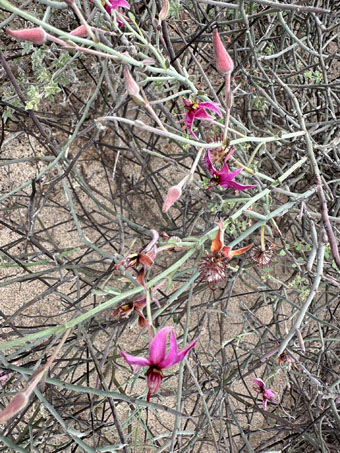
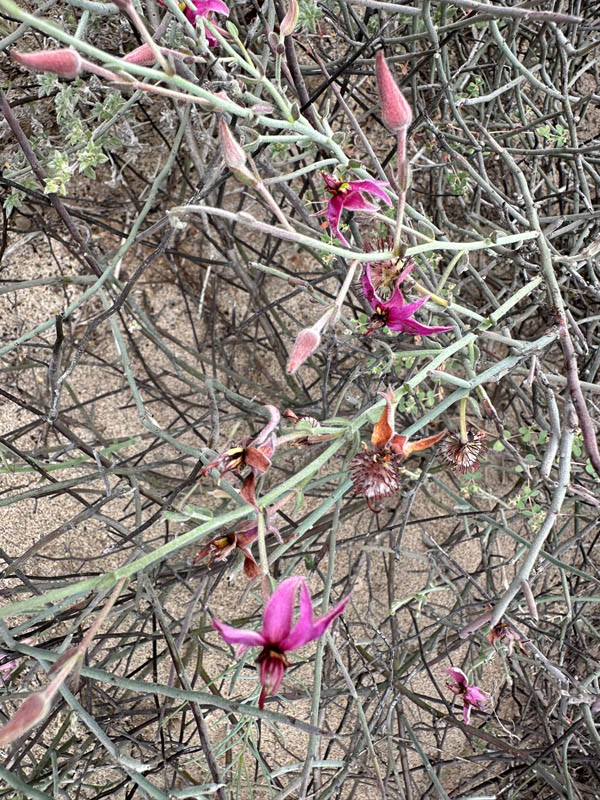
White Ratany (Krameria bicolor) with flowers and fruit in a variety of stages. The plant is a low shrub and this one was under 1 m H x D.
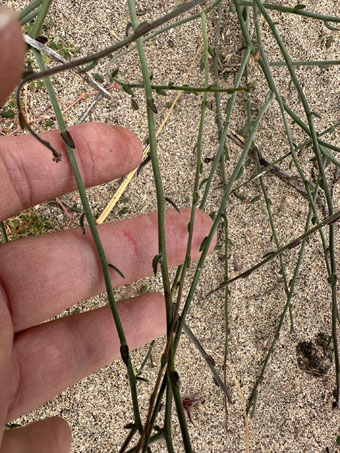
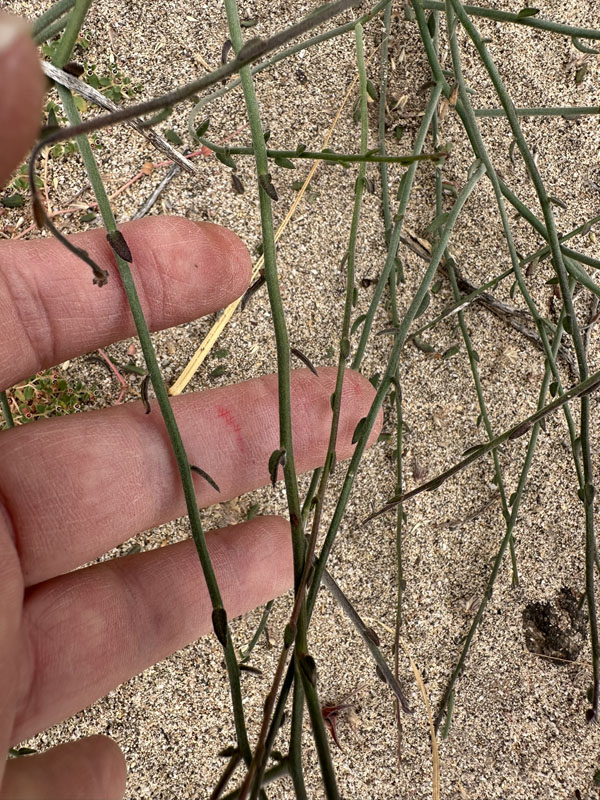
Leaves here are 4-5 mm L & sparse. Much of the herbage was green & glabrous, with some of the newer brachlets were moderately strigose.
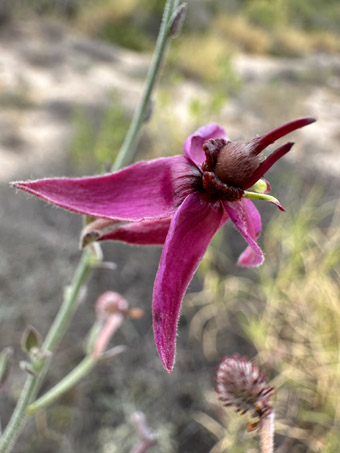
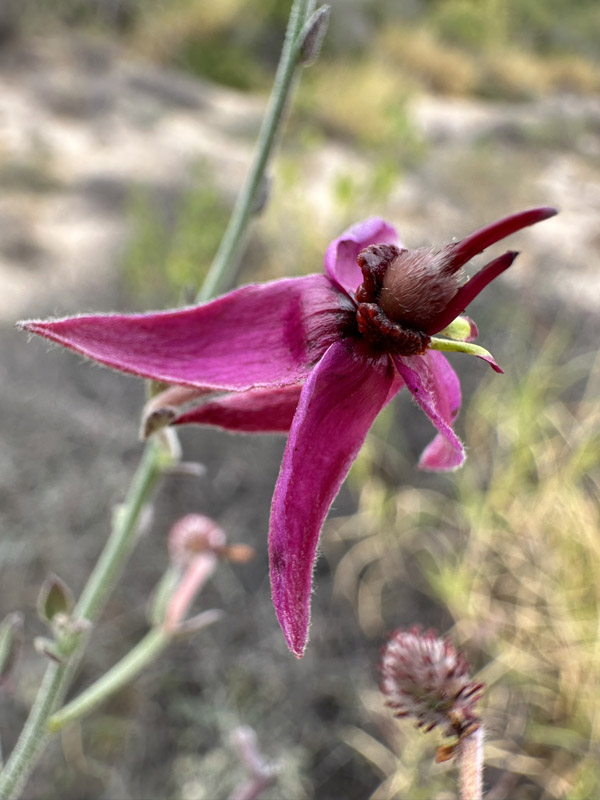
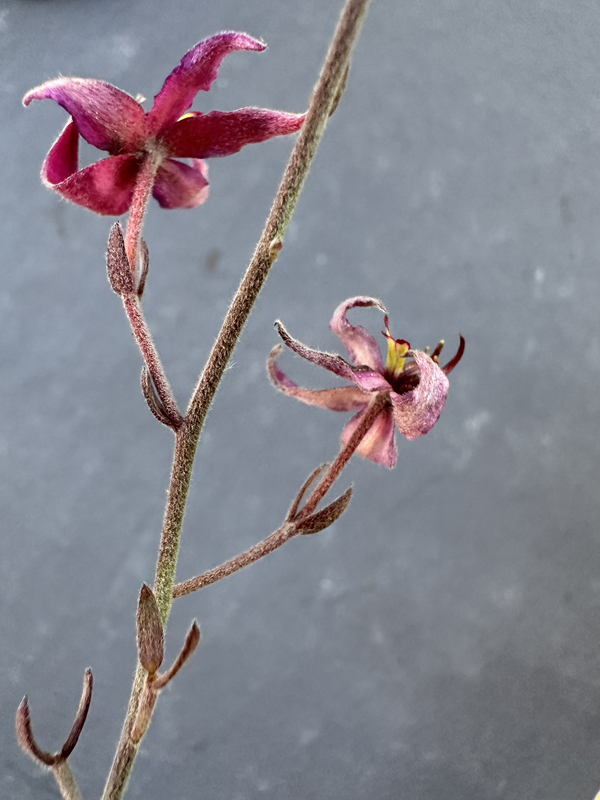
The showy parts of the White Ratany flower are actually the five petaloid sepals. The bumpy, maroon structures are two modified petals (see below). Two of three greenish petals peek out at the right.
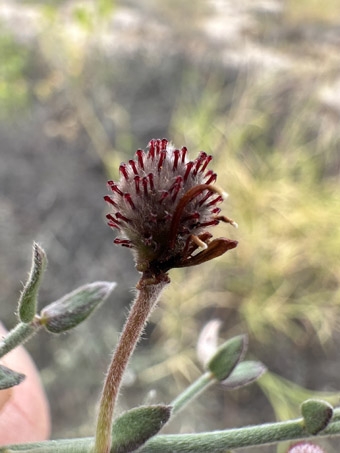
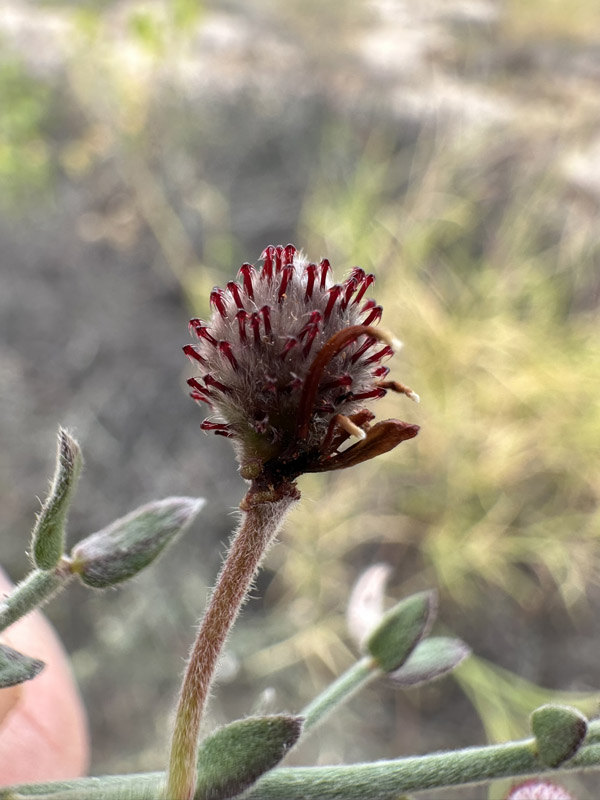
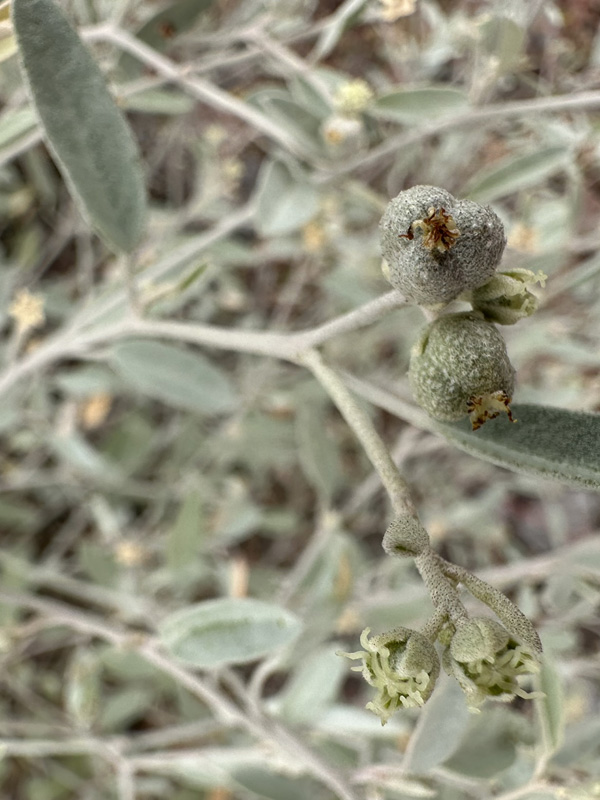
Young White Ratany fruit is a cordate to globose capsule. Note the umbrella-like barbs at the tips of the soft spines. The spines will elongate as the fruit matures and reaches c. 1.5 cm D.
All species in the genus are hemiparasitic, meaning that while they are capable of photosynthesis, they primarily steal nutrients from the roots of a variety of host plants. Ratany flowers are pollinated by bees in the genus Centris. Instead of nectar, they produce oil from two modified petals (the "bumpy, maroon structures" noted above). The female bees collect the oil on specialized appendages and mix it with pollen & nectar from other species to feed their young. In doing so, they pass by the anthers and stigma.
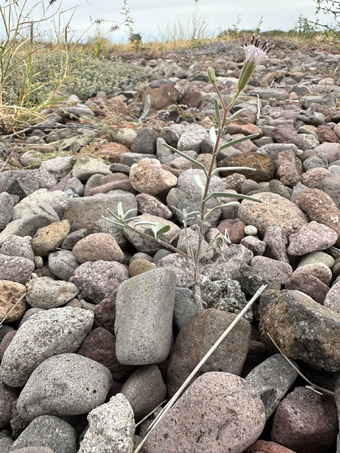
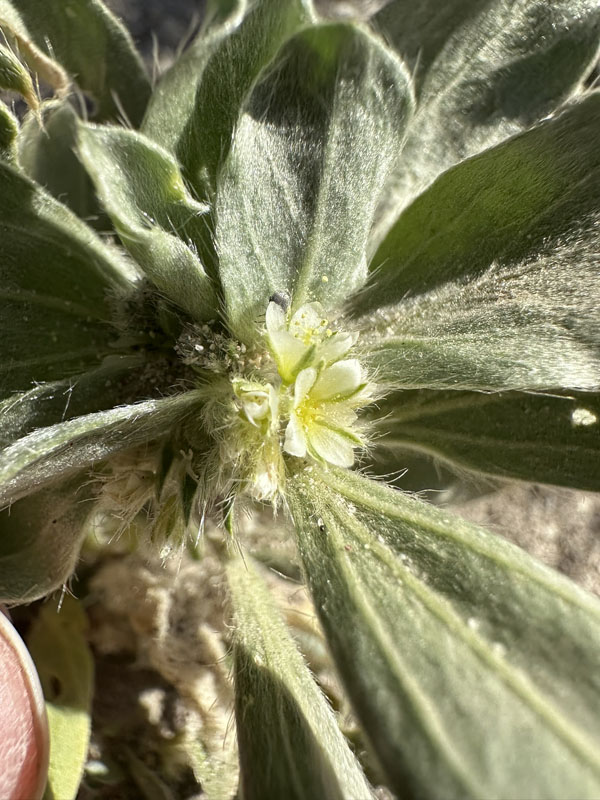
Peninsular Palafox (Palafoxia linearis var. glandulosa) is small to medium & suffretescent. Local plants of the variety have both gland-tipped hairs and non-glandular ones on the stems & leaves, unlike those plants from s BC used to describe the variety.
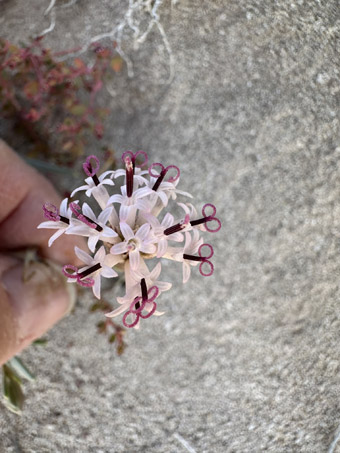
Anthers fully open in the disk flowers of Palafox. The discoid heads are c. 1.5-2.5 cm W. Achenes are 3-angled (obpyramidal) with 8 dimorphic pappus scales (long & short types), each with a broad hyaline margin.
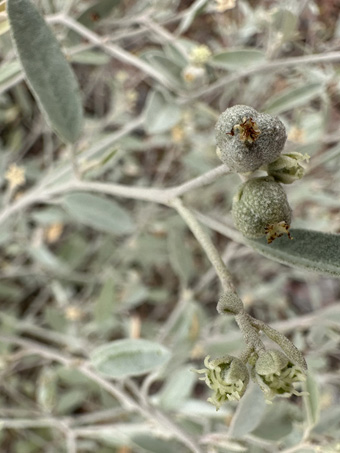
Fruit & pistillate flowers of California Croton (Croton californicus). This species is dioecious.
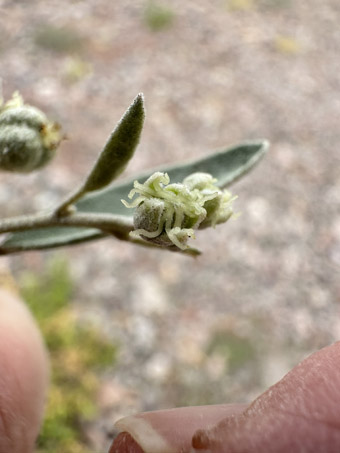
Pistillate flowers have a 3-prong ovary, each prong tipped with a 4-lobed style (above).
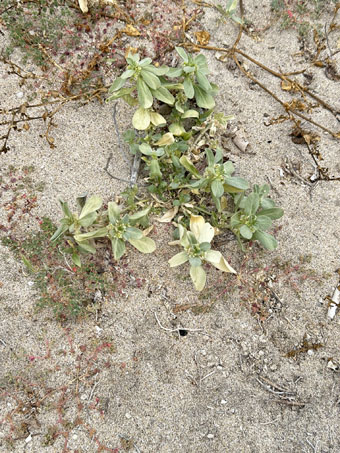
Sawtooth Ditaxis (Ditaxis serrata var. serrata) is a densely pubescent annual or perennial herb.
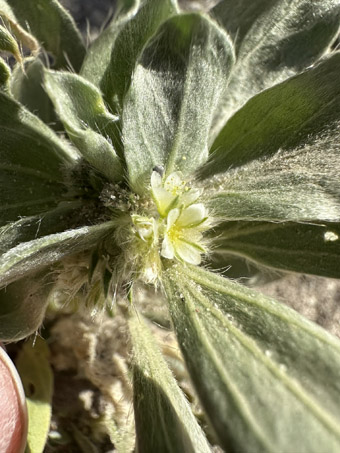
Staminate flowers of Sawtooth Ditaxis, locally common only on the dunes along Bahía Santa Inés.
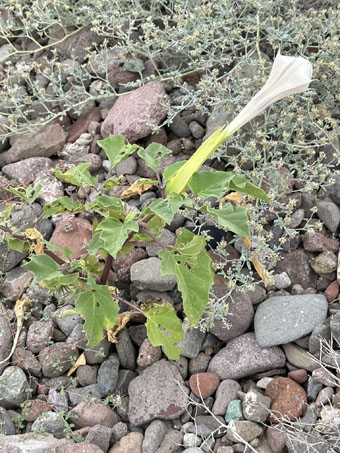
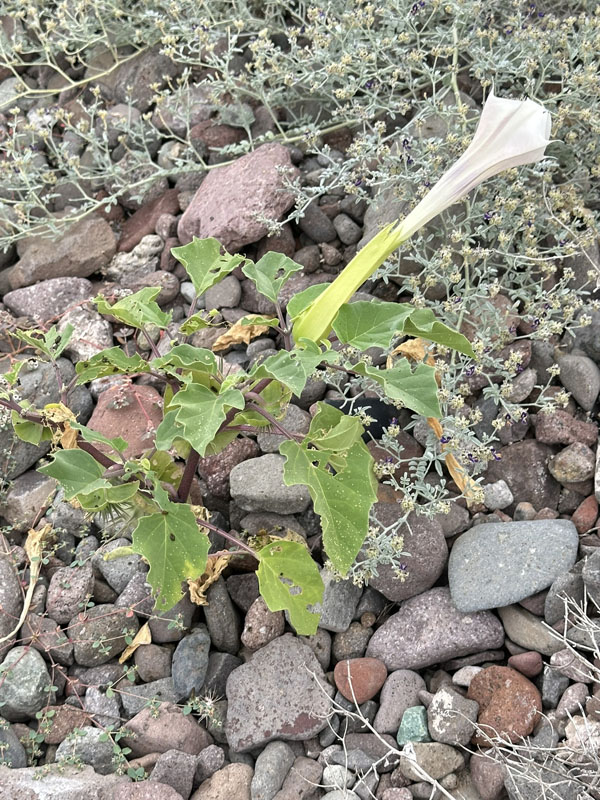
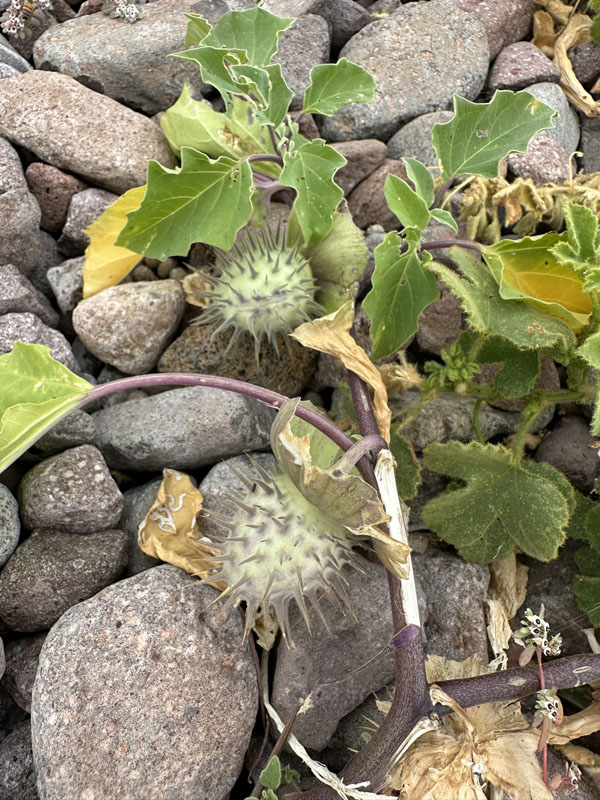
There were a few Desert Thornapple (Datura discolor) plants all ≤50 cm H with flowers or fruit.
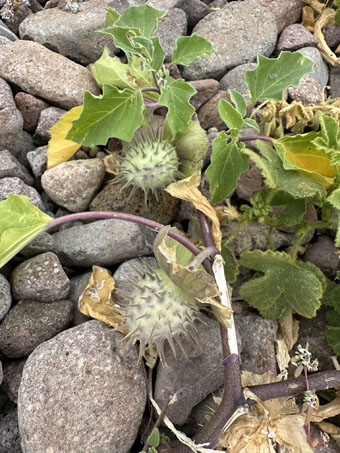
One of the Desert Thornapple plants with fruit. Each mature papery capsule will release 100s of seeds.
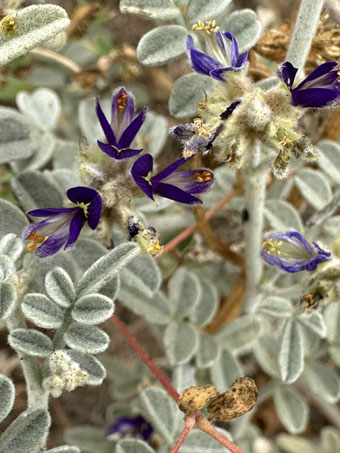
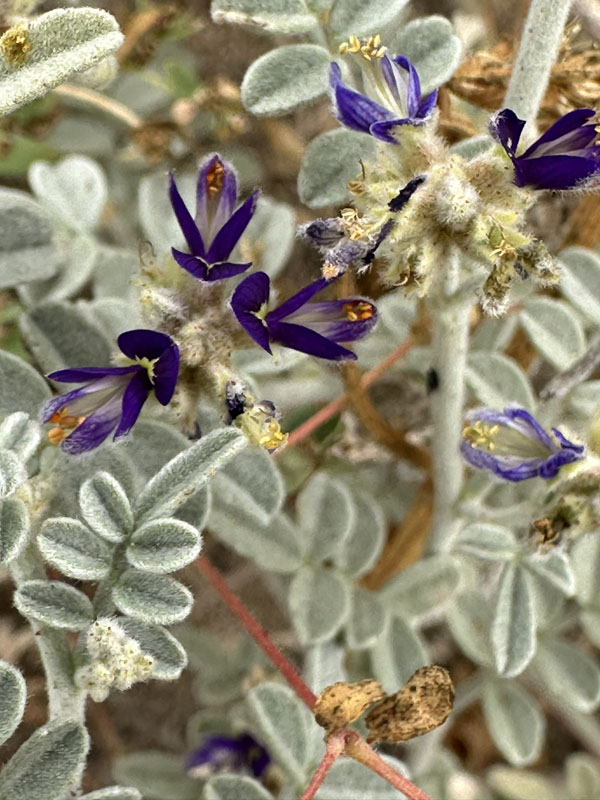
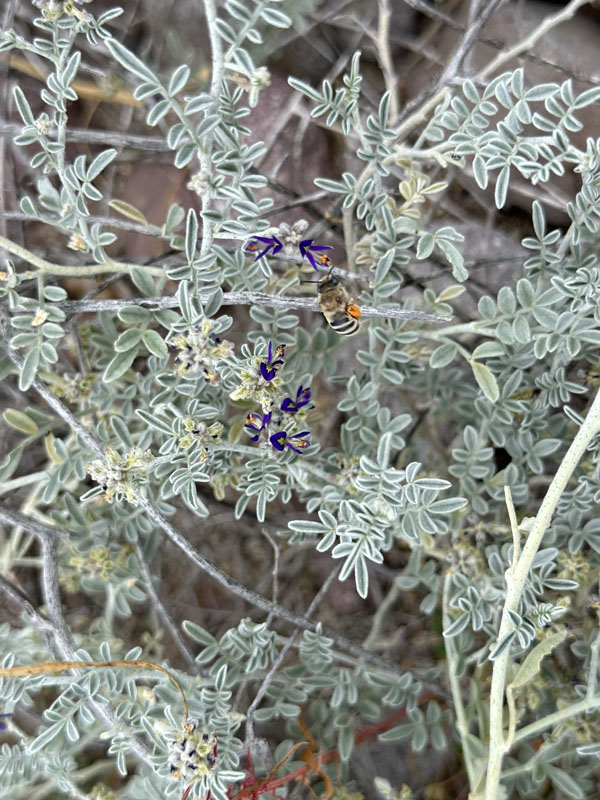
Closeup of Emory Dyebush flowers (Psorothamnus emoryi var. emoryi). Densely glandular and hairy.
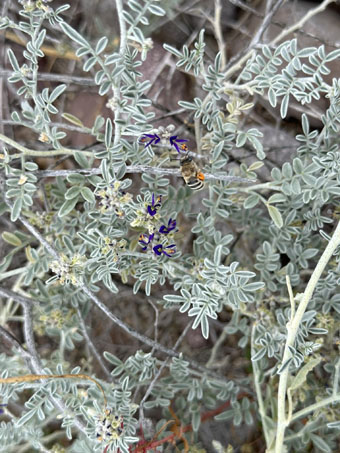
Native bee collecting pollen on Emory Dyebush. One of the pollen sacs is visible as a bright orange spot.
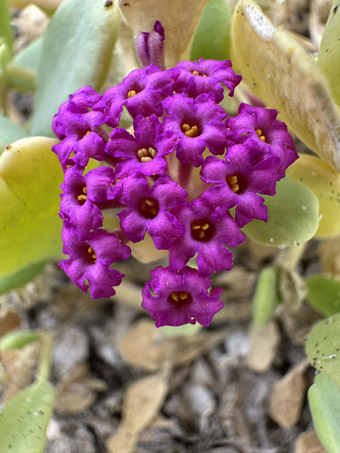
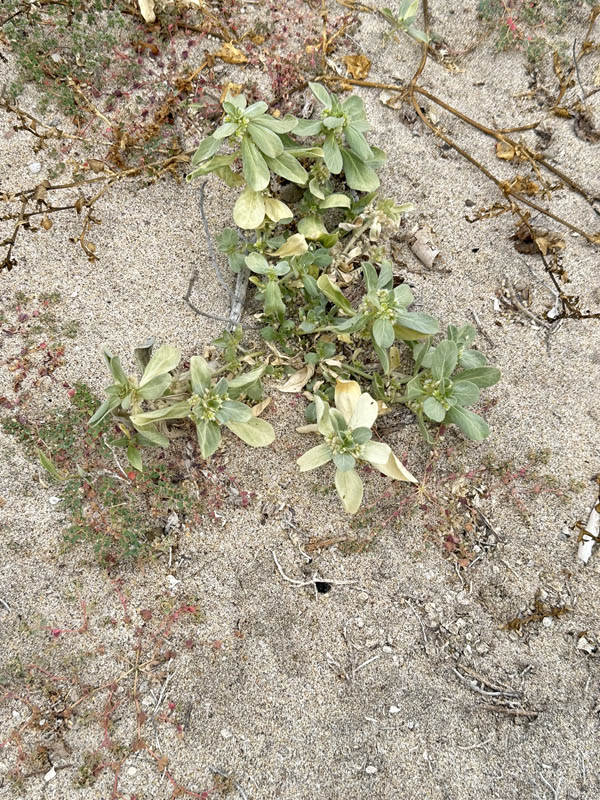
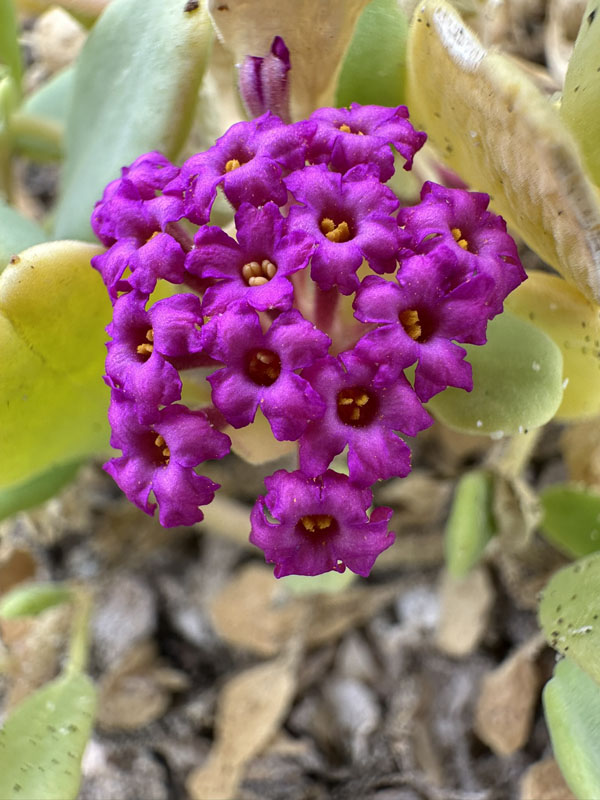
Red Sand Verbena (Abronia maritima). In the Mulegé area, it occurs in small numbers on just a few dunes.
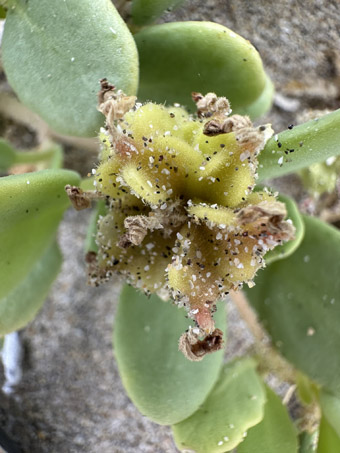
The herbage and fruit (pictured here) of Red Sand Verbena is glandular and tacky.
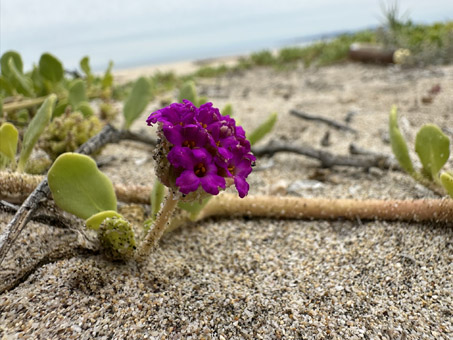
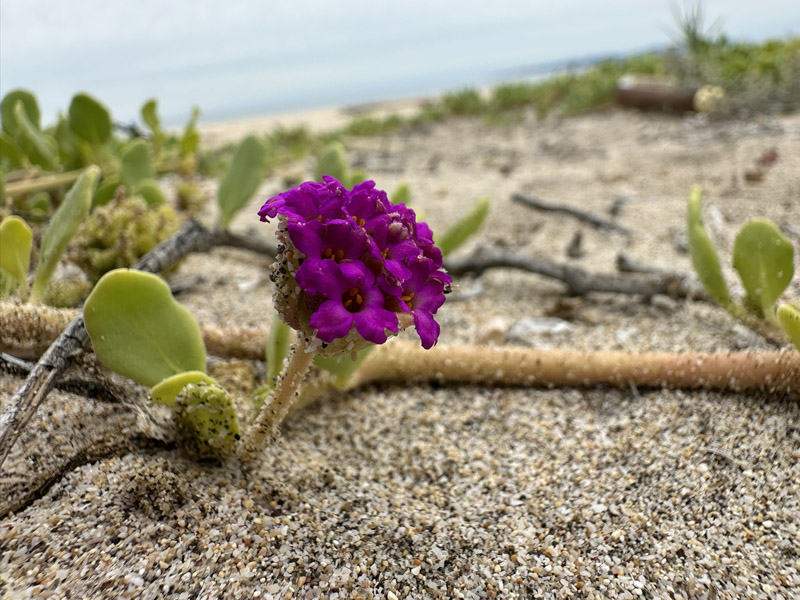
Red Sand Verbena is a creeping perennial with prostrate to decumbent stems.
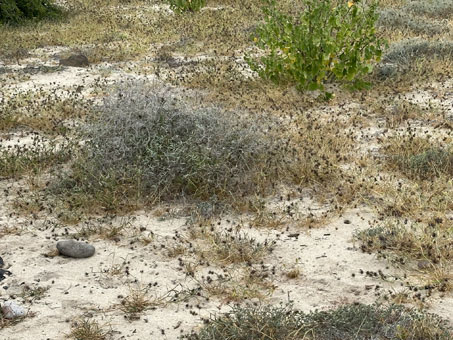
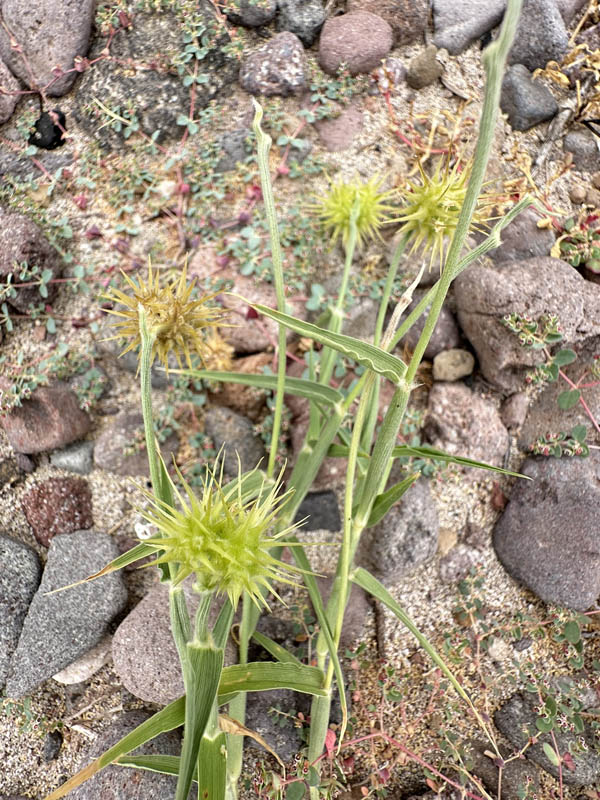
In disturbed places, like the parking area, the annual Giant Sandbur (Cenchrus palmeri) is very invasive.
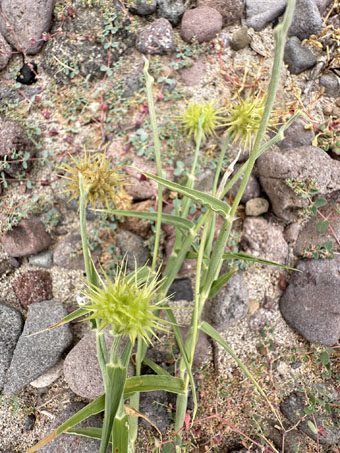
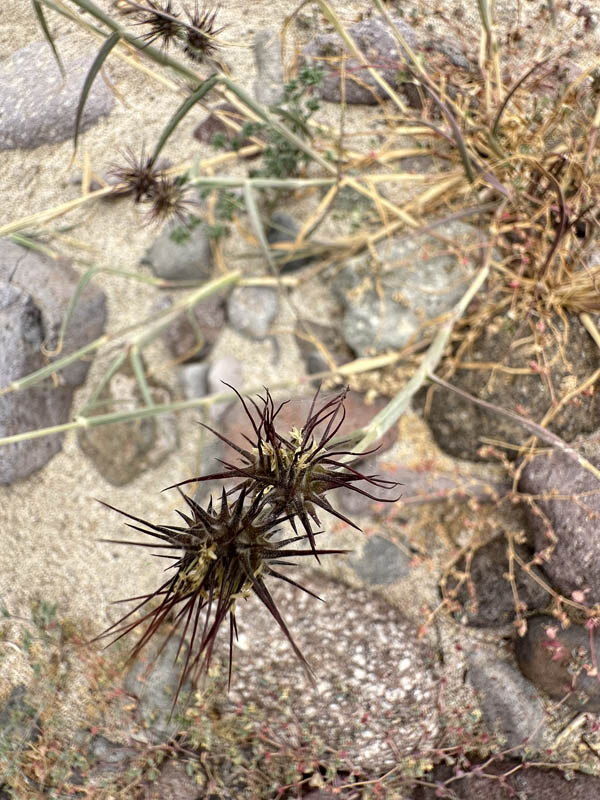
Giant Sandbur (Cenchrus palmeri) can have either green or purplish (most common) inflorescences. The former matures tan while the latter blackish.
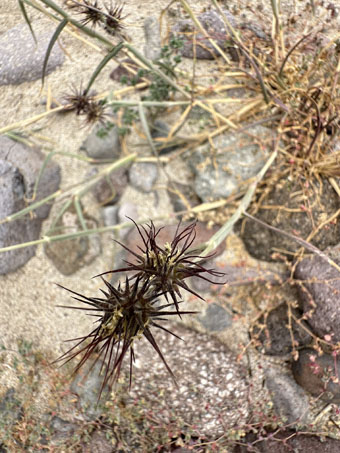
Click on the image to see the flowers of these Giant Sanburs poking out between the coalesced bristles. The entire bur will take root and sprout.
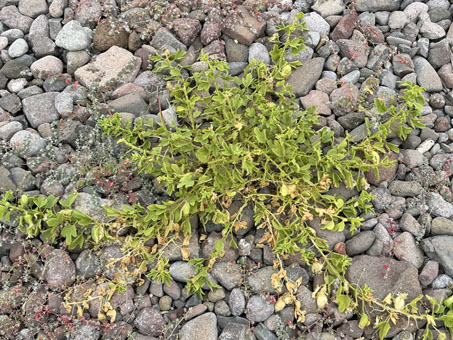
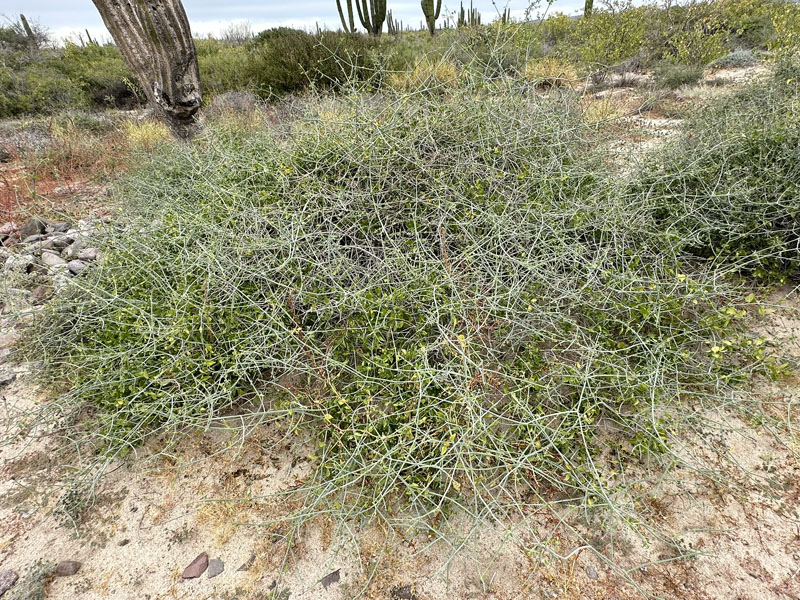
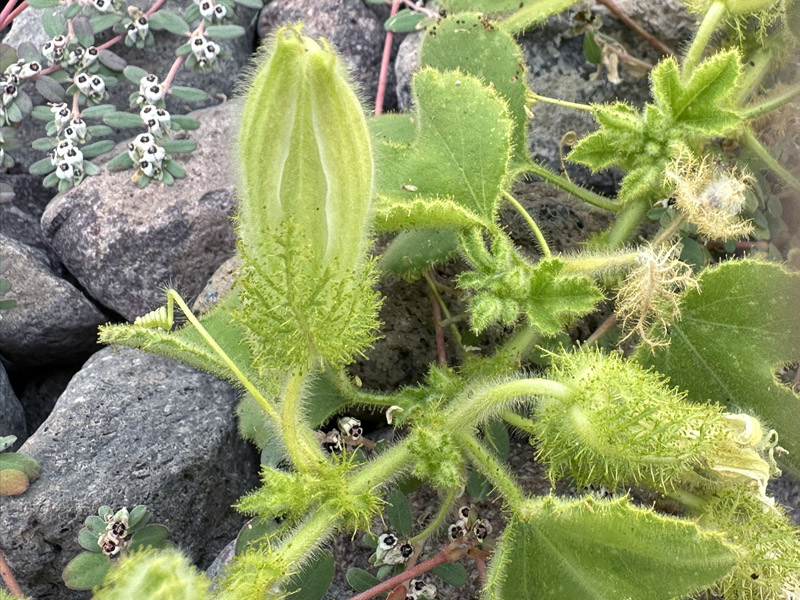
Palmer Passion Flower (Passiflora palmeri) is a low, spreading to bushy vine. This one is c. 1 m D. Plants reach a size of c. 1.25 m H x 1.5 m D. Given the chance, branches may climb by tendrils into trees.
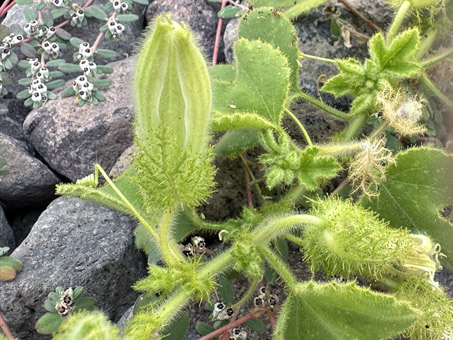
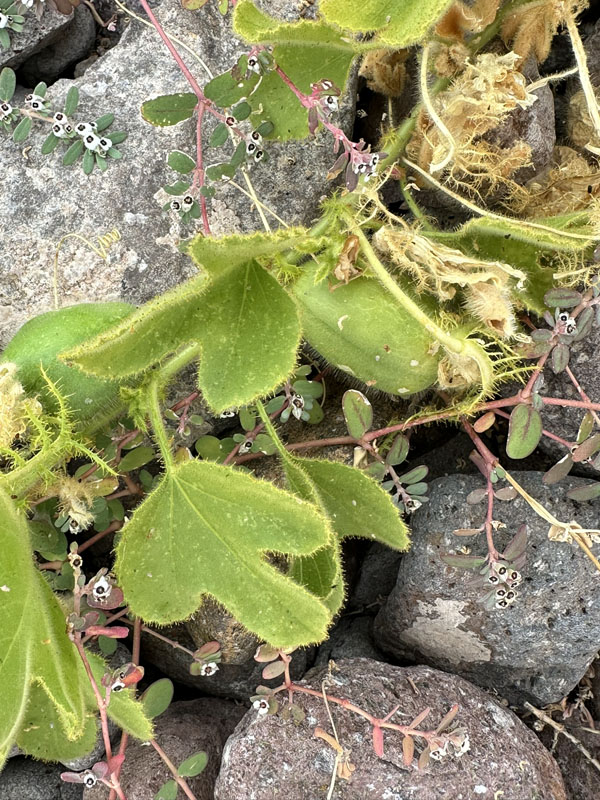
Palmer Passion Flower bud (erect). Herbage is glandular-pubescent and strongly pungent. Leaves are 3-lobed, the middle lobe the same or slightly longer than the others, and the margins toothed.
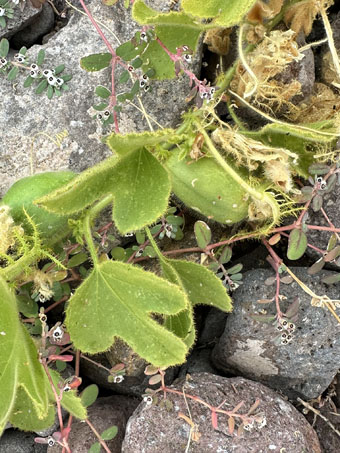
Immature fruit of Palmer Passion Flower. The fruit has many seeds, each one surrounded by a juicy aril.
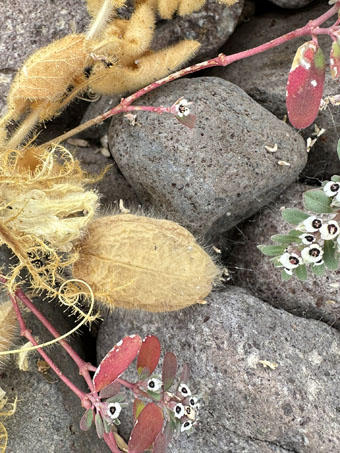
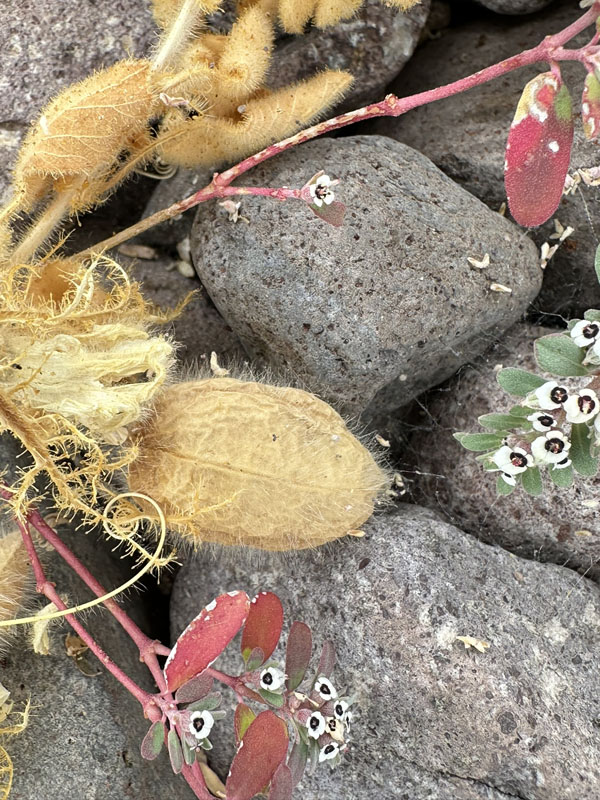
The ripe fruit is papery & dry, with any residual moisture contained in the aril around each seed.
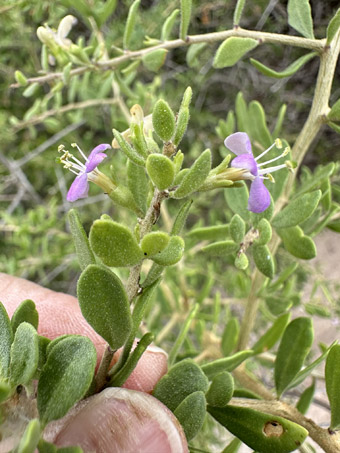
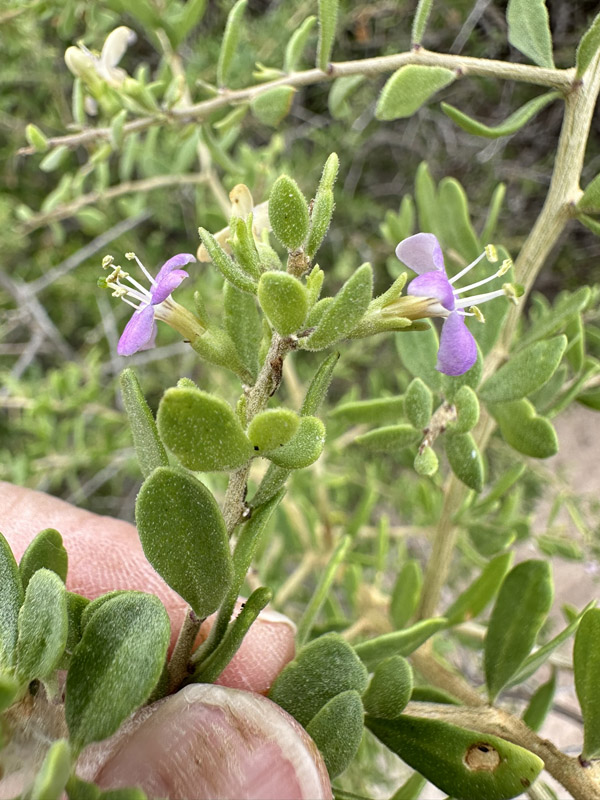
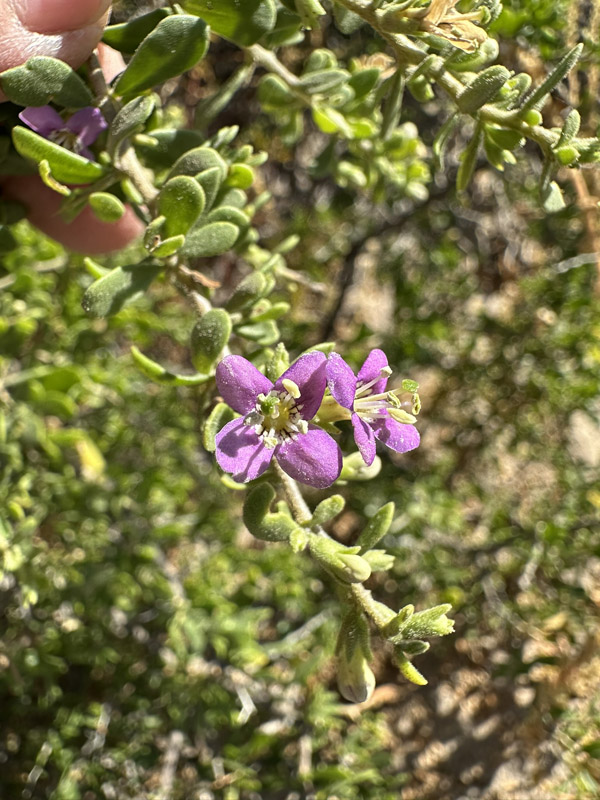
Flowers & thick, glandular-pubescent leaves of Common Desert Thorn (Lycium brevipes var. brevipes).
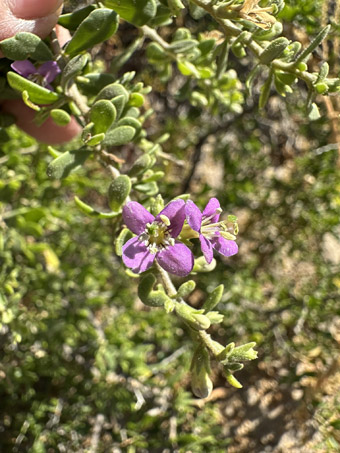
Flowers of Common Desert Thorn. In this area, the species is most common close to the coast or the margins of saltflats.
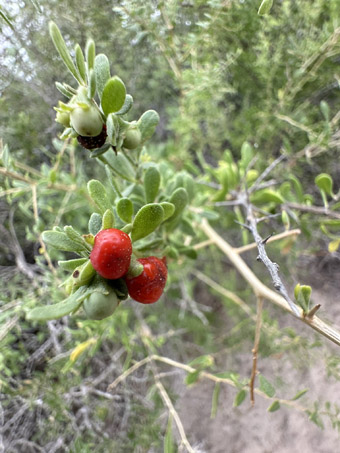
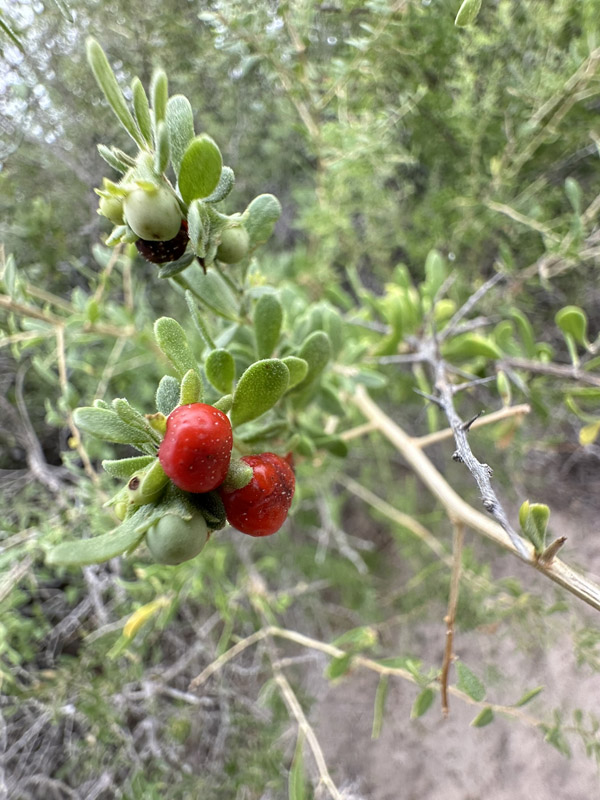
Desert Thorn fruit is a ±globose and ≤1 cm D berry that is edible and usually sweet.
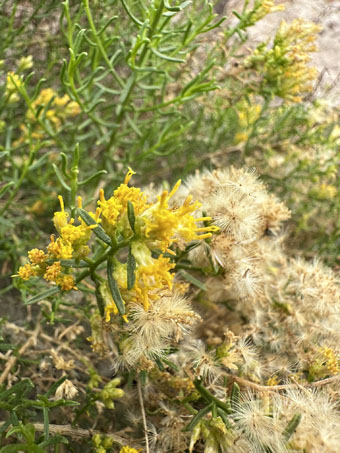
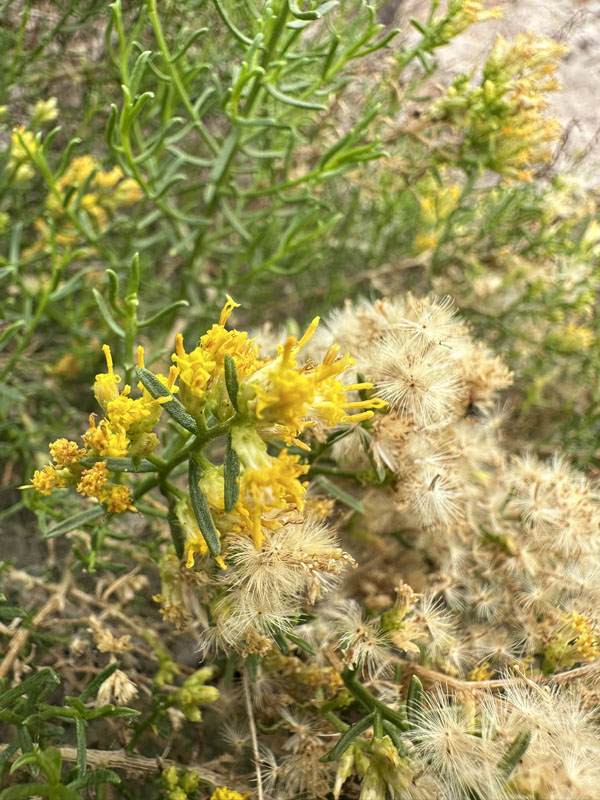
Flowers and fruit of Sonoran Goldenbush (Gundlachia diffusa). This a great bee & butterfly bush.
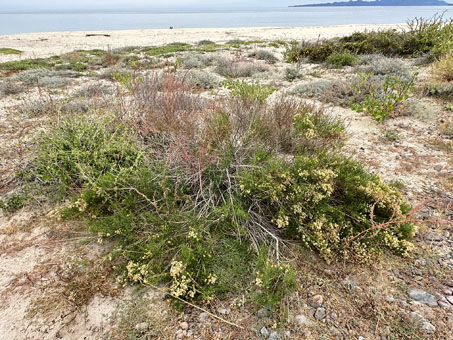
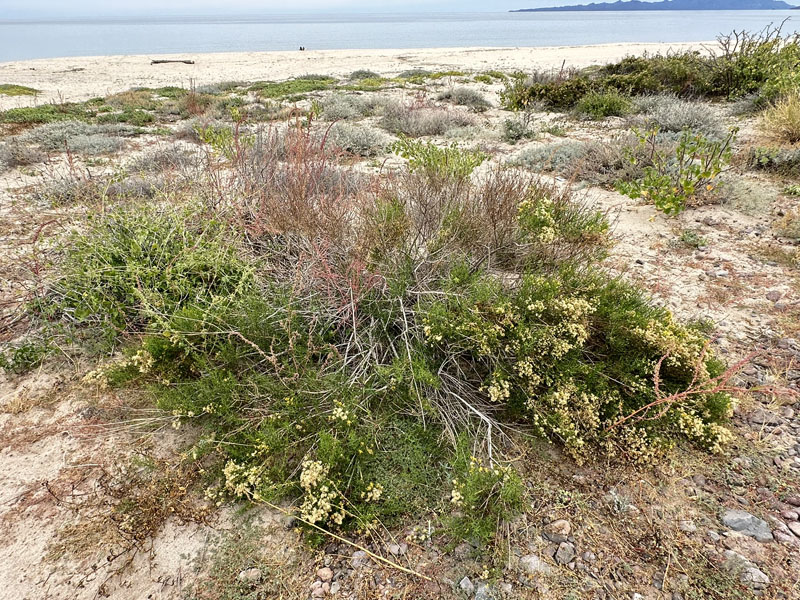
Sonoran Goldenbush on the edge of the fore and rear dunes at Playa Santa Inés. This species is common in the lower 2/3s of the peninsula.
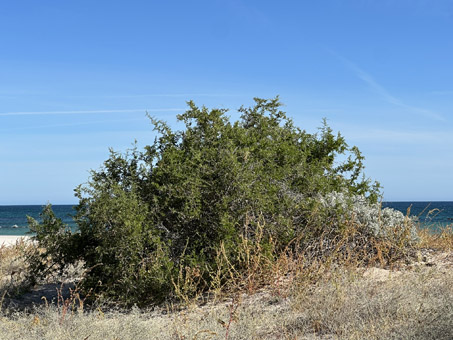
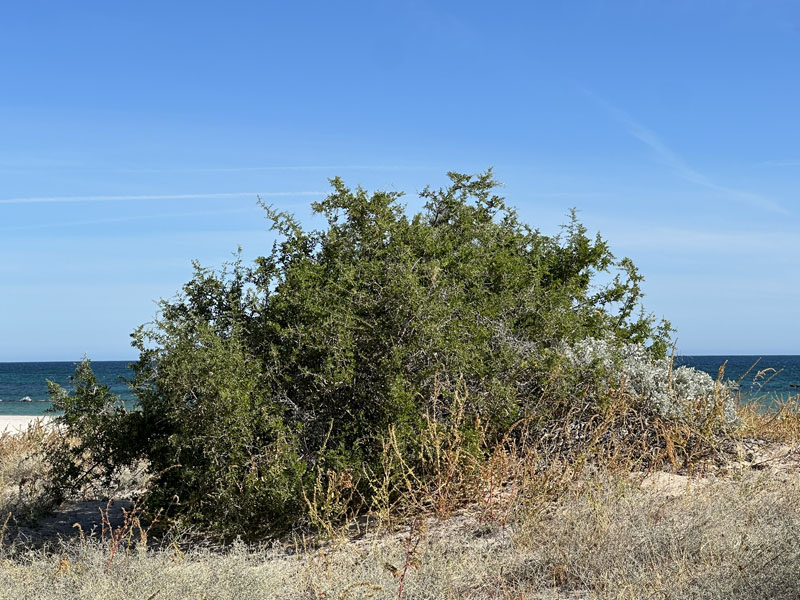
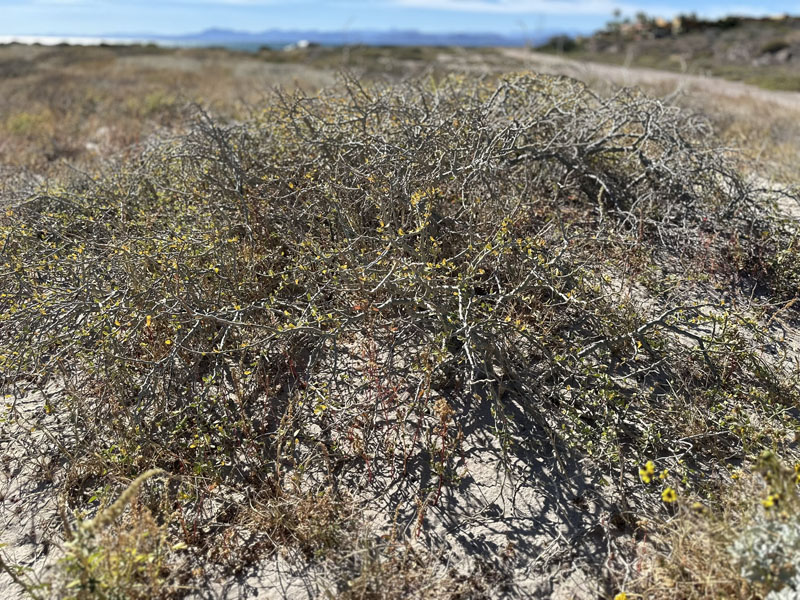
Common Desert Thorn (Lycium brevipes var. brevipes) on the rear dune at Punta Chivato.
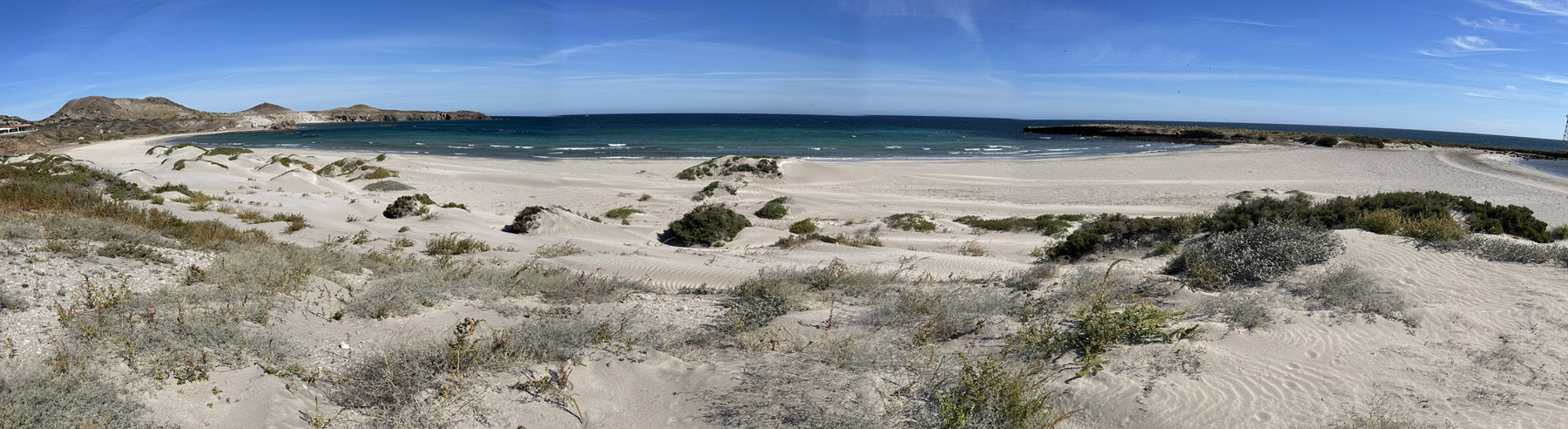
Punta Chivato Camping Beach
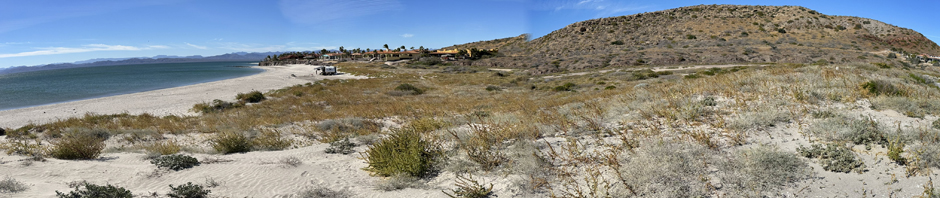
This is the panoramic view 180 degrees from that shown in the banner at the top of this page. Here, the view is WSW towards the housing developments, the shoreline that continues south to Playa Santa Ines, and the Sierra in the far distance.
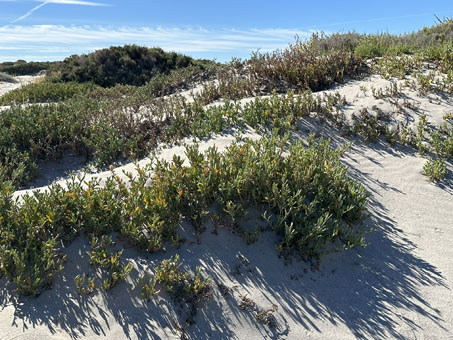
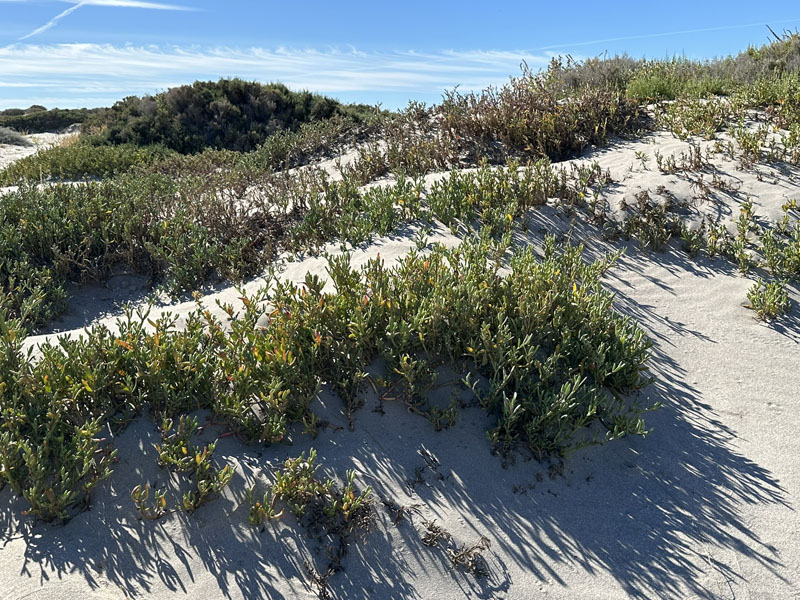
Sea Purslane (Sesuvium portulacastrum) is common on beach foredunes on the peninsula & is an important dune stabilizer.
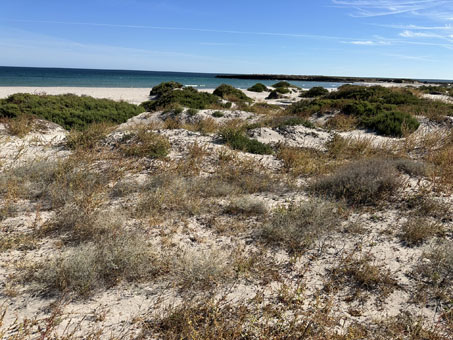
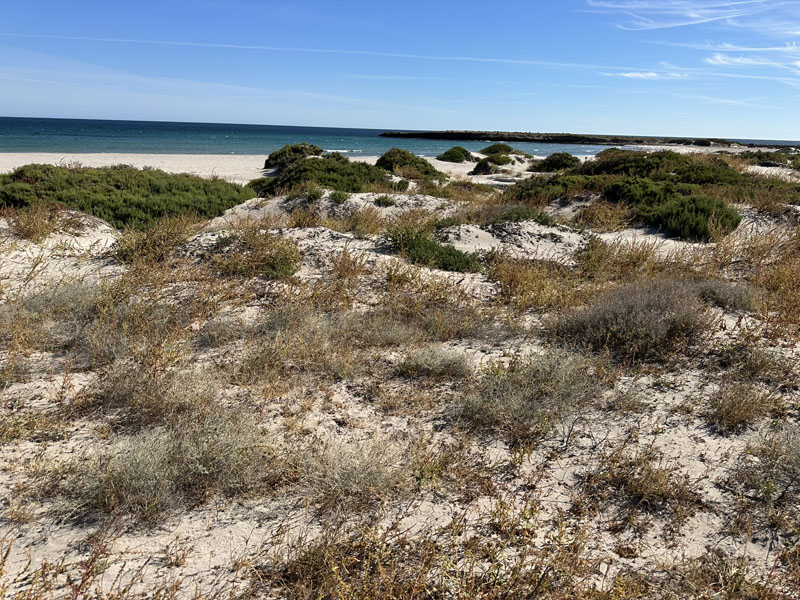
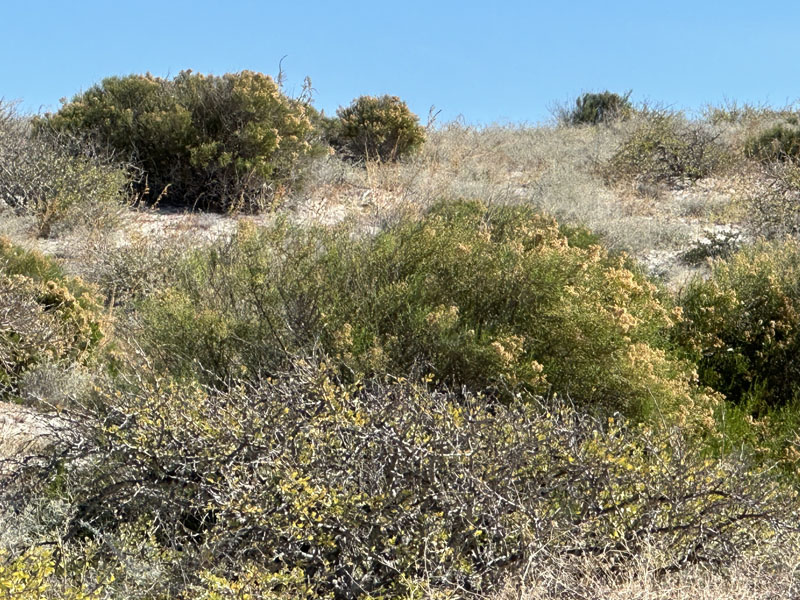
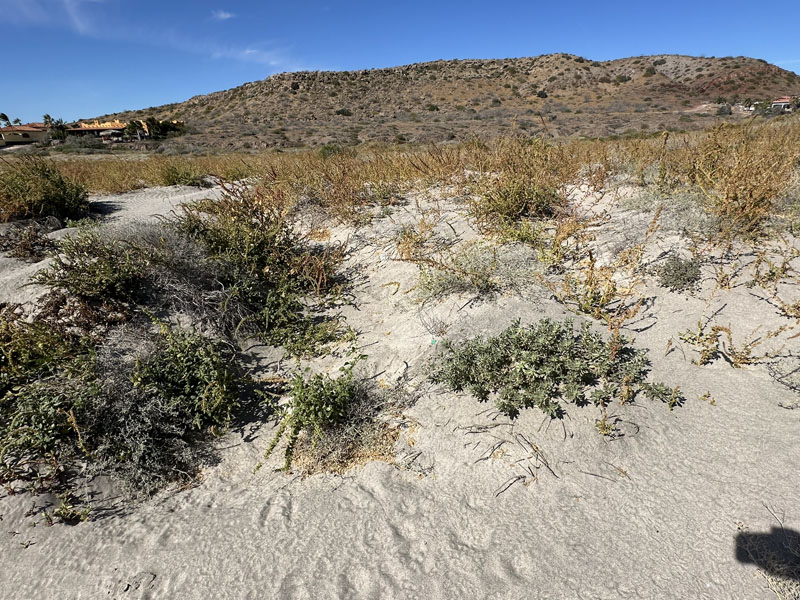
A mix of species in the rear dunes, including Saltbush, Crinklemat, Emory Dyebush, Palafoxia and Giant Sandbur.
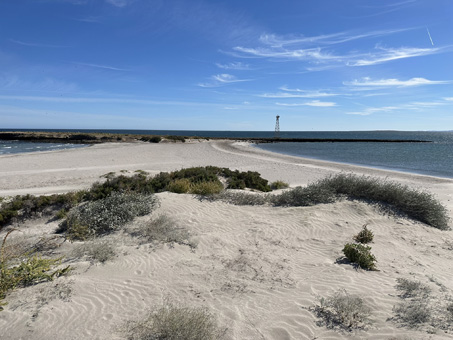
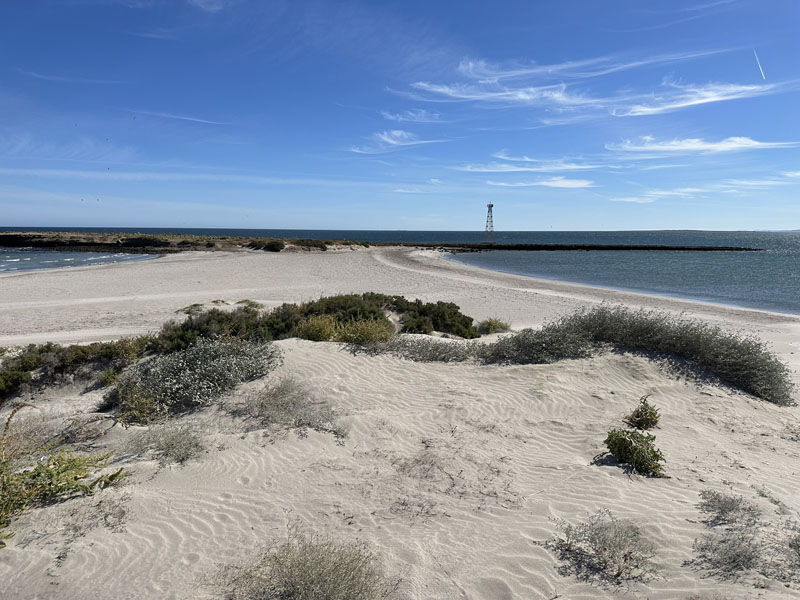
Punta Cacarizo is a low, flat limestone island (exposed seabed) connected by a tombolo. The island is c. 3 to 4 m above sea level.
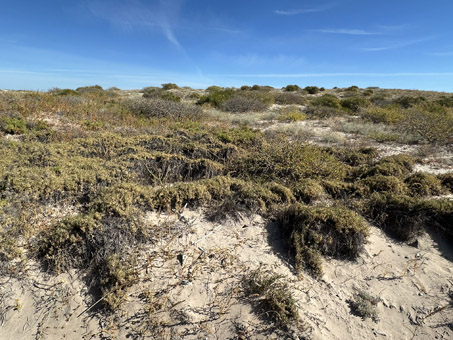
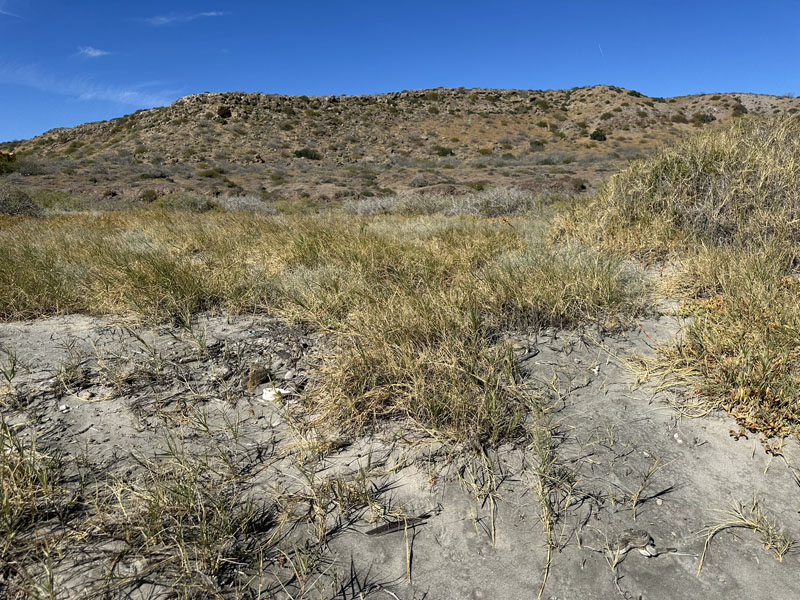
W. side of the dunes (above). Perennial grasses, Sonoran Goldenbush, Limberbush & Sea Purslane are some of the larger species.
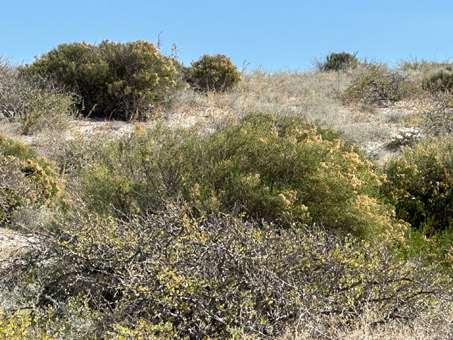
Limberbush (Jatropha cuneata, foreground) with numerous Sonoran Goldenbush beyond.
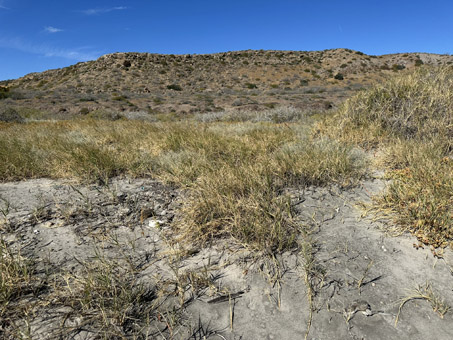
Beach Dropseed (Sporobolus virginicus), a perennial halophytic grass helps stabilize the dunes.
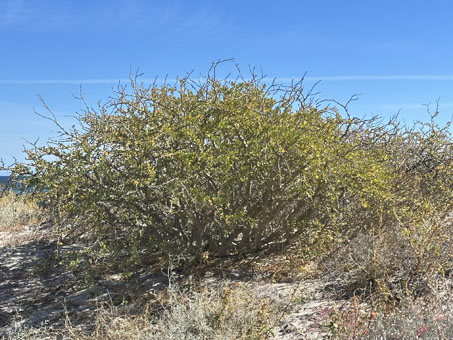
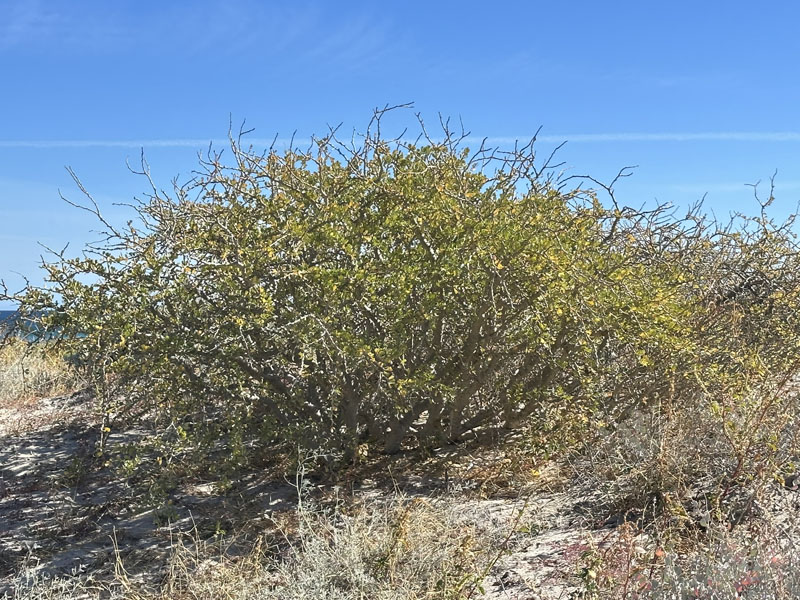
This Limberbush (Jatropha cuneata) is on the downhill slope of the dune, farthest from the beach. Note the branches at upper far R...
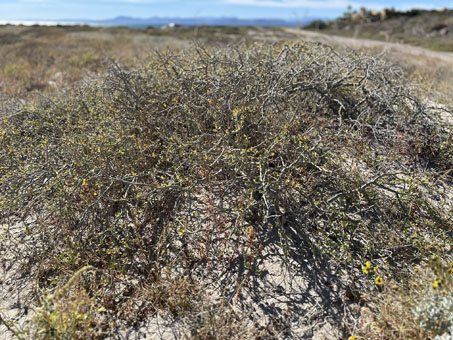
...which are from this Limberbush, at the top of a sandy mound closer to the water & more exposed to the wind. Most branches are bare.
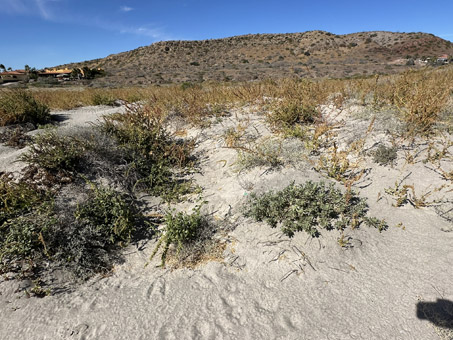
Dune plants, including Saw-tooth Ditaxis & Crinklemat. Also pictured are Sea Purslane & Watson Amaranth (Amaranthus watsonii, rear).
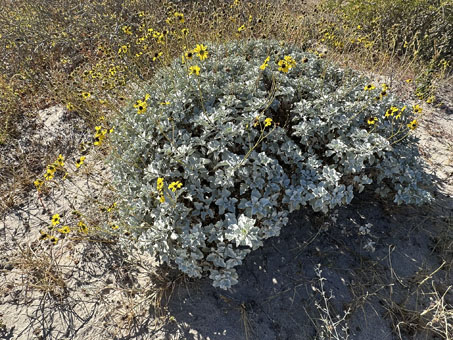
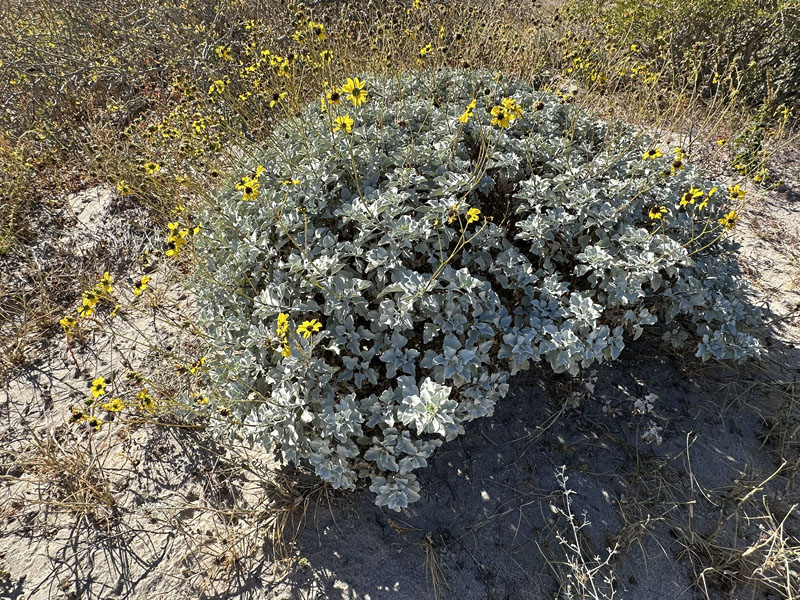
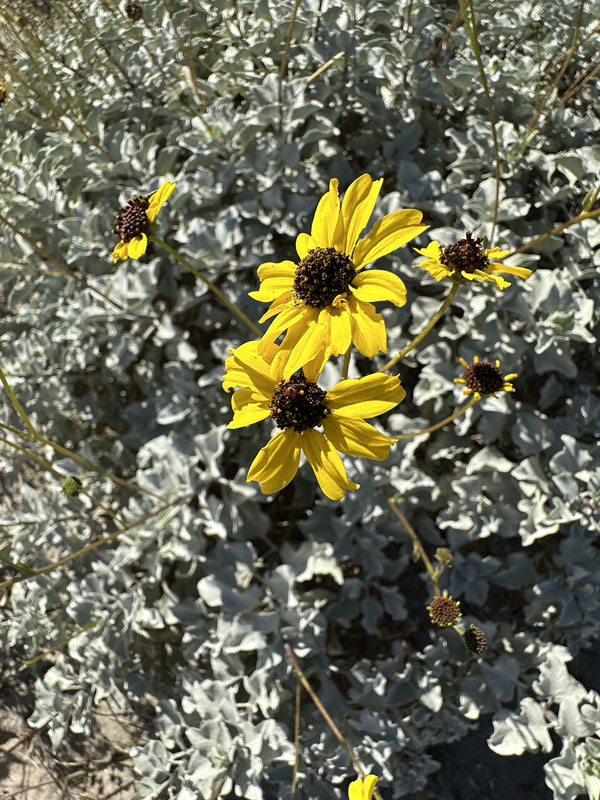
Brittlebush (Encelia farinosa var. phenicodonta). This species is well adapted to the intense UV light and heat on the dunes.
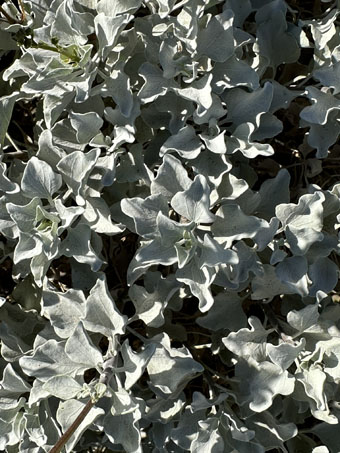
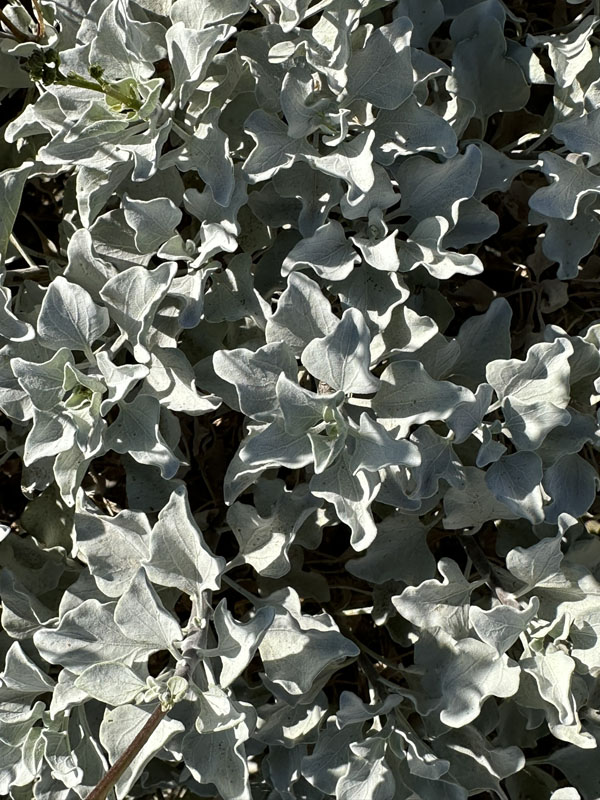
Brittlebush has a thick, resinous sap & leaves that are densely covered with silvery hairs, creating a protective and reflective layer.
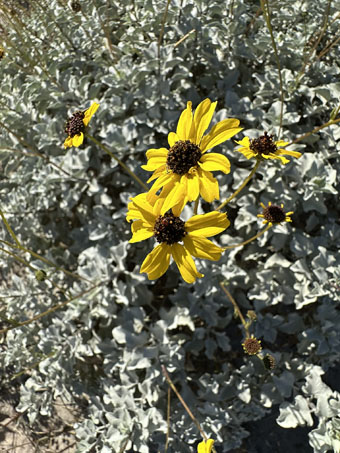
The rounded, open architecture of Brittlebush & the flowers growing well above the plant are also adaptations that reduce exposure & heat.
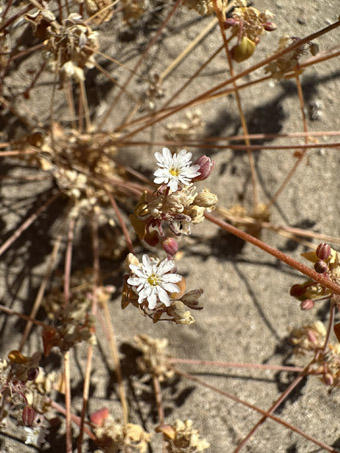
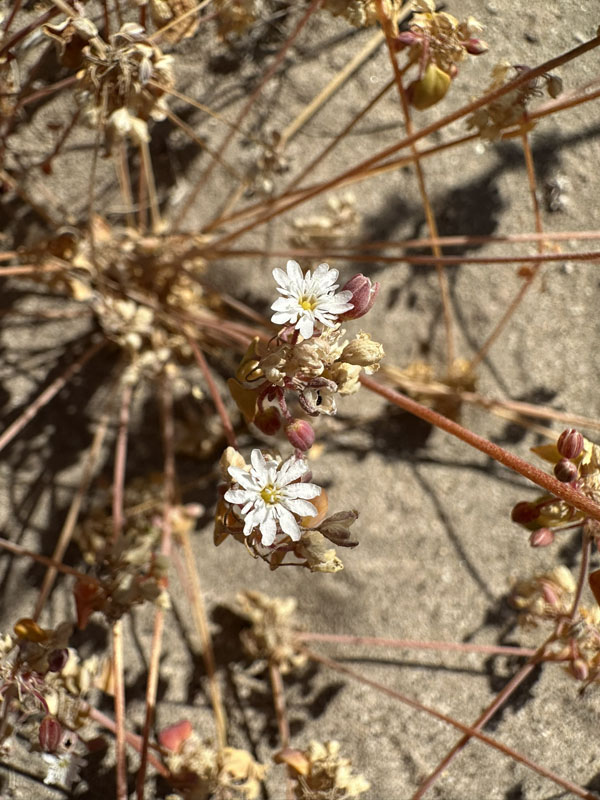
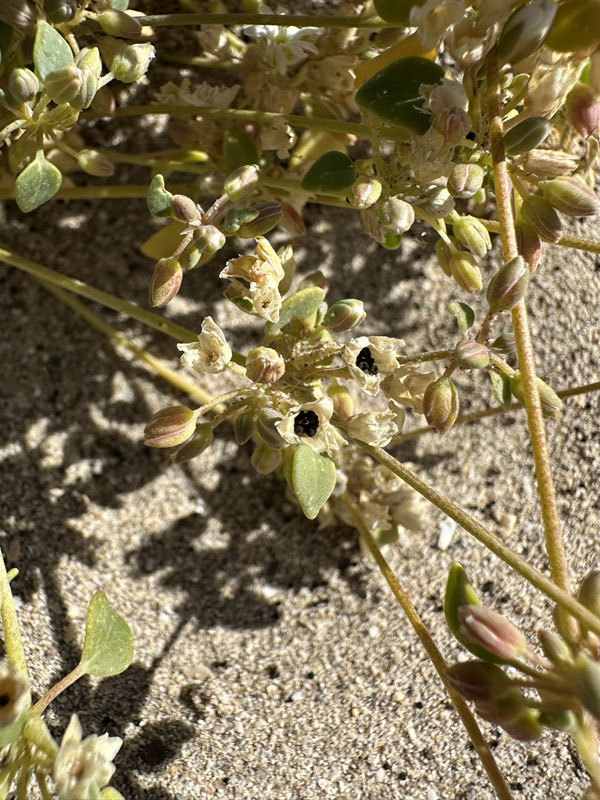
A large patch of Desert Drymary plants (Drymaria holosteoides var. holosteoides) at the edge of the dunes & adjacent saltpan was mostly dried out. But there were a couple with buds or a few flowers.
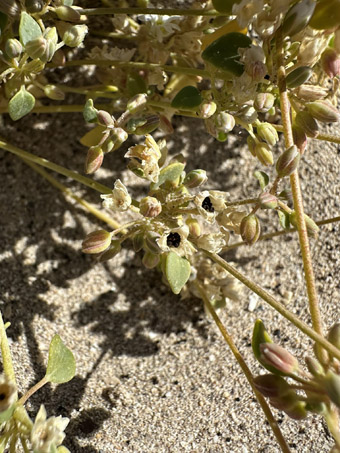
Desert Drymary has erect, papery capsules that open at the top, & the many minute seeds are gradually shaken out by the wind. Black seeds can be seen here sitting in the cuplike capsule.
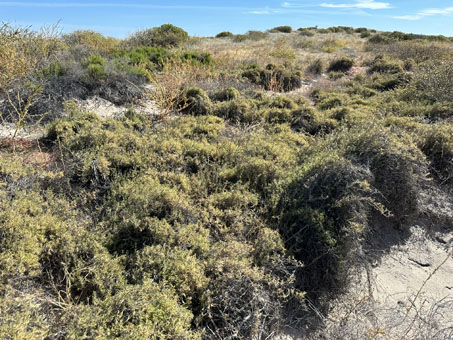
Salt Grass or Shoregrass (Distichlis littoralis) is generally found on the margins of salt marshes. Here, it is growing at the base of the rear dune where it meets a saltpan. The patch shown is c. 4 m x 4 m.
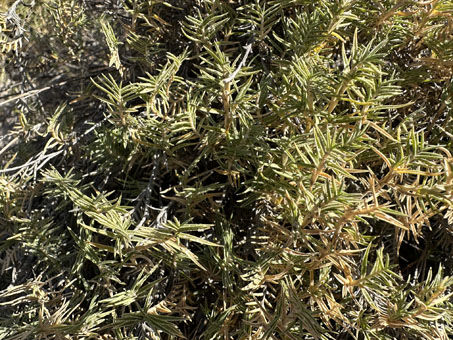
Salt Grass has short culms, erect culms with stiff, short pointy leaves. It forms low thickets, aiding in soil stabilization around lagunas, estuaries & in this case, dune edges.
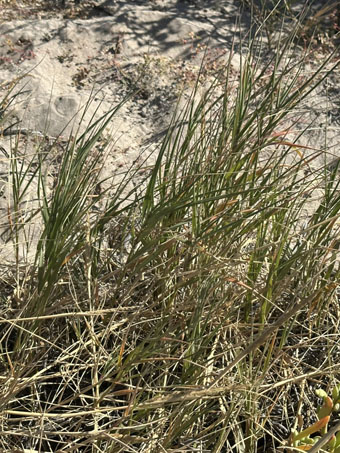
Beach Dropseed (Sporobolus virginicus) spreads via creeping rhizomes.
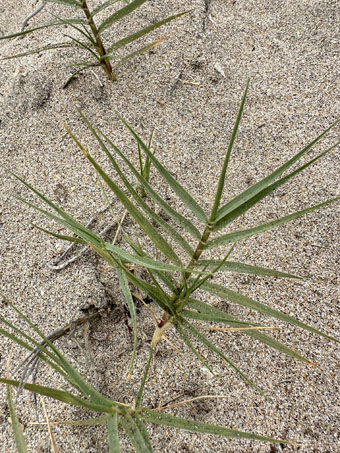
The culms of Beach Dropseed are ascending to decumbent and help to stabilize dunes.
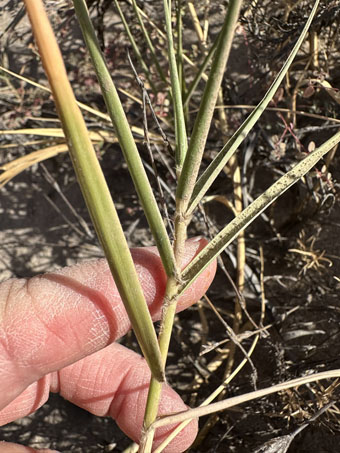
Beach Dropseed leaves are long and distichous.
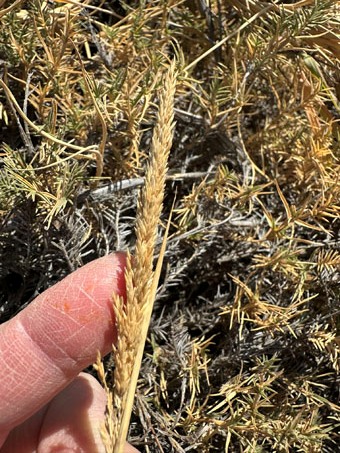
Ascending panicles have closely apressed branchlets.
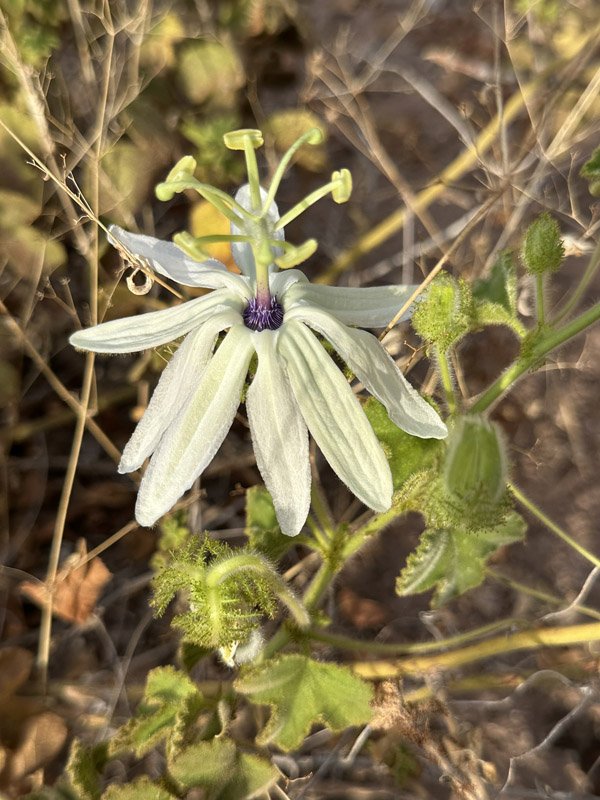
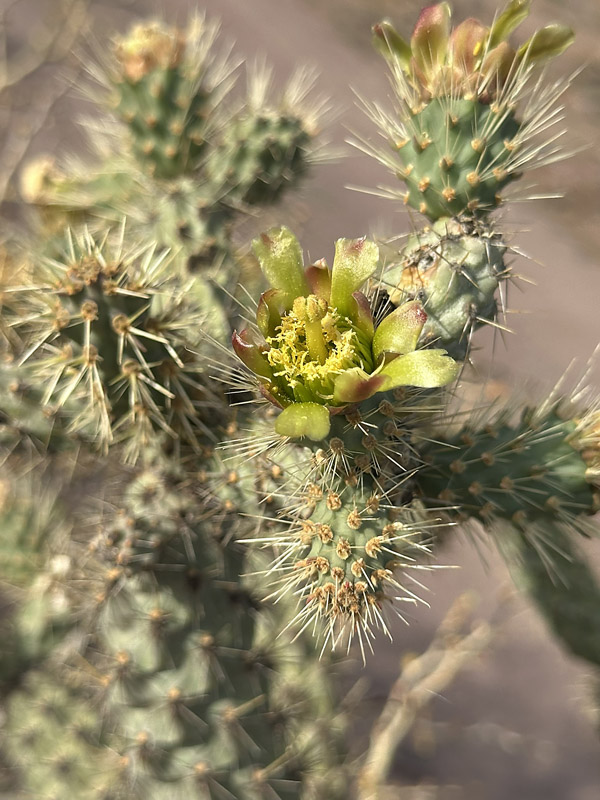
That's it for this month's post but first I wanted to add that I revisited Playa Santa Ines several times in March, just before Easter, when I spent a few nights camping with friends. The weather has been so crazy this season that the Gulf was already warming up, with fog banks off shore during the day and fog rolling onshore at night. The cool damp mornings were lovely for walking along the road running between the rear dunes and the desert scrub, as well as up hill. Many scrub plants showed lots of new growth as well as flowers, while most of the dune species I'd seen in late November were fruiting or dying back. I'll leave you with these two images from those trips. Until next time, hasta pronto...see you soon.
Debra Valov — Curatorial Volunteer
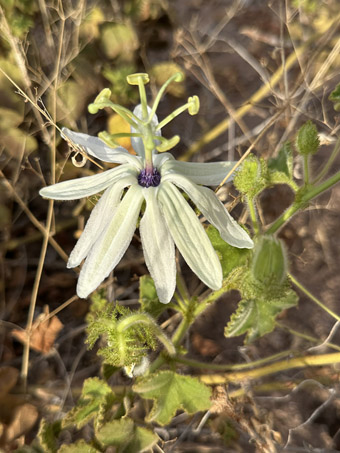
Flower of Palmer Passion Flower. The flower is 5-7 cm D and has 5 petalloid sepals & 5 petals.
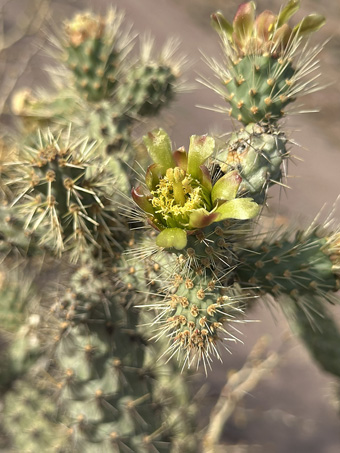
Peninsular Cholla (Cylindropuntia alcahes var. alcahes) in flower. The perianth shown is c. 2.5 cm D.
For a full inventory list of this month's plants (family, latin name and common names in both English and Spanish as well as links to photos from previous posts or my iNaturalist observations), visit this page.
References and Literature Cited
Daniel, T. F., M. Wetherwax & L. R. Heckard (2012) Justicia californica, in Jepson Flora Project (eds.) Jepson eFlora, https://ucjeps.berkeley.edu/eflora/eflora_display.php?tid=29815, accessed on 30-Apr-2026.
Mayfield, M. H. & G. L Webster 2012. Croton californicus, in Jepson Flora Project (eds.) Jepson eFlora, https://ucjeps.berkeley.edu/eflora/eflora_display.php?tid=21120, accessed on 30-Apr-2026.
Rebman, J. P., J. Gibson, and K. Rich, (2016). Annotated checklist of the vascular plants of Baja California, Mexico. Proceedings of the San Diego Society of Natural History, No. 45, 15 November 2016. San Diego Natural History Museum, San Diego, CA. Full text available online.
Rebman, J. P and Roberts, N. C. (2012). Baja California Plant Field Guide. San Diego, CA: Sunbelt Publications. Descriptions and distribution.
Simpson, B.B. (1989). Flora Neotropica, Vol. 49, Krameriaceae. Available at: https://www.jstor.org/stable/4393807, accessed 30-Apr-2026.
The American Southwest. Croton californicus, California Croton at: https://www.americansouthwest.net/plants/wildflowers/croton-californicus.html
Accessed on
08-May-2026
.
Valov, D. (2020). An Annotated Checklist of the Vascular Plants of Mulegé, Baja California, Mexico. Madroño 67(3), 115-160, (23 December 2020). https://doi.org/10.3120/0024-9637-67.3.115
Wiggins, I. L. (1980). The Flora of Baja California. Stanford University Press. Keys and descriptions.