THE HIVE APR 2026
Punta Chivato, BCS — December 2025
 As noted in the past two entries, November and December were excellent months for botanizing because of the abundant later summer rain. In early December, I was invited to lead a plant walk for local residents in Punta Chivato PC), about a 40 minute drive north and east from Mulegé.
You can read a little more about the promontory in the Mulegé Flora Project locations page that I created as a companion for my Annotated Checklist of the Vascular Plants of Mulegé as well as this previous post from last spring.
I met up with the group of eight or nine people at the junction where the main road into Punta Chivato turns sharply to continue NE out past a number of housing developments, the airstrip and the camping beach.
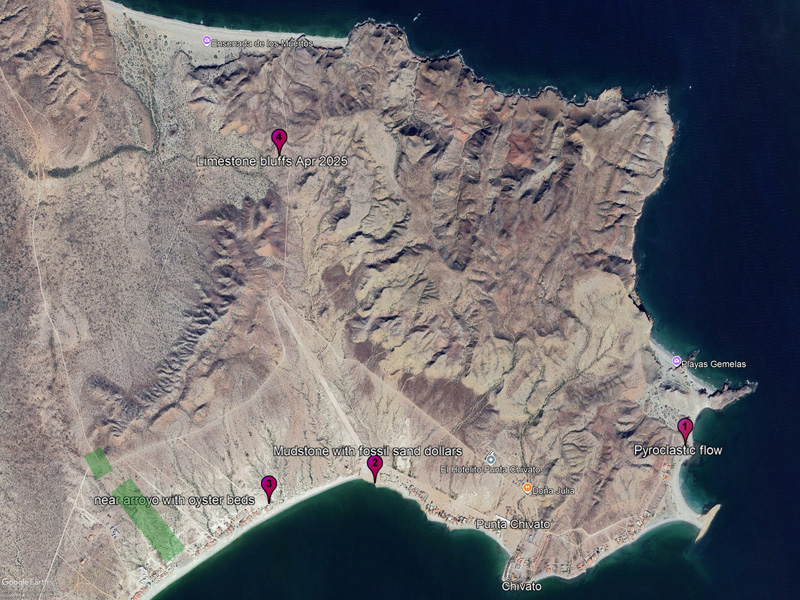
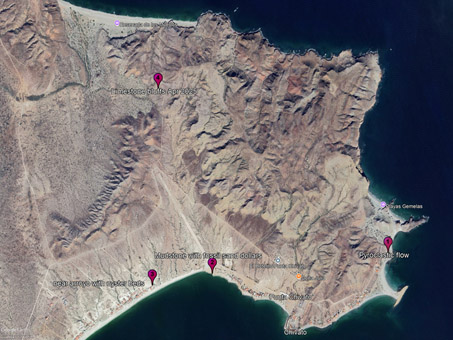
This site was west of where I had co-led a plant & geology walk last spring (click to enlarge the map at right; current area covered is within the small green rectangles).
For previous posts about Punta Chivato, see: Mulege Flora Project Locations, May 2025 (plant/geology walk).
For a full list of this month's plants and other organisms (with family, latín name and common names in both English and Spanish), visit this page.
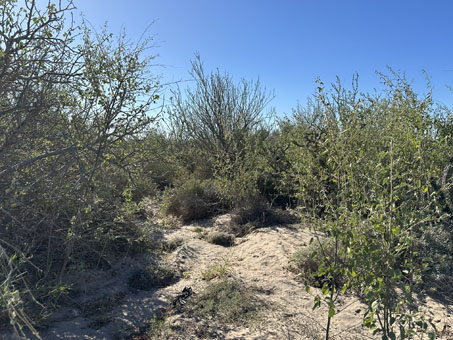
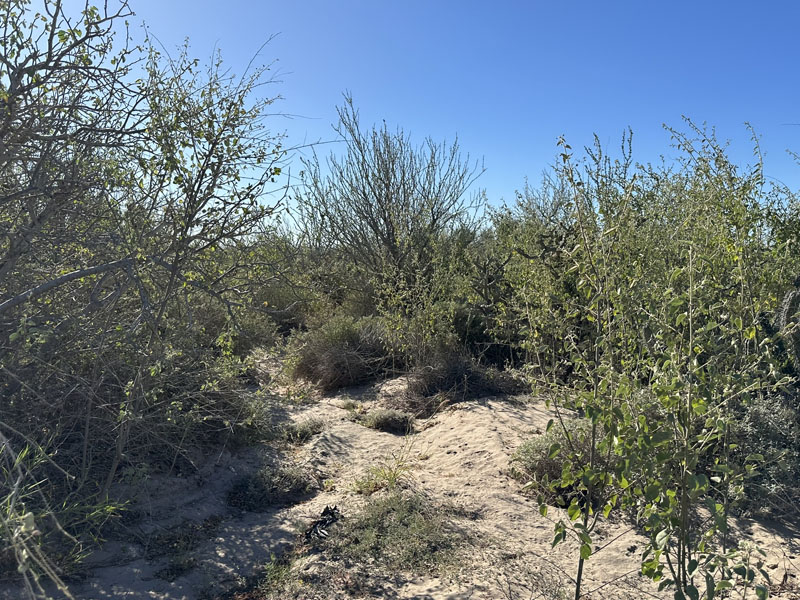
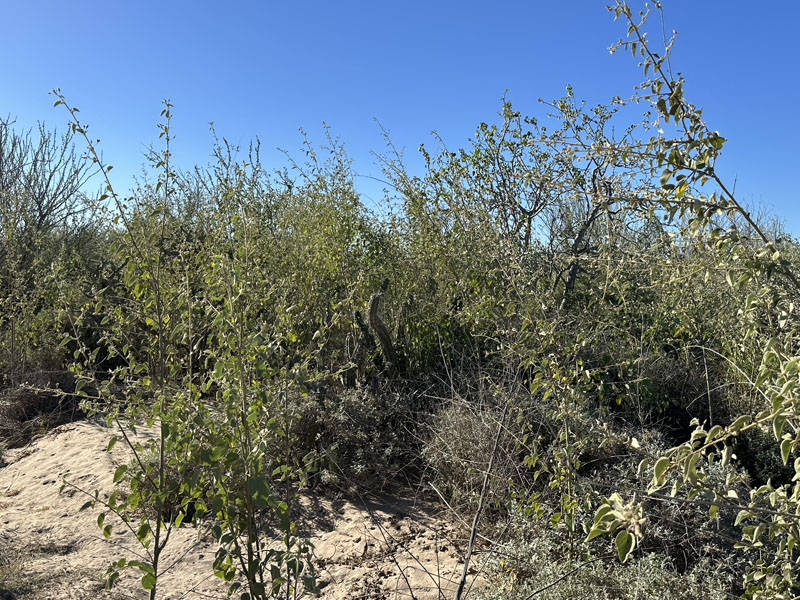
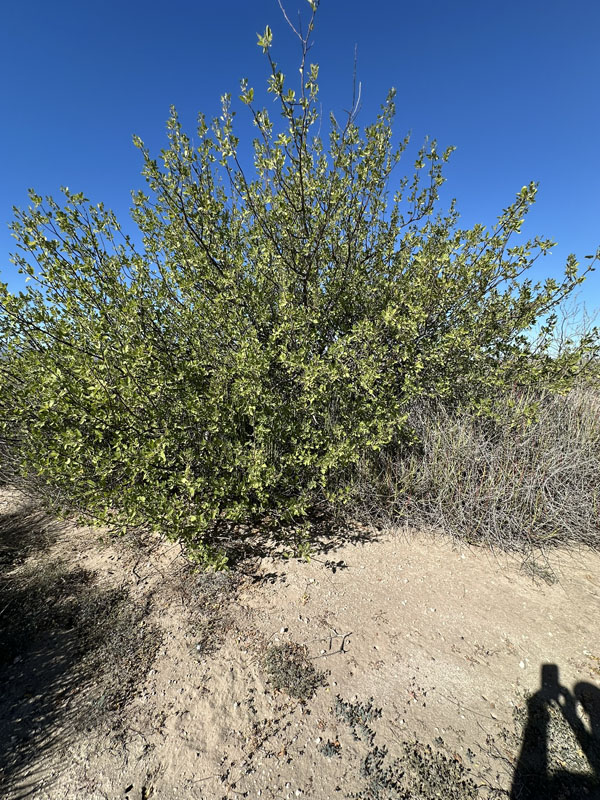
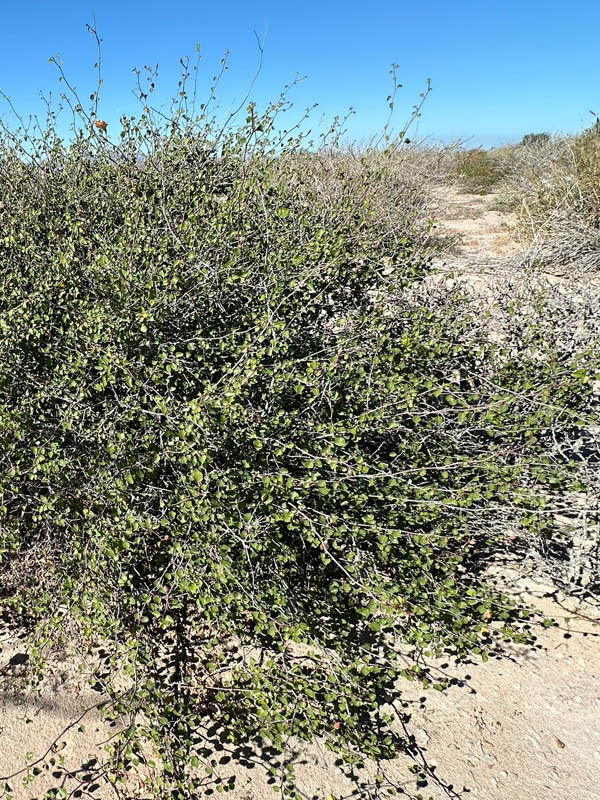
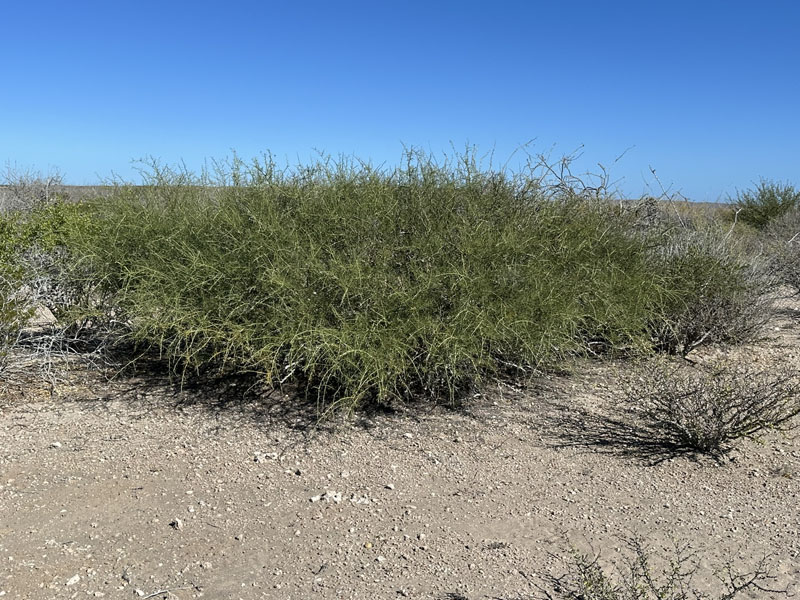
Dense scrub along roadside near plant walk area.
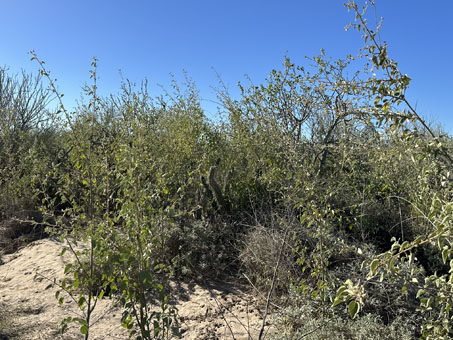
Dense scrub along roadside near plant walk area.
I chose the site for the walk both because it usually has very dense growth and because it has a soil type rather unique to the area that supports a high level of plant diversity. The area is located on a raised, ancient sea bed terrace with a secondary deposit of gypsum. According to my geologist friend Warren, who co-led the walk last spring, the mineral originates from the deposits on Isla San Marcos, not far off shore to the north of the point.
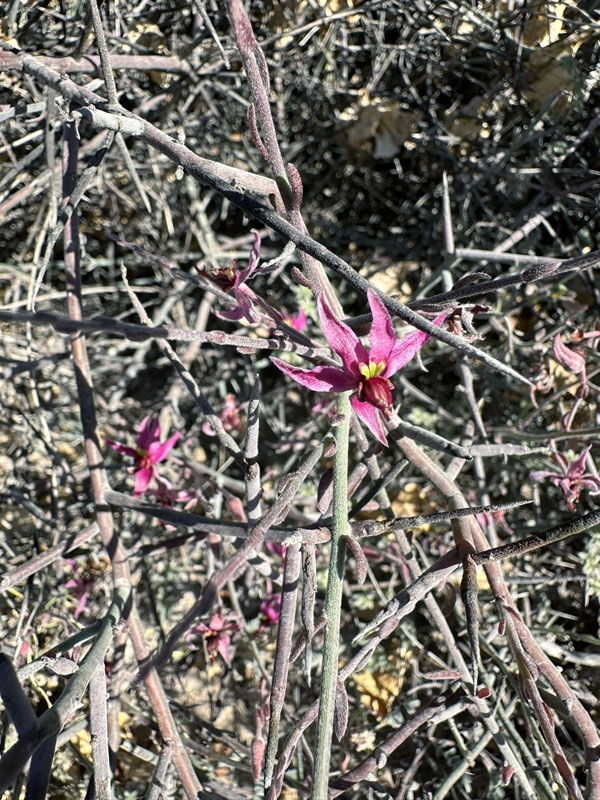
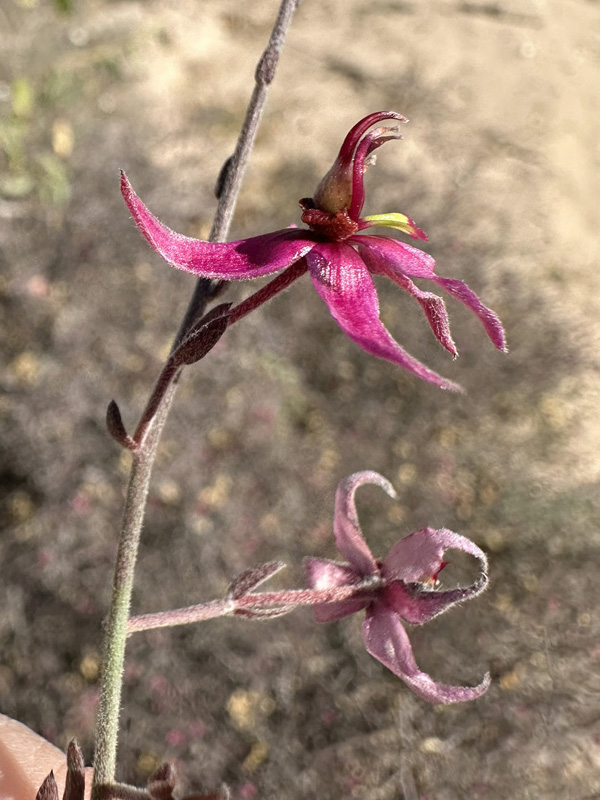
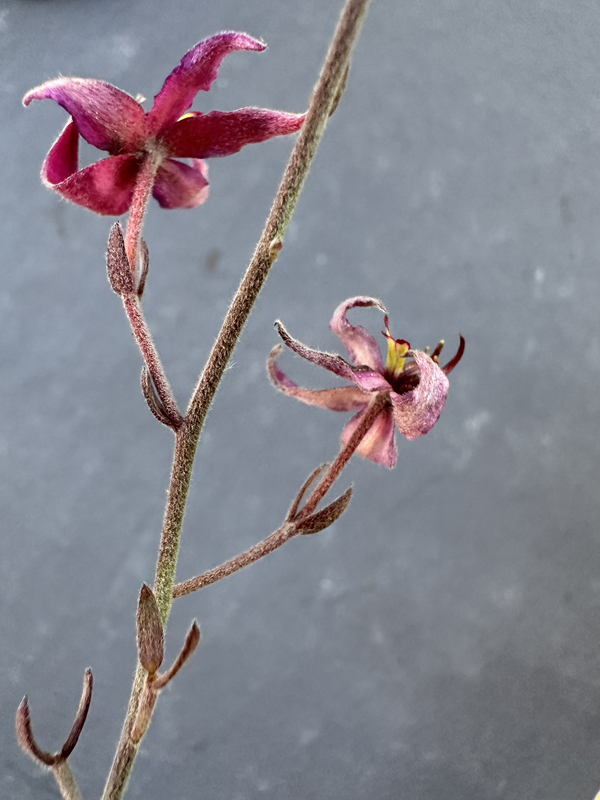
This soil type may be the reason that there are several species not seen elsewhere in the Mulegé area, though they are found elsewhere in BCS. These are: Ambrosia magdalenae, Calliandra eriophylla, Euphorbia ceroderma, Gossypium armourianum (originally only known from Isla San Marcos) and Marina peninsularis. Two additional species, Castela polyandra and Tiquilia canescens var. canescens) are also found a few miles south around Playa Santa Ines.
On the way in from the highway, I was happy to see that there were lots of plants in bloom or full of new growth so there would be lots to see and talk about. And so, everyone armed with a plant list for the local area I had prepared beforehand, we set out to explore the area for a few hours. I was too busy talking to take photos, so I ended up returning a few days later to retrace our steps and document. Below are just some of the species seen on those days.
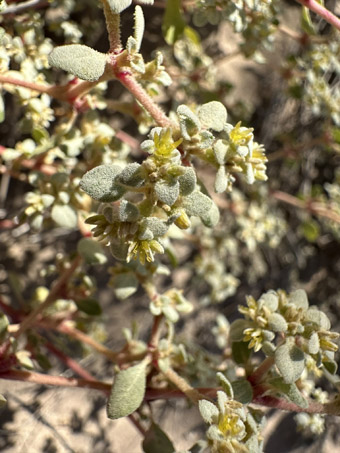
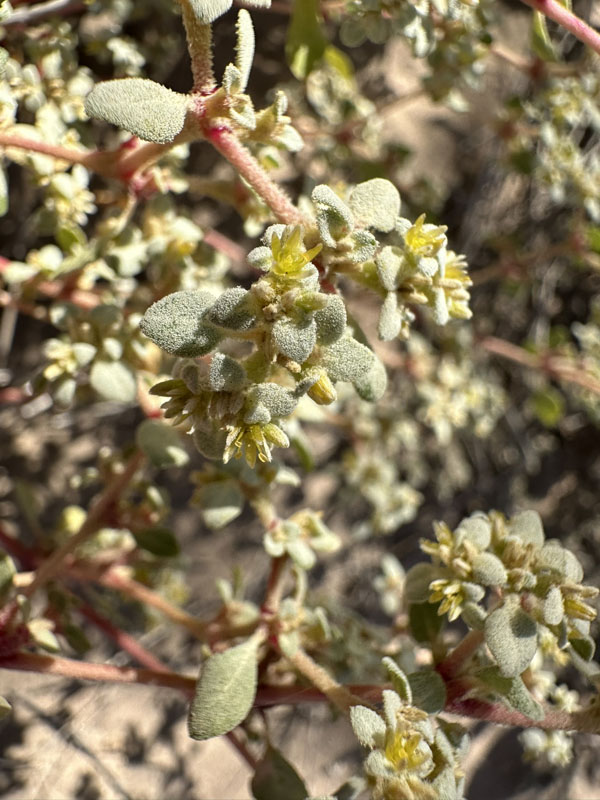
The prostrate perennial Honeysweet (Tidestromia lanuginosua) is uncommon in BCS & currently known only from populations in sandy areas near the coast between Santa Rosalía & Mulegé (Tiburón grade).
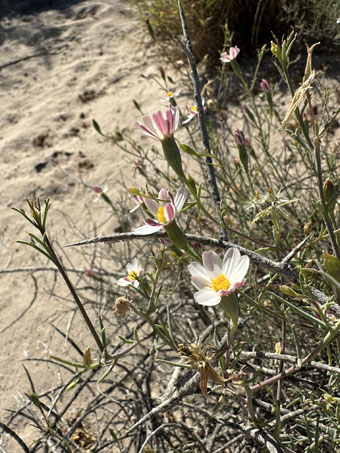
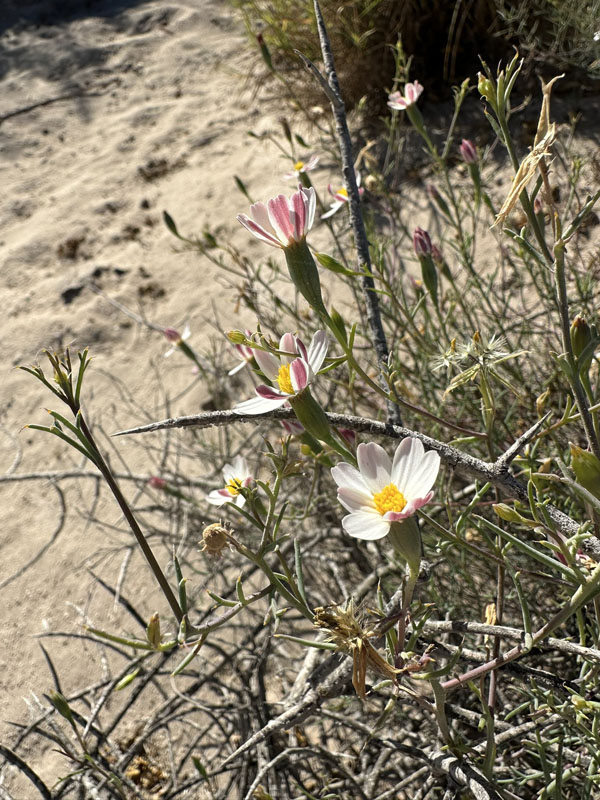
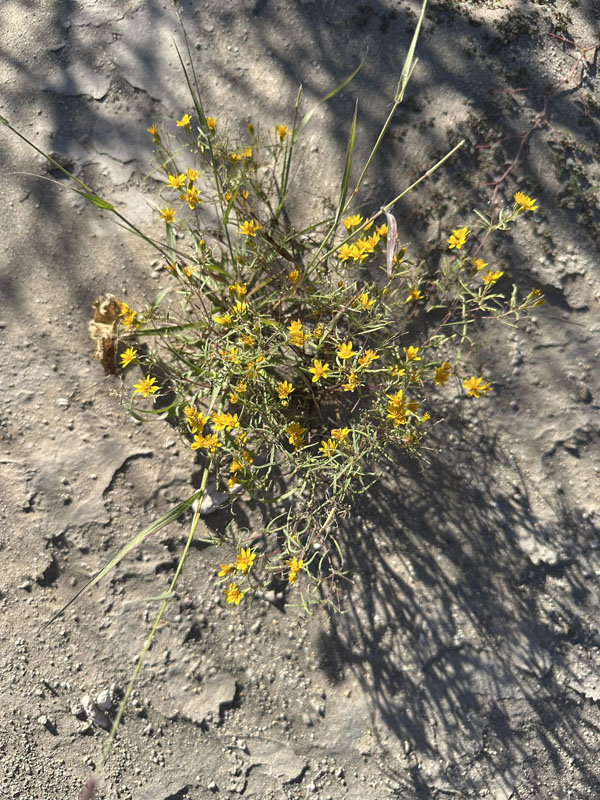
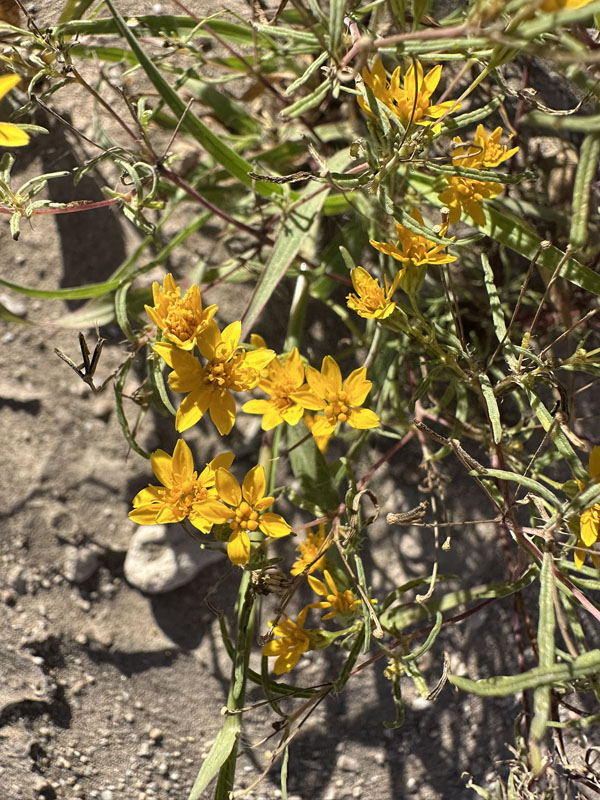
Baja California Nicolletia (Nicolettia trifida) is usually found in coastal areas in sandy soils such as on marine terraces. Its fleshy, filiform stems & leaves & open growth form are ideal dune adaptations.
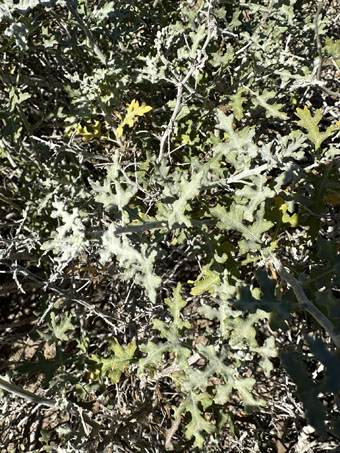
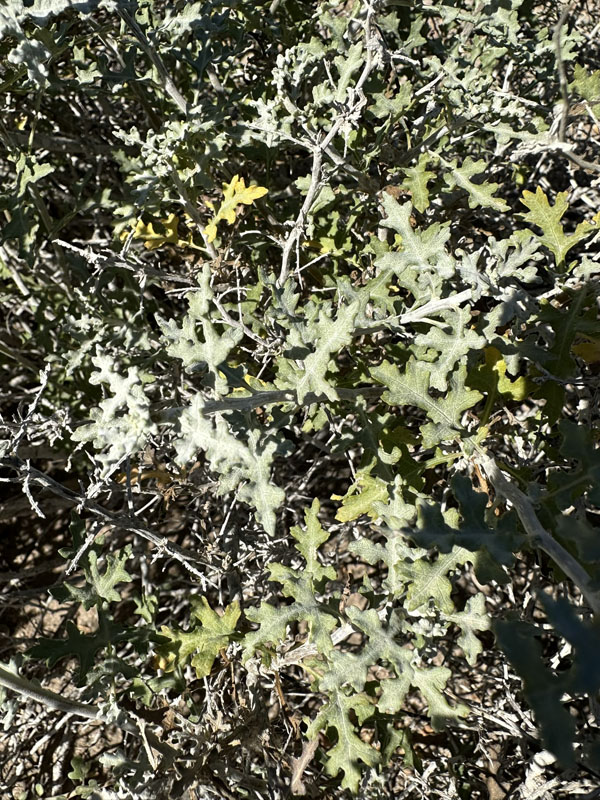
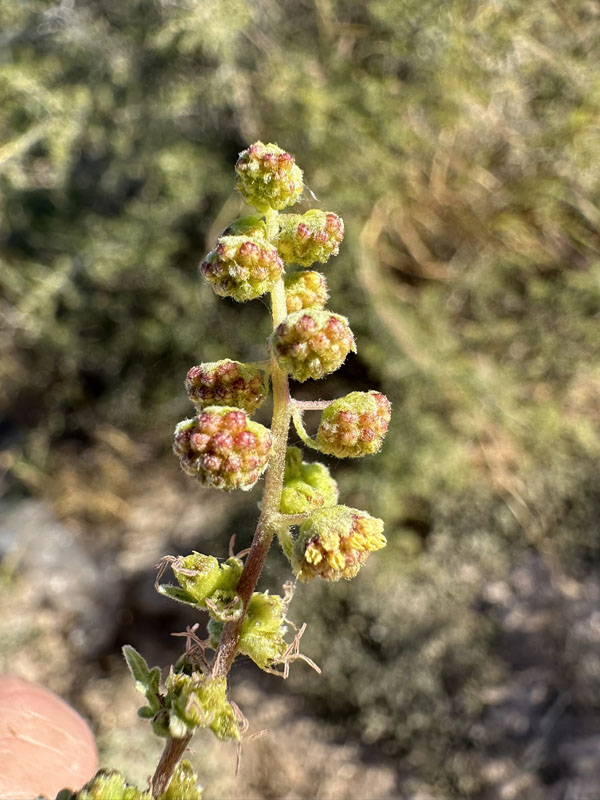
Magdalena Ragweed (Ambrosia magdalenae) is a small to medium shrub to c 1.25 m HxD. Superficially aIt is very similar in overall appearance to A. dumosa found farther north but branchlets & leaves are more green than grayish-white.
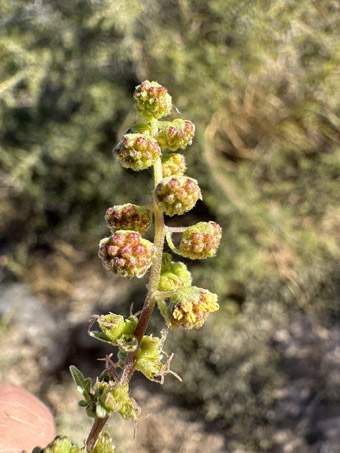
Like other Ambrosias, Magdalena Ragweed has spike-like inflorescences with staminate heads above & pistillate ones below. Stam. heads are few-flowered & gen. nodding. With 1-5 per involucre, pistil. fls are bur-like & have 6-60 spines, each hooked at the tip.
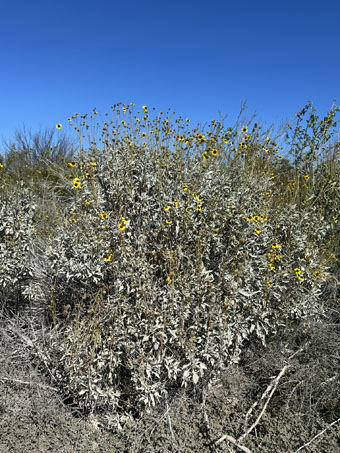
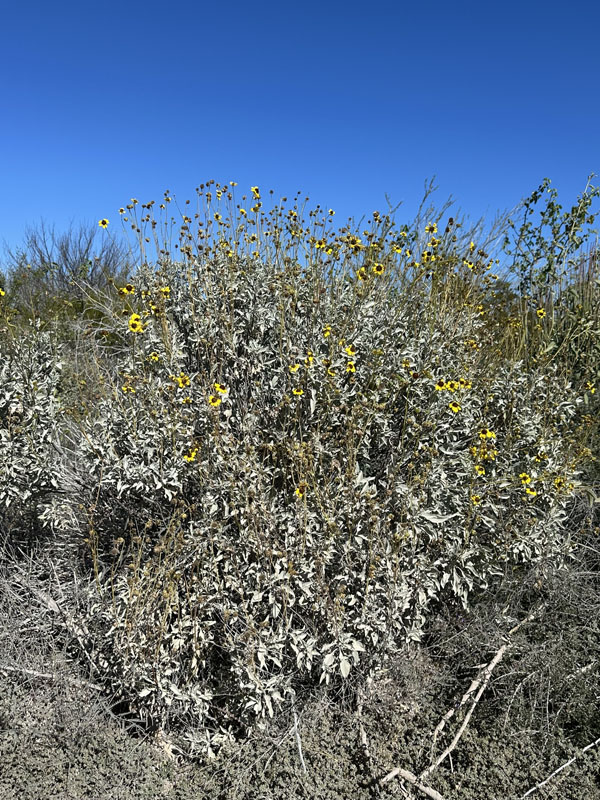
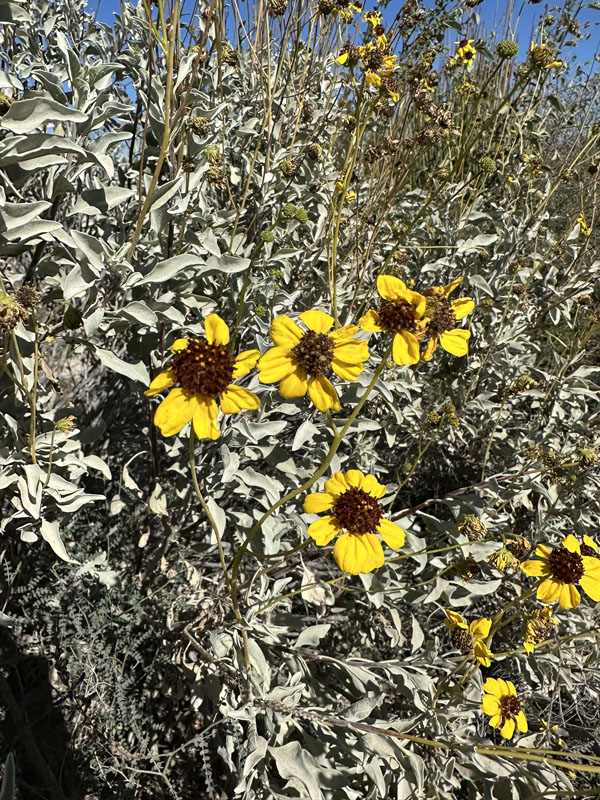
Large Brittlebush (Encelia farinosa var. phenocodonta) c. 1.5m H on the gypsum-rich marine terrace.
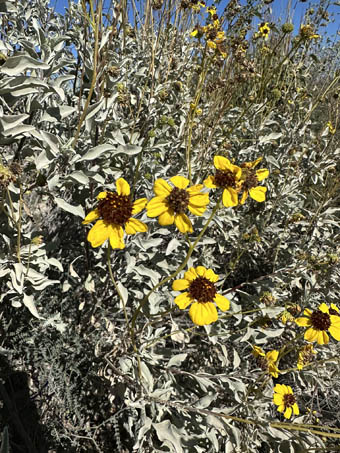
Brittlebush (Encelia farinosa var. phenocodonta) has densely hairy leaves and a sticky, fragrant sap.
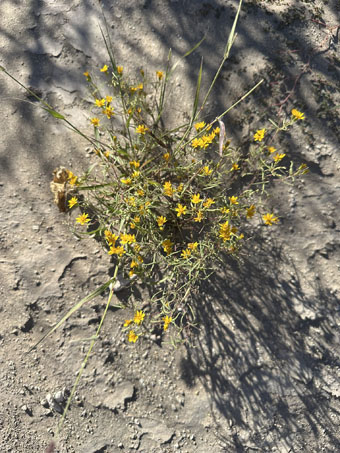
Desert Chinchweed (Pectis papposa var. papposa) is an herb gen. ≤50 cm D. Gland-dotted herbage is pungent if crushed. Lower leaf margins are bristly.
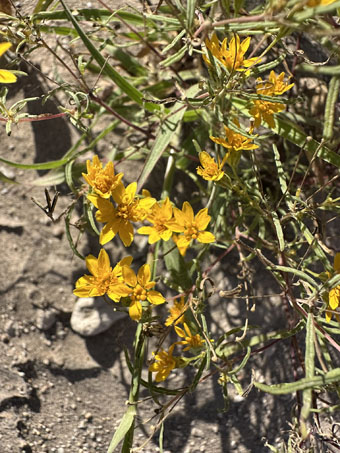
Desert Chinchweed flowers are c. 8-10 mm D with 7-10 ray fls. The 7-10 involucral bracts each have 3 conspicuous apical glands.
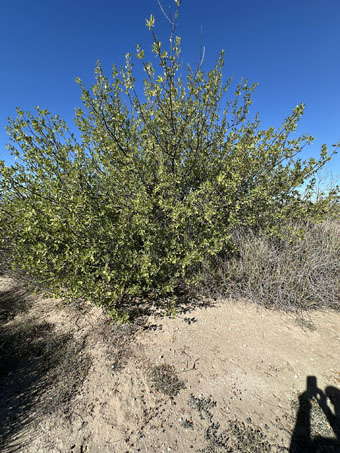
Many of the Red Elephant Trees (Bursera hindsiana) were very leafy, this one particularly so.
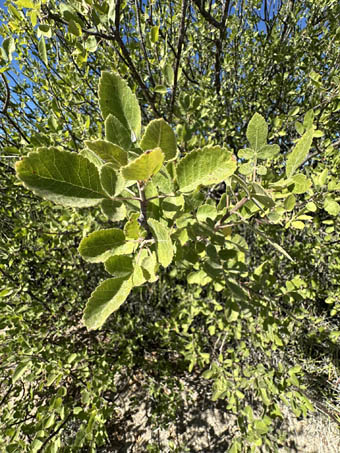
Red Elephant Tree is drought-deciduous.In other areas around Mulege they only had sparse leaves.
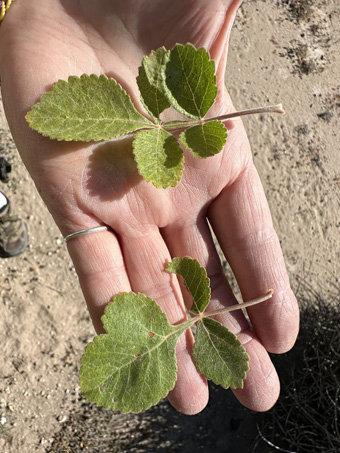
The leaves of Red Elephant Tree (Bursera hindsiana) are simple or have 3-5 leaflets.
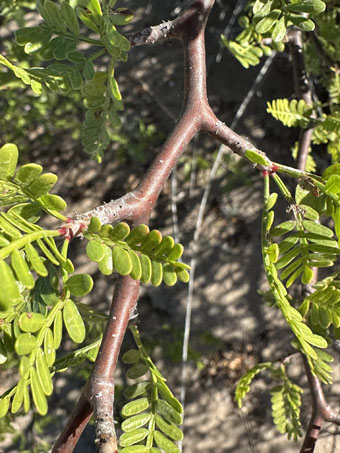
The pinnate leaves of Little-leaf Elephant Tree. This species is more drought tolerant than B. hindsiana so leaves from summer rain through spring is common.
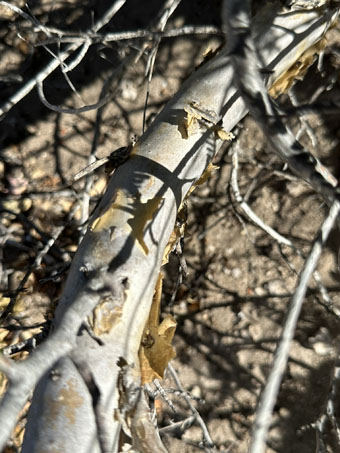
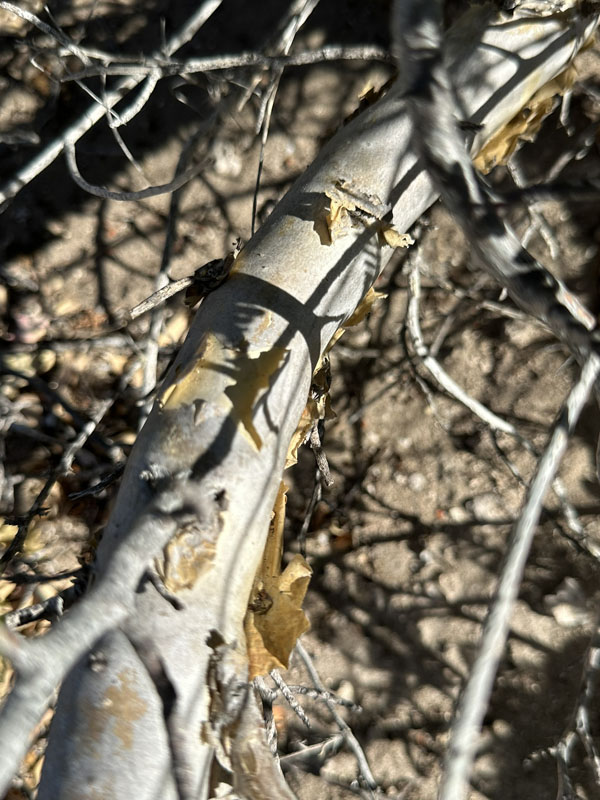
The bark of Little-leaf Elephant Tree is variable, from silvery gray to yellowish or almost orange, but its peeling bark helps with ID.
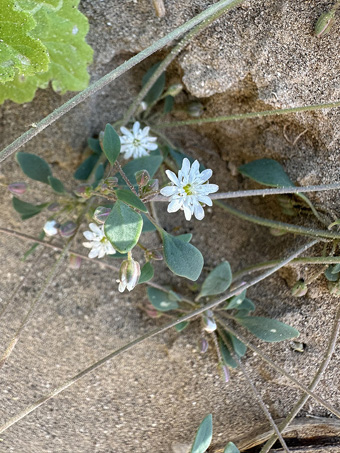
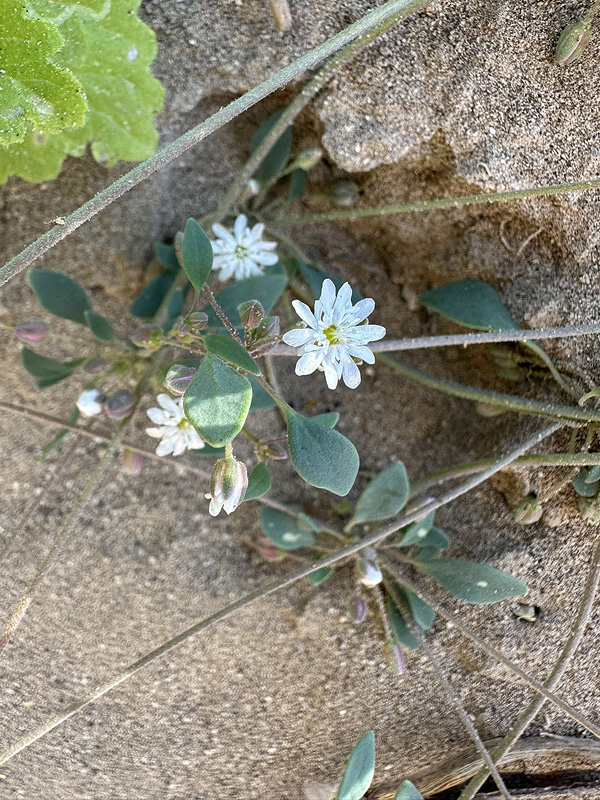
Thick-leaf Drymary (Drymaria holosteoides var. holosteoides) thriving in the shade.
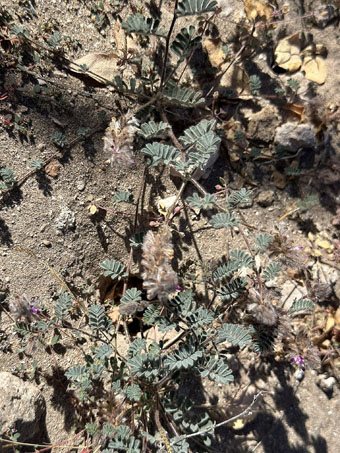
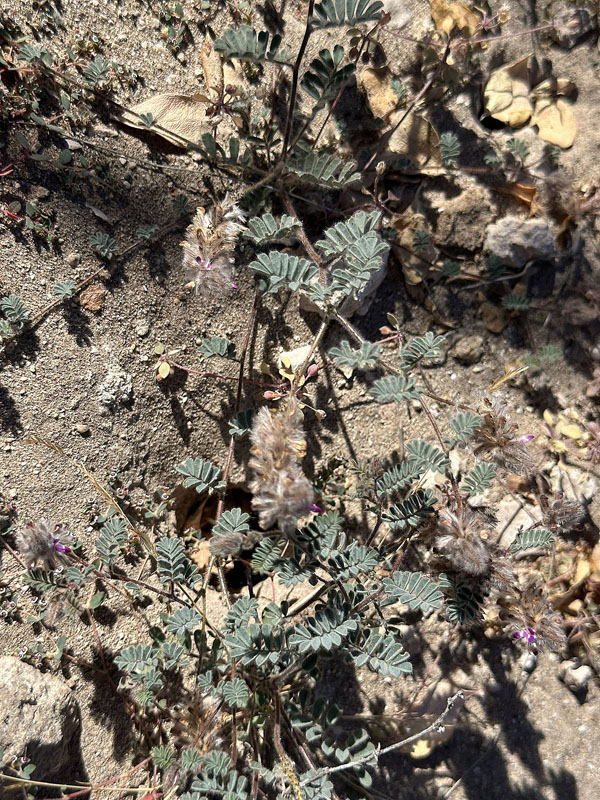
Silky Dalea (Dalea mollis) is a low perennial herb commonly found on marine terraces around Mulegé.
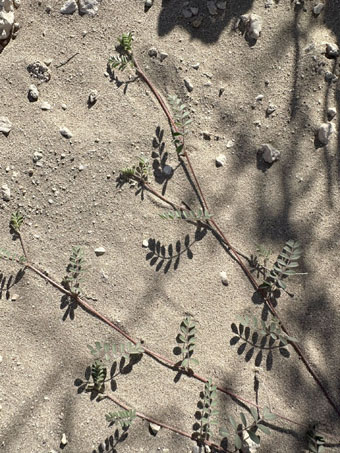
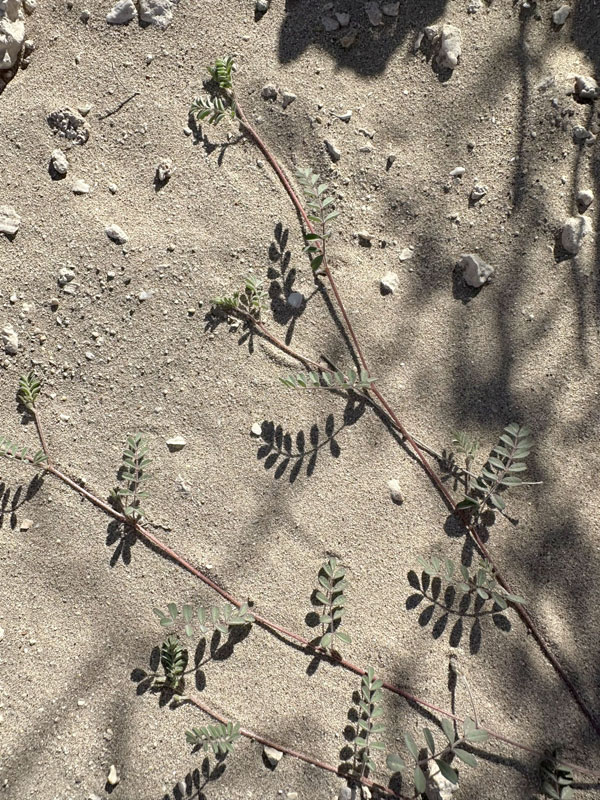
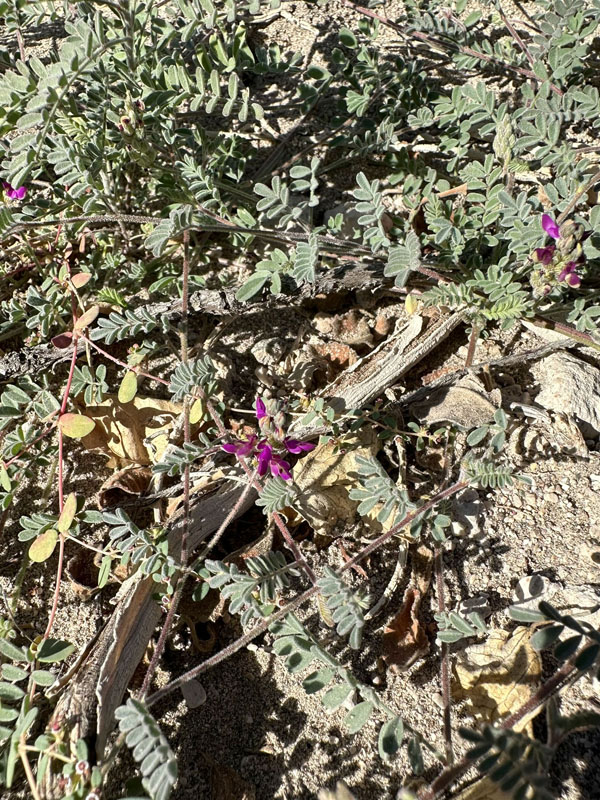
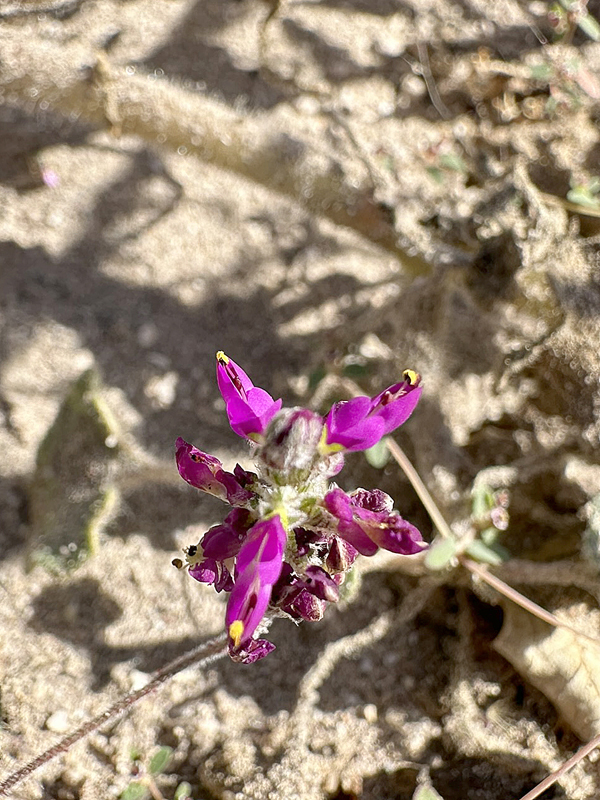
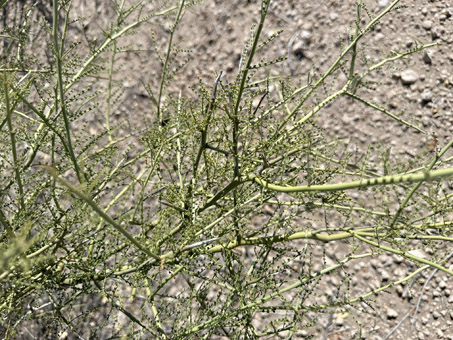
The stems & branches of the prostrate herb Peninsular Marina (Marina peninsularis) are very fine, ≤1 mm D.
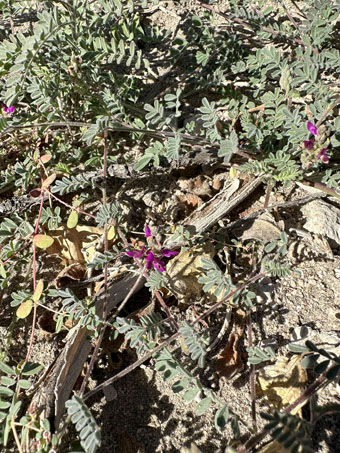
To date, in the Mulegé area, I have only found this species at PC where it is common in sandy soils in a variety of areas on the promontory.
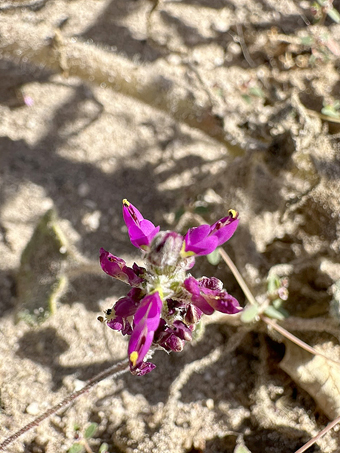
Peninsular Marina (Marina peninsularis). The banner petals are 3 mm W x 4 mm L and reniform.
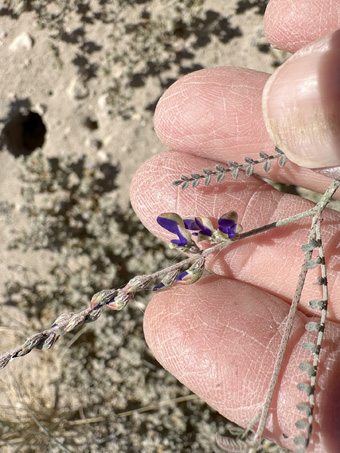
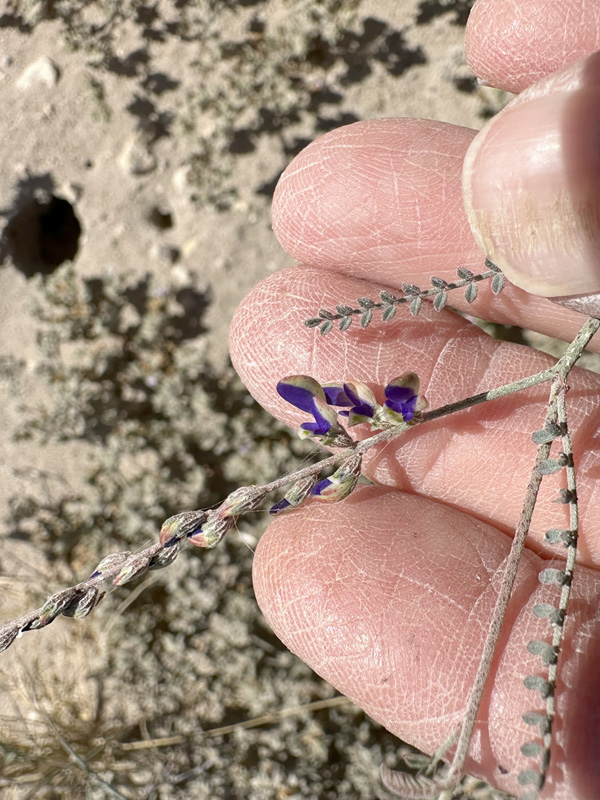
Inflorescence & leaves of Parry Dyeweed (Marina parryi).
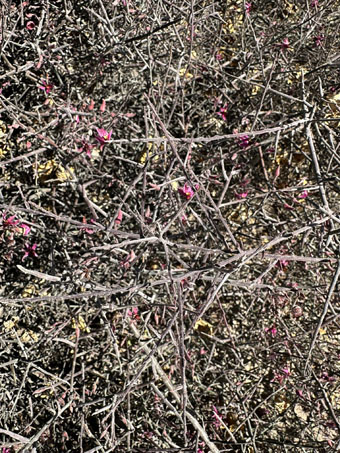
White Ratany (Krameria bicolor).
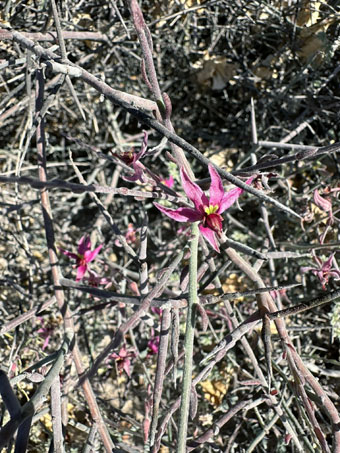
White Ratany (Krameria bicolor).
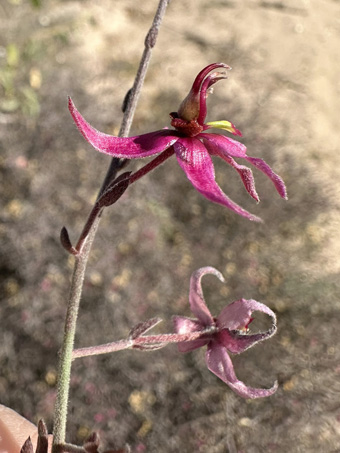
White Ratany (Krameria bicolor).
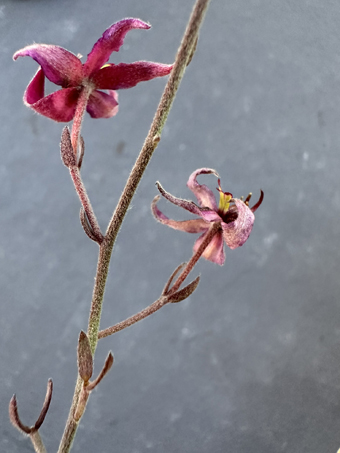
White Ratany (Krameria bicolor).
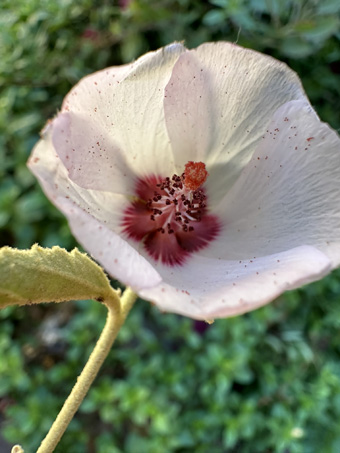
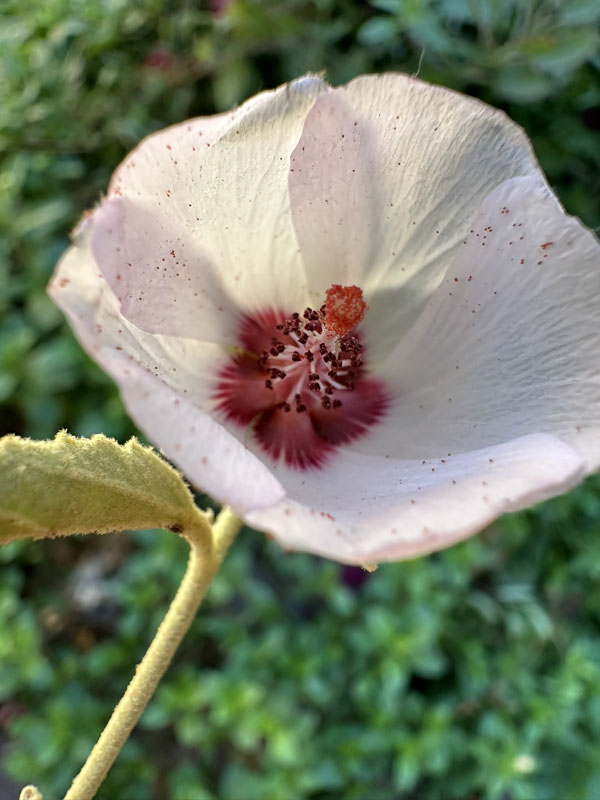
Rock Hibiscus (Hibiscus denudatus). Five petals are 1-2 cm L. Spots of pollen can be seen on them here.
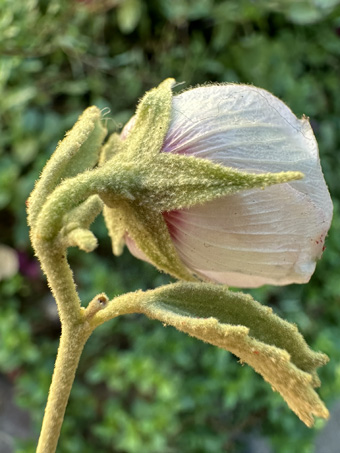
Herbage is covered with dense gray to yellowish pubescence. Leaves are up to 3 cm L.
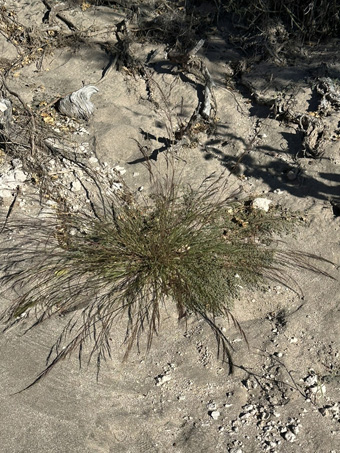
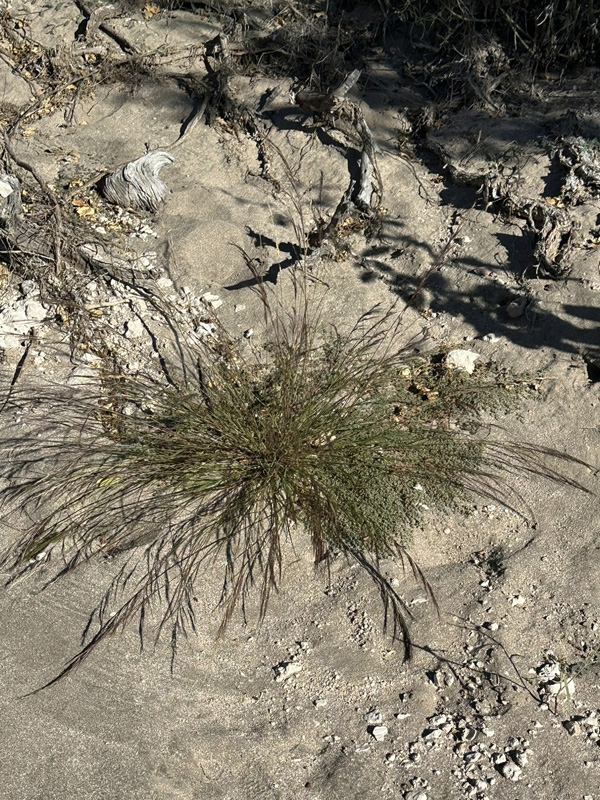
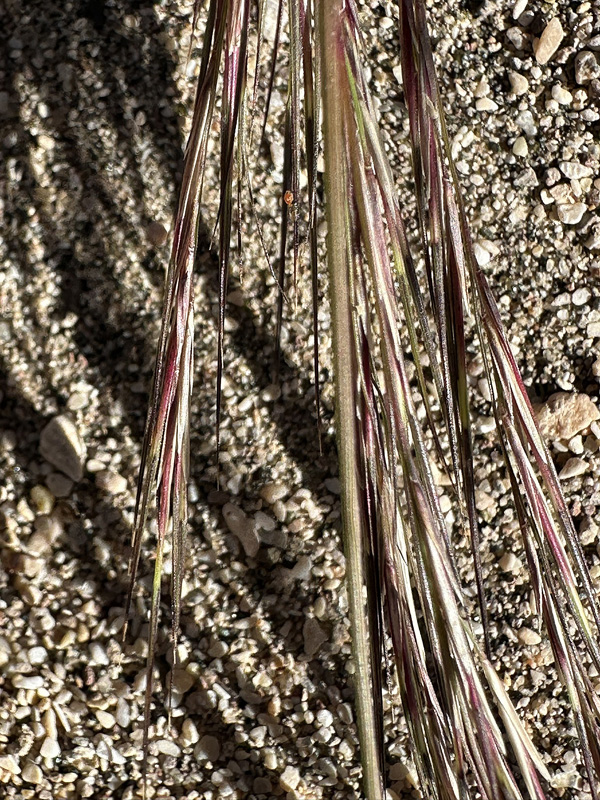
Six-weeks Three-awn (Aristida adscensionis).
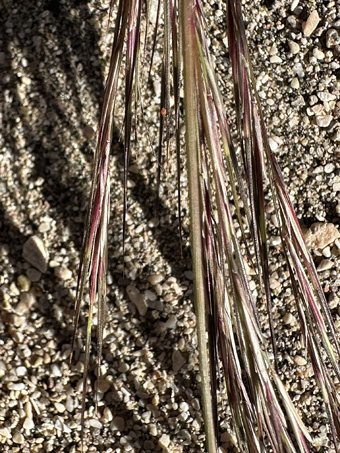
Six-weeks Three-awn (Aristida adscensionis).
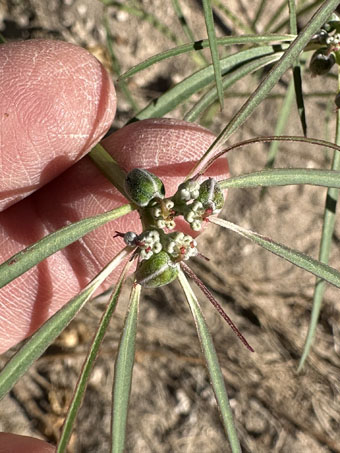
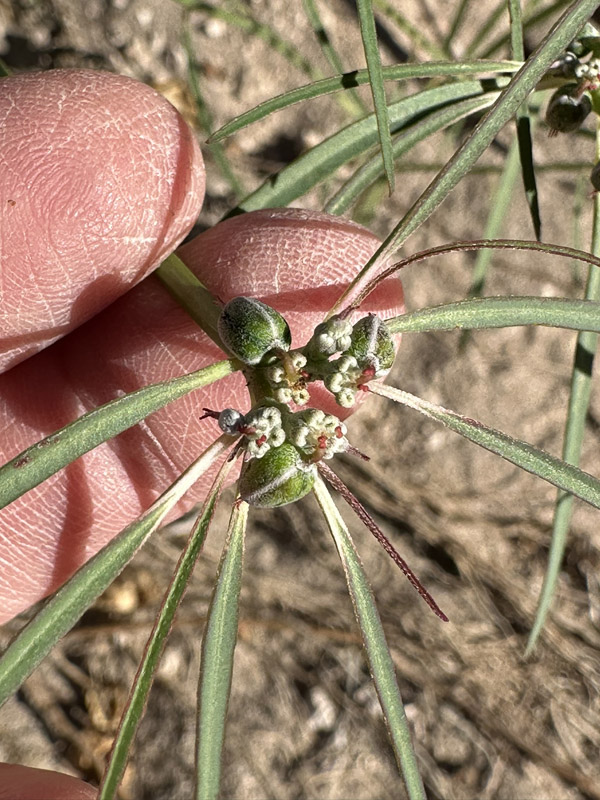
Beetle Spurge (Euphorbia eriantha) is a slender annual 30-50 cm H. Lanceolate leaves are ±5 mm x 6 cm with flowers & fruit clustered in the axils. The±5 nn K fruit does somewhat resemble a beetle.
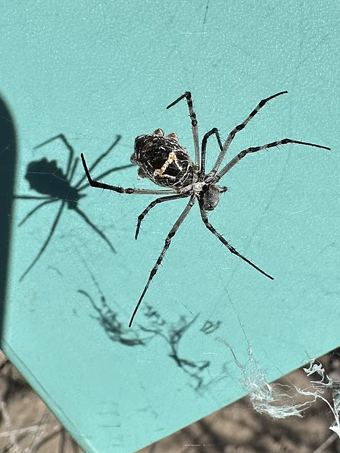
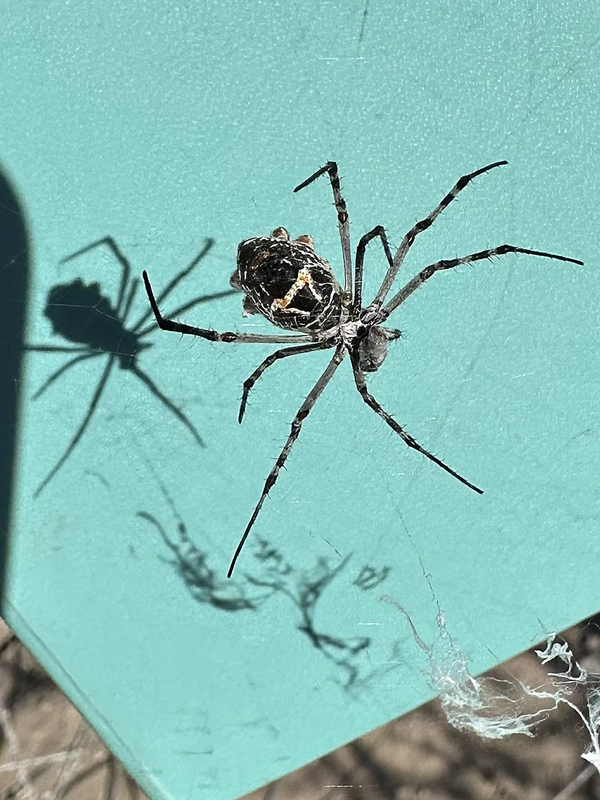
This female Silver Argiope or Silver Garden Spider (Argiope argentata) was in its web at about 1 m above the ground between two shrubs. I almost walked through it. Body: ±12 mm L.
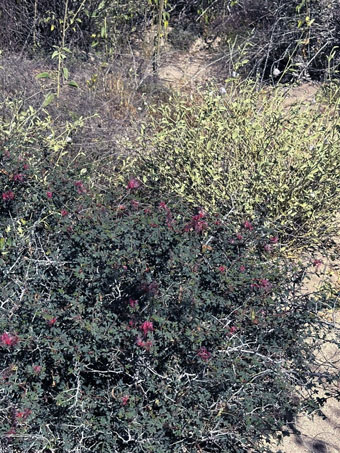
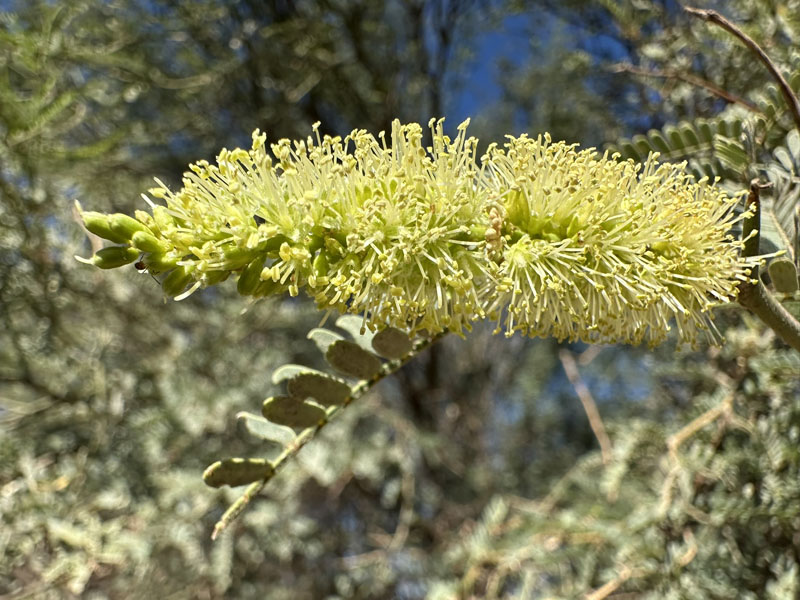
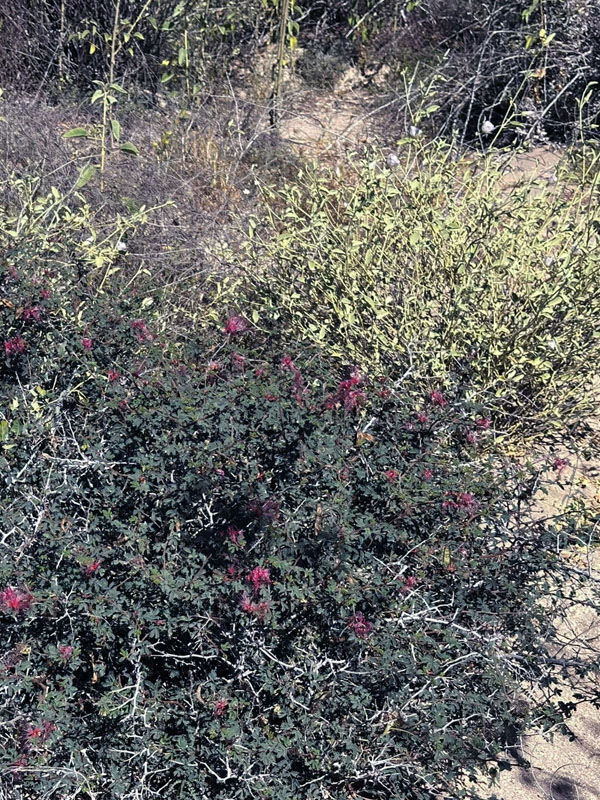
Pink Fairyduster (Calliandra eriophylla) is a woody shrub 0.3-1.5 m H x 0.9-1.2 m D.
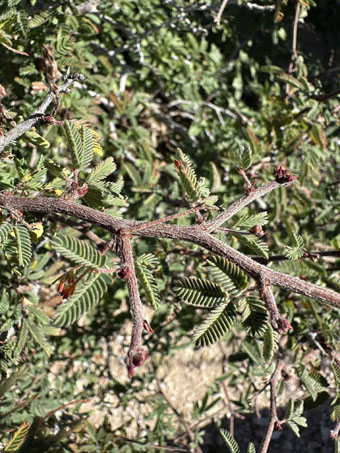
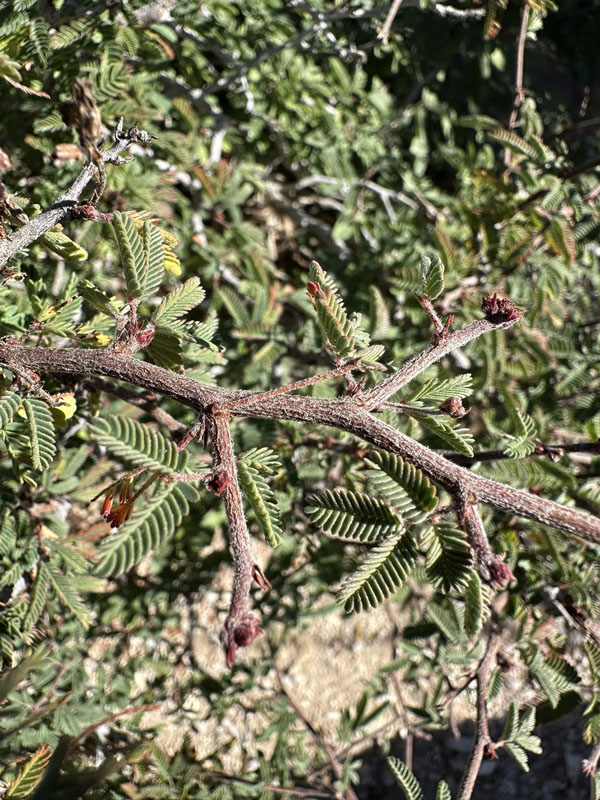
The branchlets and bipinnate leaves of Pink Fairyduster are pubescent, the fine hairs appressed.
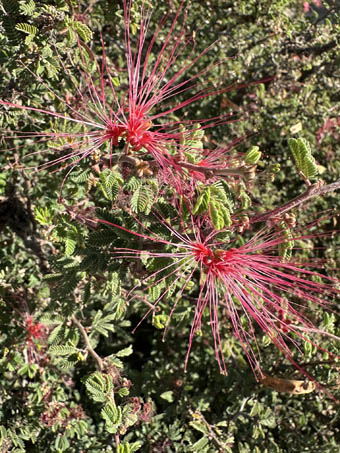
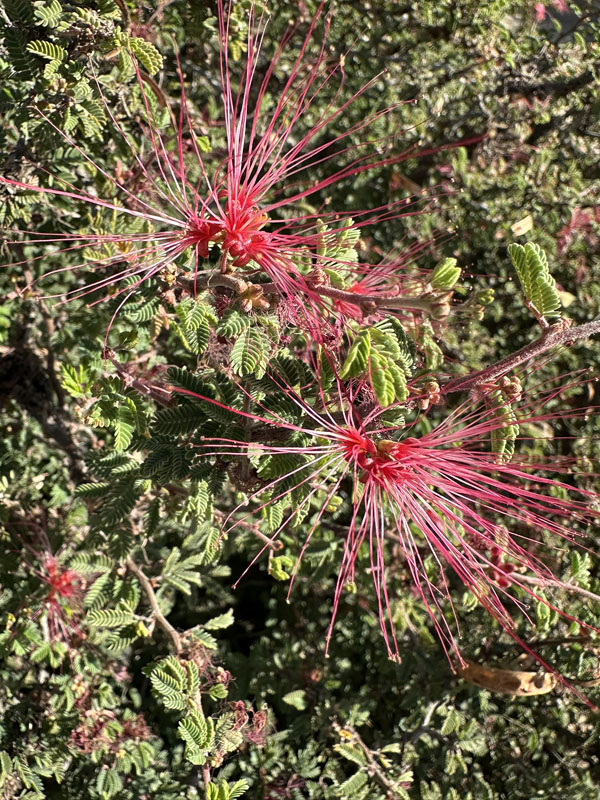
The globose inflorescence of Pink Fairyduster is 2-5 cm D, packed densely with pink flowers that have long pink-white stamens 18-22 mm L.
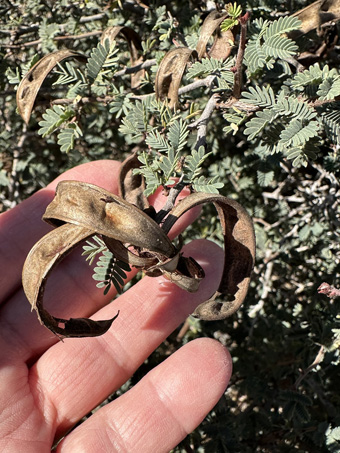
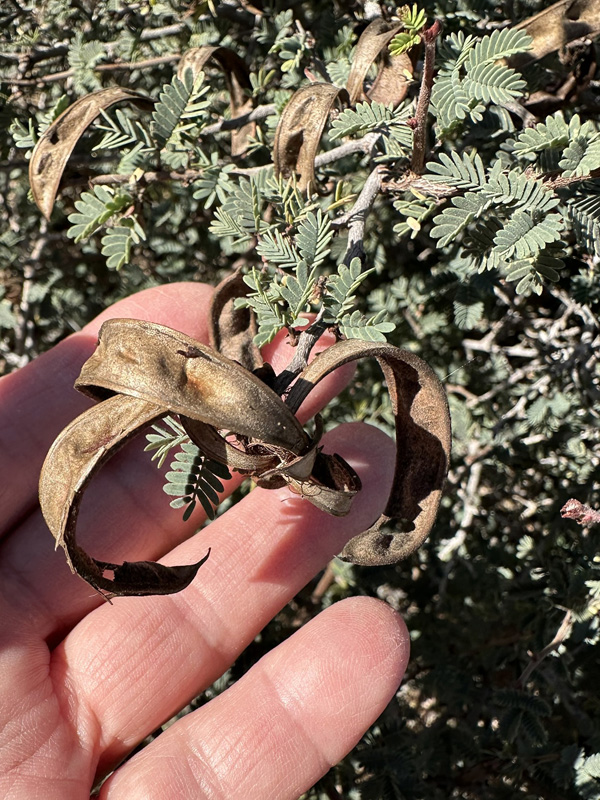
The densely pubescent, velvety fruit of Pink Fairyduster are 3-7 cm L x 3-7 mm W. One to six obovate seeds are 6-7 mm L.
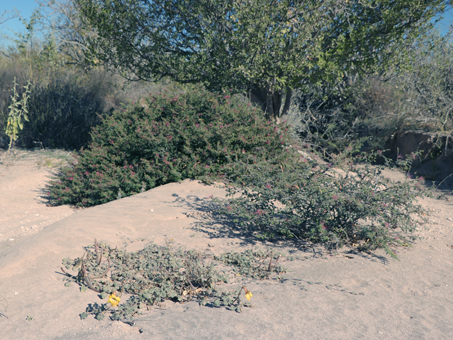
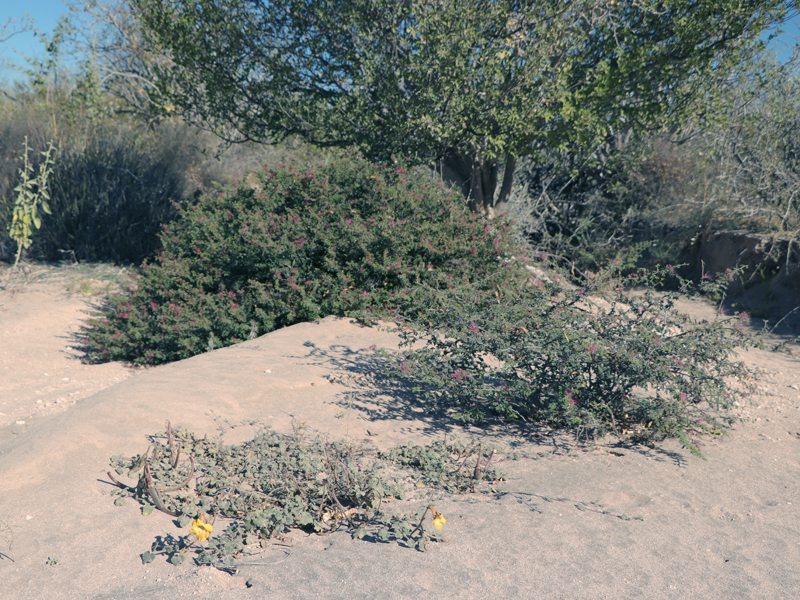
Pink Fairyduster (rear) and Devil's Claw (foreground). Devil's Claw is very common in the sandy soils all around Punta Chivato.
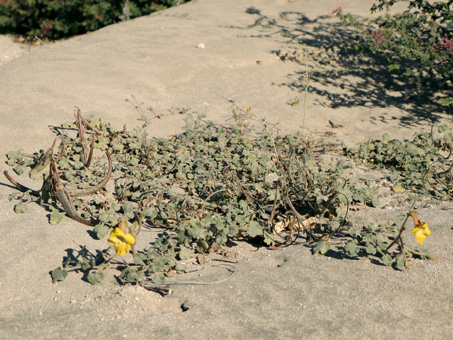
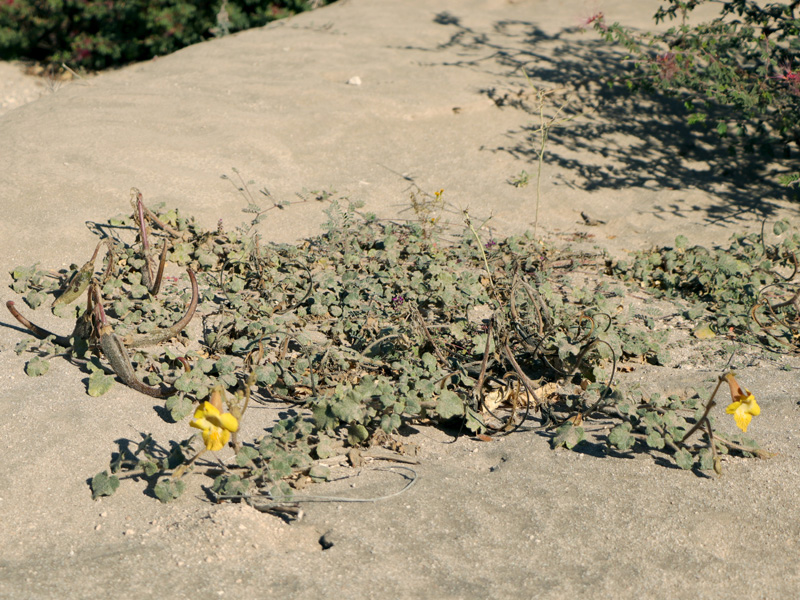
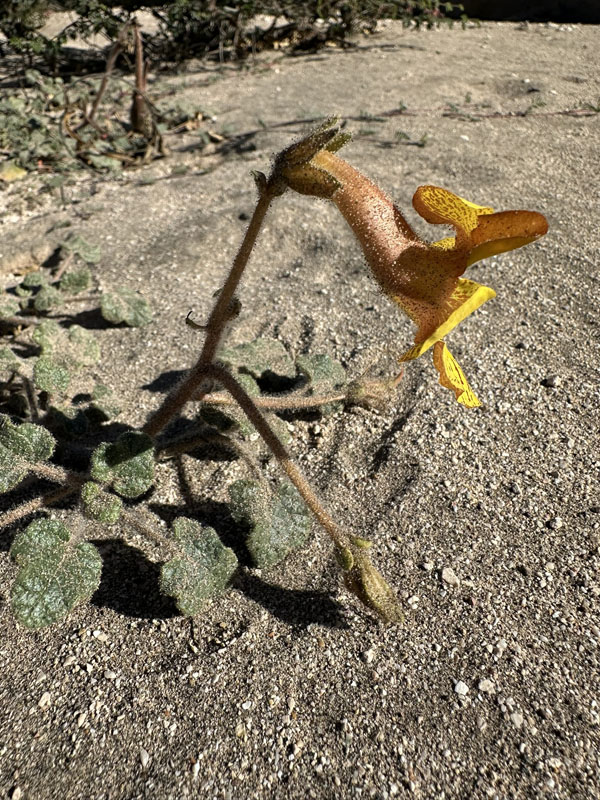
Devil's Claw (Proboscidea altheaifolia) is a trailing perennial vine with radiating stems up to 1 m L.
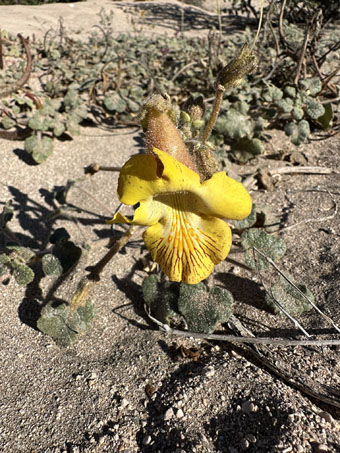
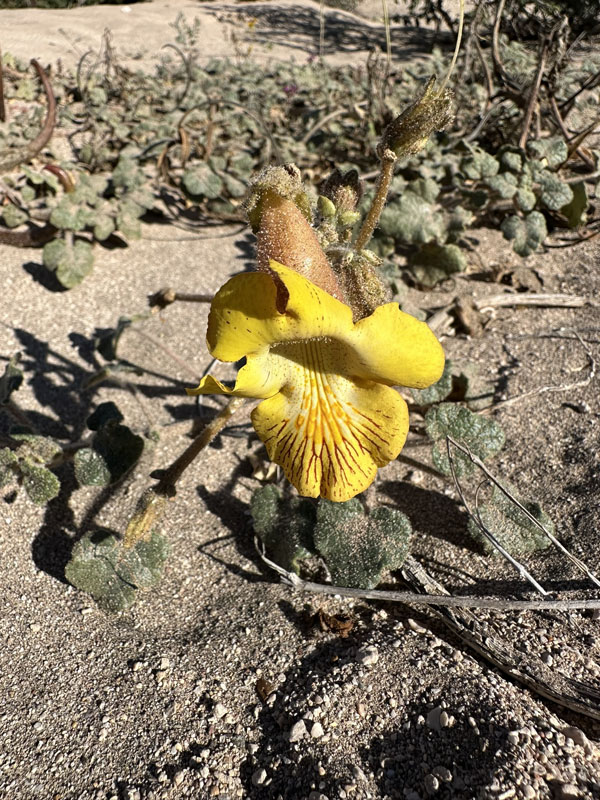
This large, showy Devil´s Claw flower is c. 5 cm L. The herbage & corolla are glandular-hairy.Both dry & immature fruit can be seen in the background.
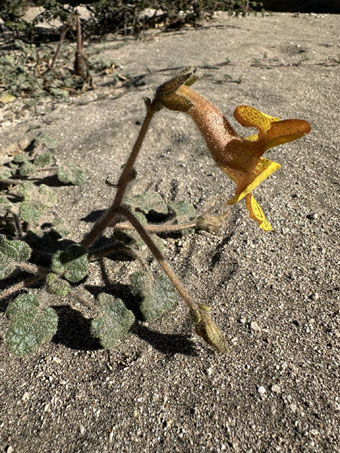
The claw (horn) shaped fruit is up to 20 cm L that, at maturity, splits wide open into two dry, sharp tipped claws that readily grab onto shoes & hooves.
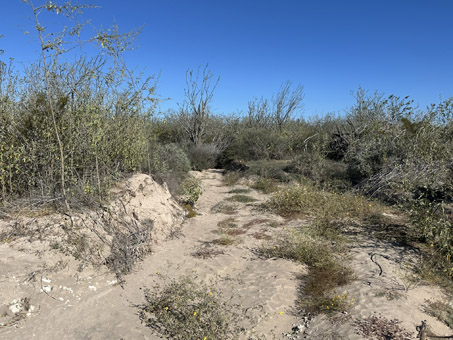
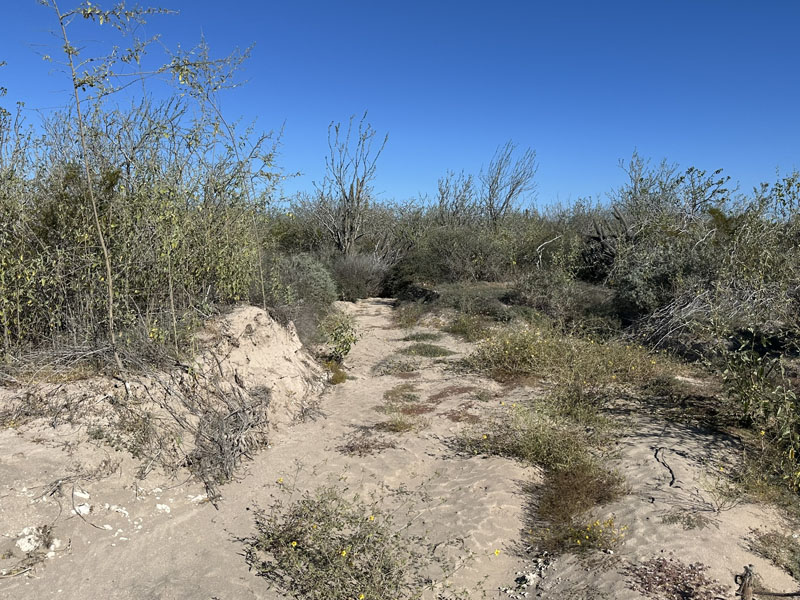
Small wash cutting through the dense scrub towards the main road. The ancient seabed is criss-crossed by such features and growth along them is usually much denser.
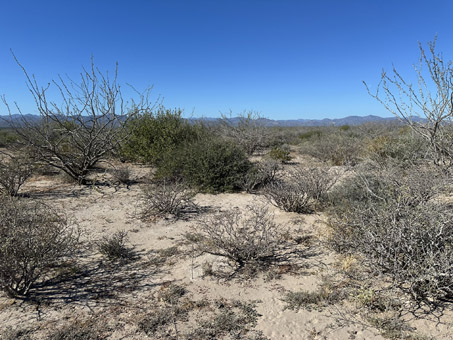
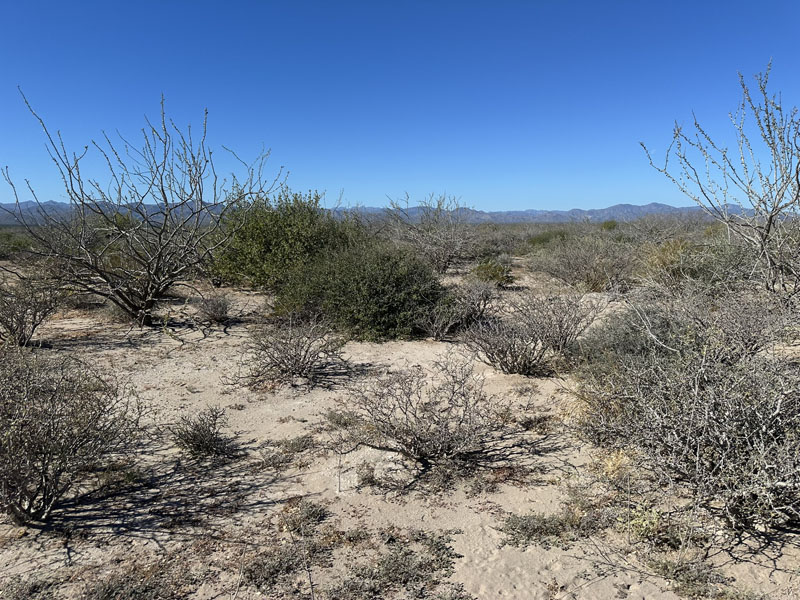
Moving westward away from the road, the dense scrub opens up and there is more open space.
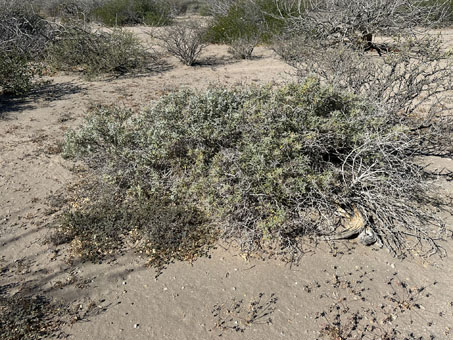
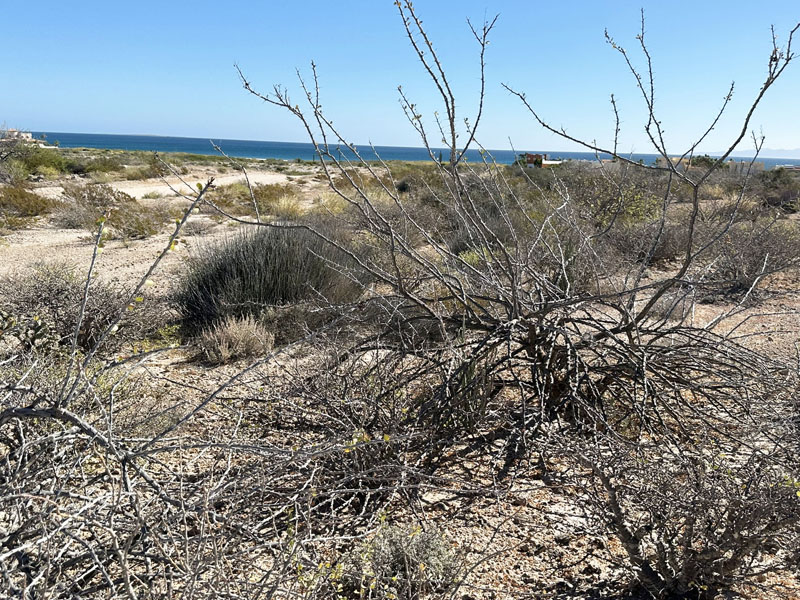
Same area as previous photo. Large, mostly well-spaced shrubs dominated. However moving away from the road, the flat area starts to dip down and this ridge begins to be more wind-exposed, as demonstrated by a rapidly decreased plant height.
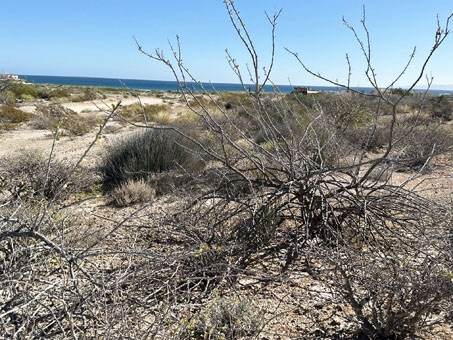
Here, we left the flatter area shown in the last two images and move onto a rocky, shelly ridge. The ground was mostly composed of rock and limestone outcrops and most of the plants were very dry.
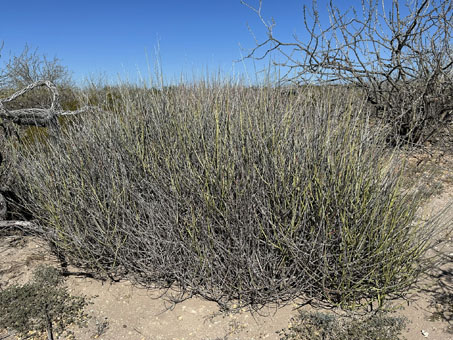
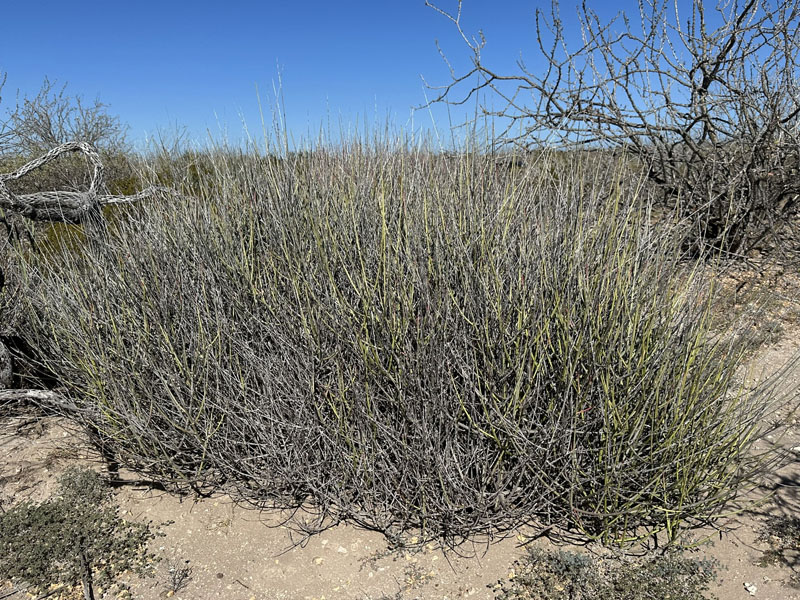
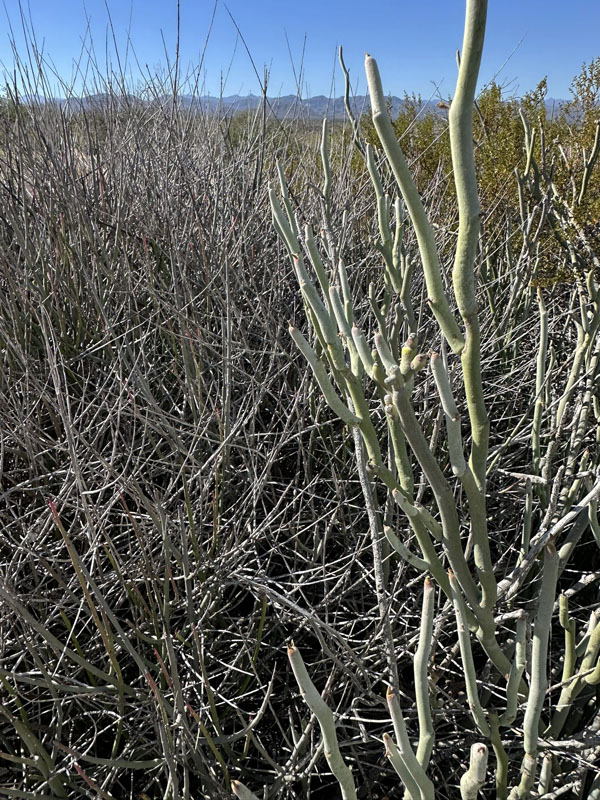
Espadín (Euphorbia ceroderma). See my previous post from May 2025 for details about this species.
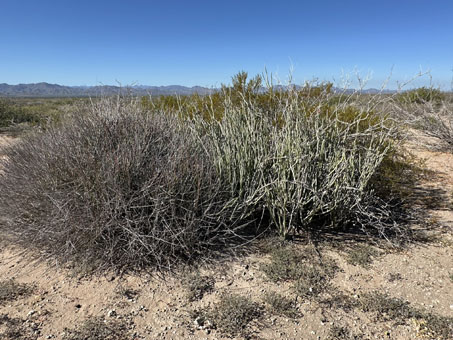
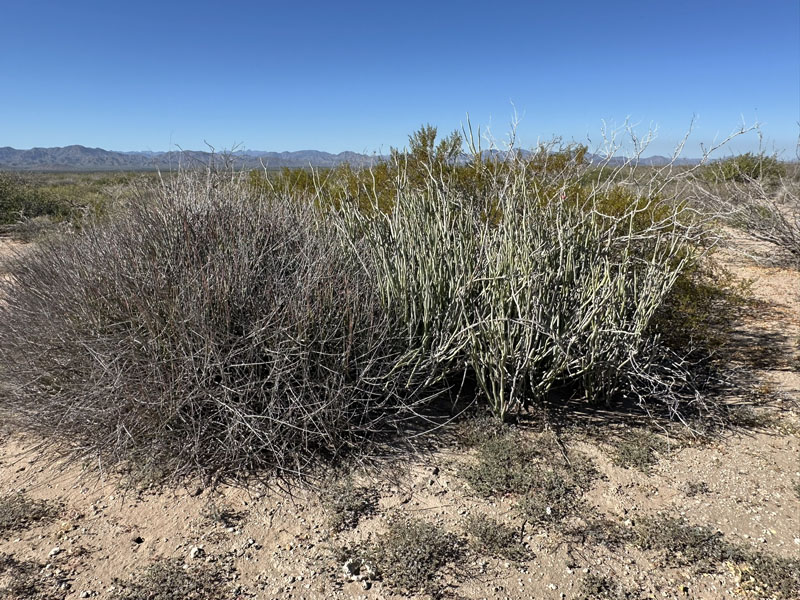
Espadín (left) and Candelilla (Euphorbia lomelii) at right.
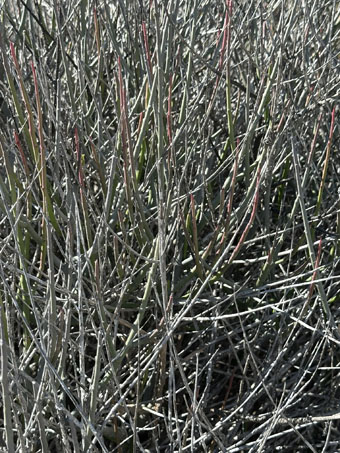
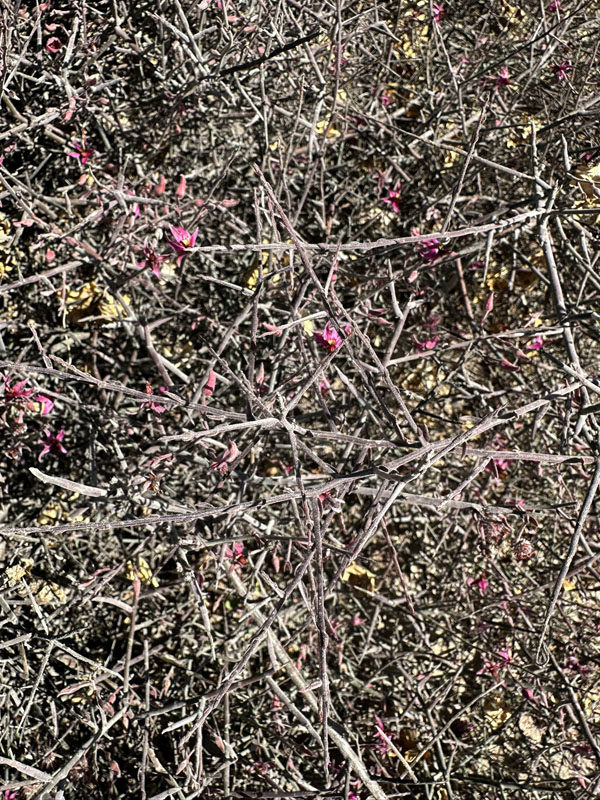
The stiff, woody stems of Espadín are spinose, c. 8 mm D & form a dense intertwined clump to 1.75 m H.
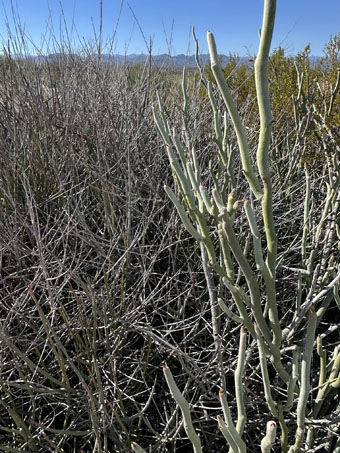
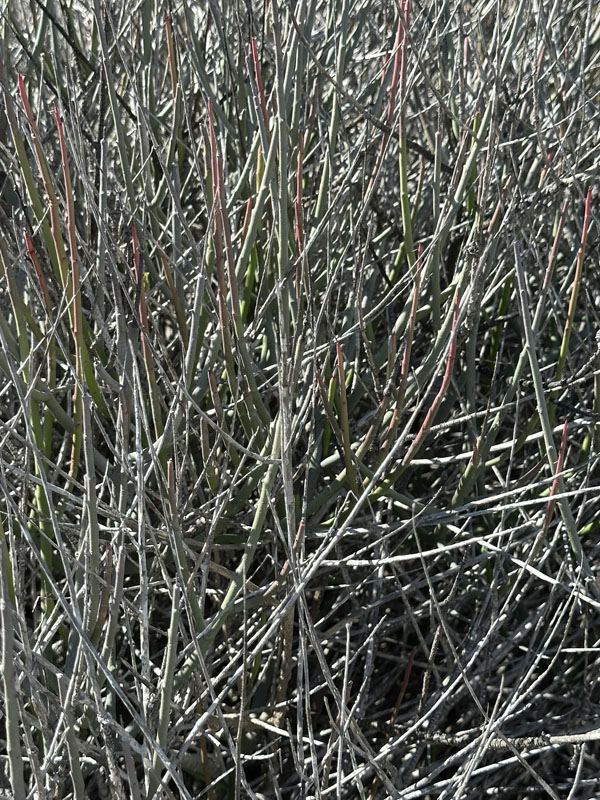
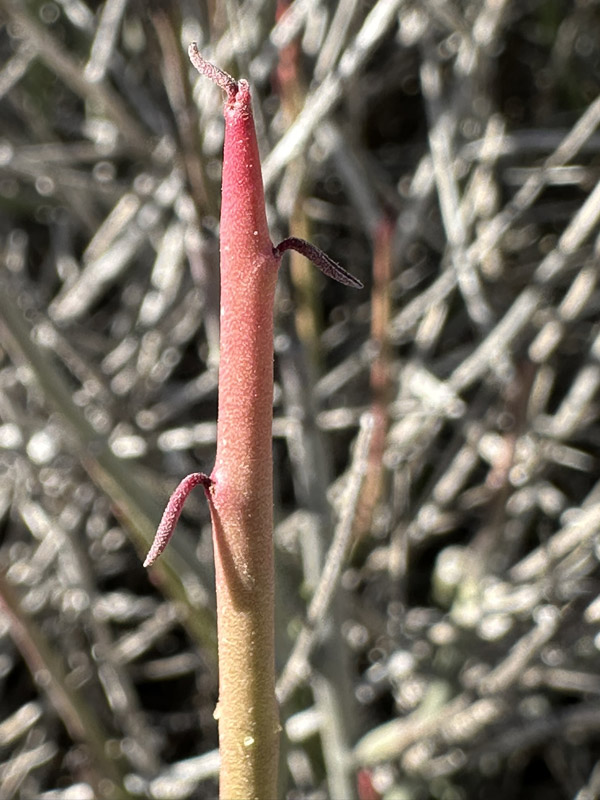
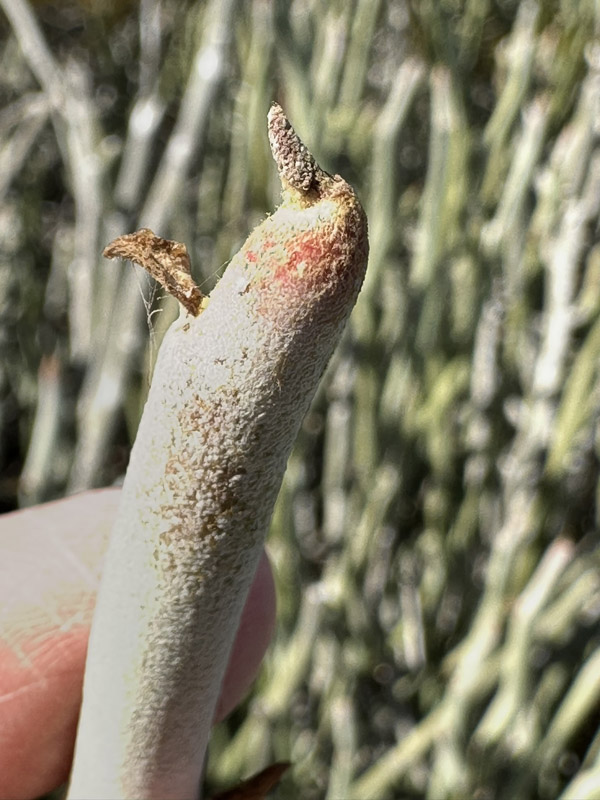
Espadín and Candelilla stems for comparison. Both have a latex sap and ephemeral leaves.
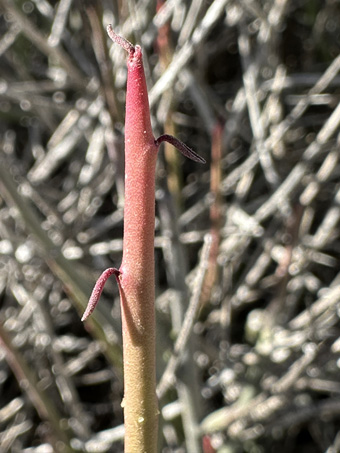
Espadín stems are up to ±1 cm D & leaves are filiform c. 10-15 mm L x <2 mm W.
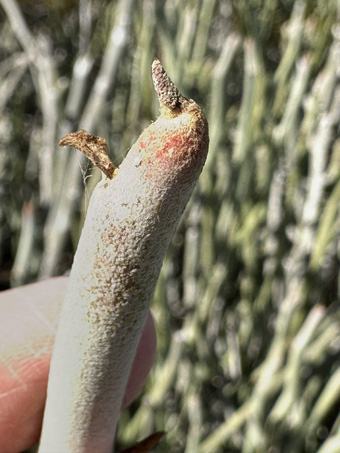
Candelilla stems are up to 1.5 cm D & covered with a waxy coat. Leaves are c. 1-2 cm L x c. 2 mm D.
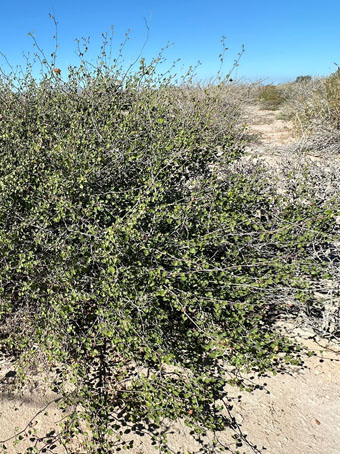
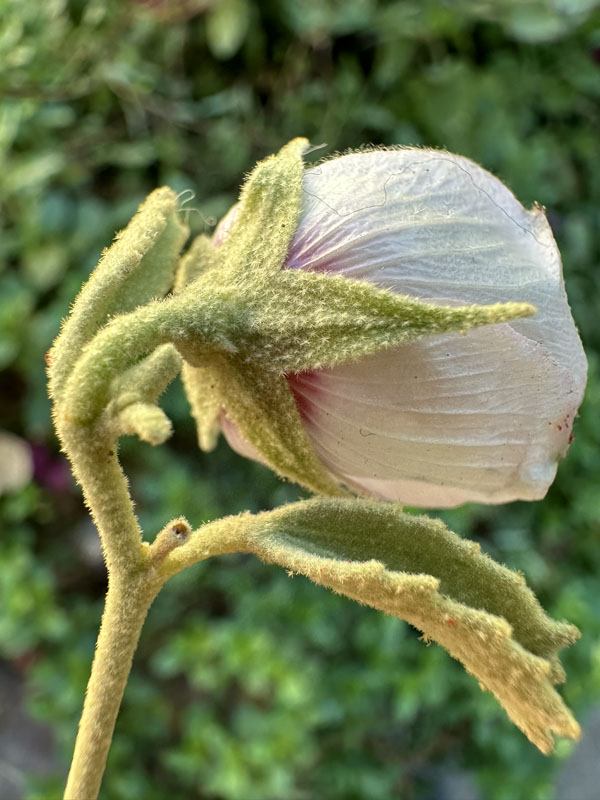
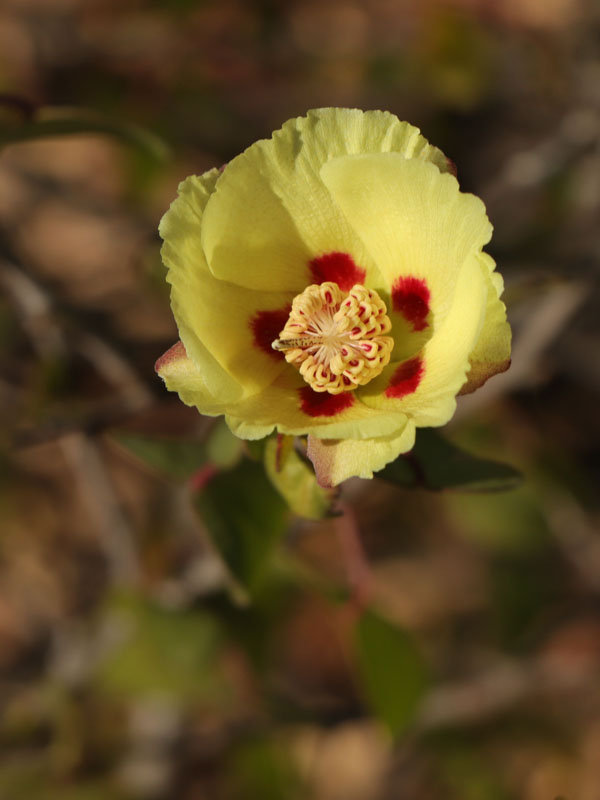
San Marcos Cotton (Gossypium armourianum). More info. about this species is in my May 2025 post.
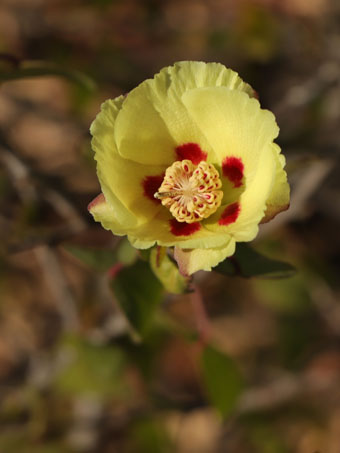
San Marcos Cotton flower is 3.5-4 cm D.
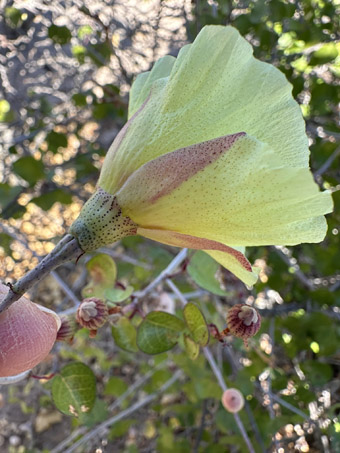
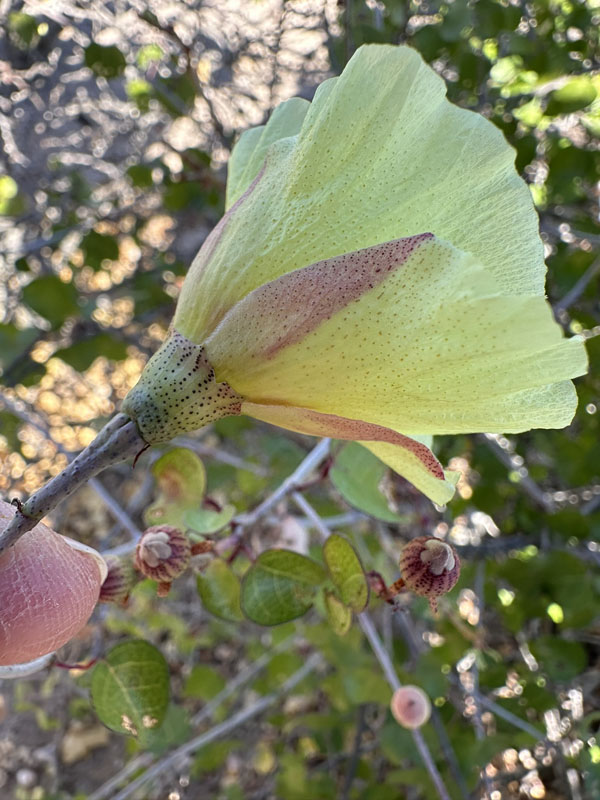
Underside of San Marcos Cotton flower and buds.
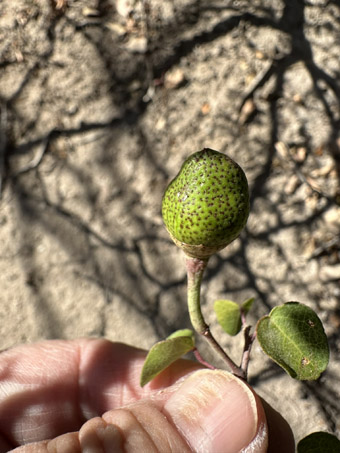
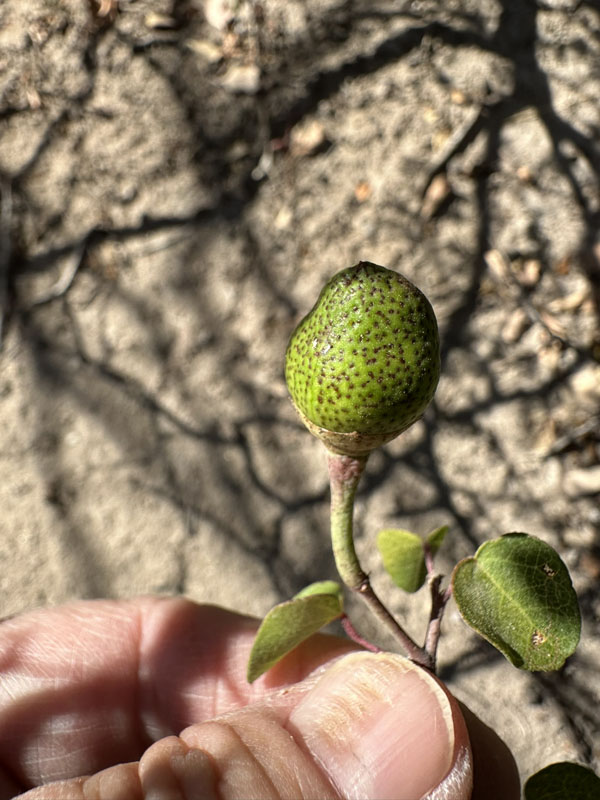
Fruit & leaves (unlobed) of San Marcos Cotton.
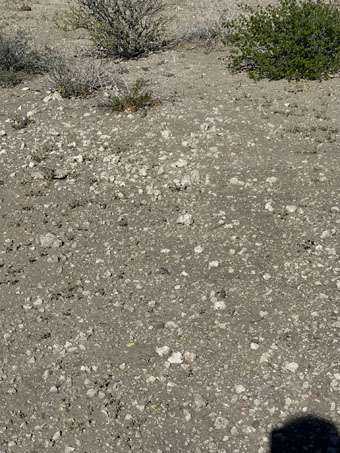
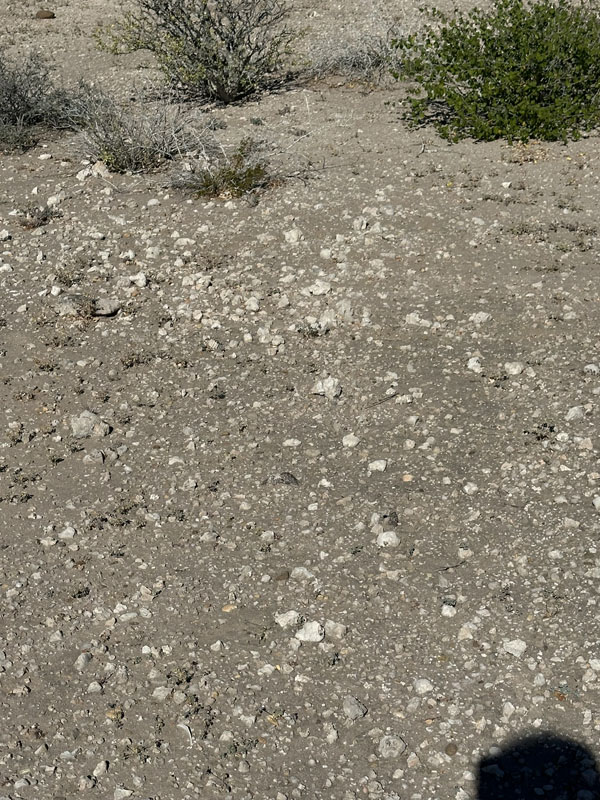
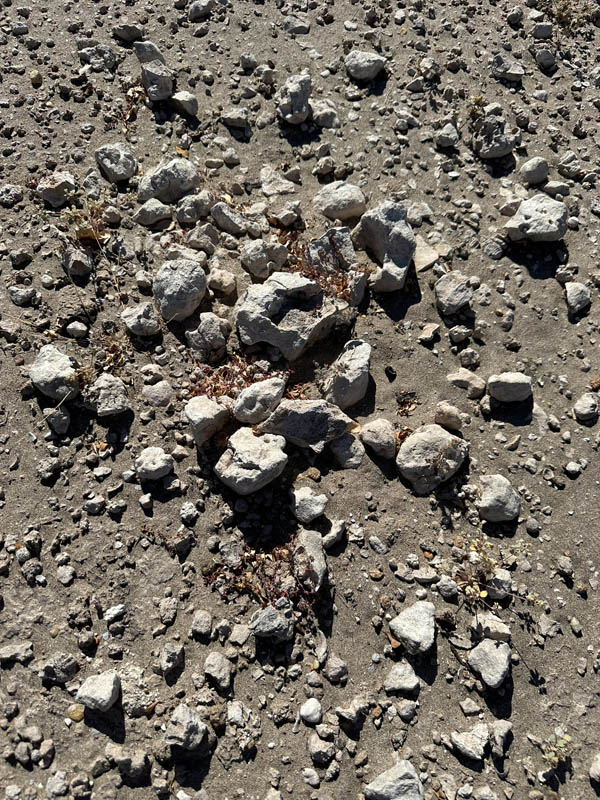
About 20-50 m from the road, there are large areas where the grayish marine terrace soil is bare.
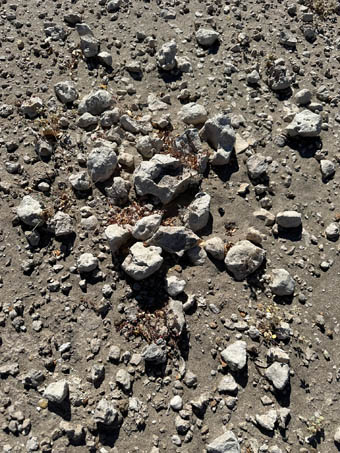
A closer view of the pavement shows small, irregular pieces of shell & limestone embedded in sand & silt.
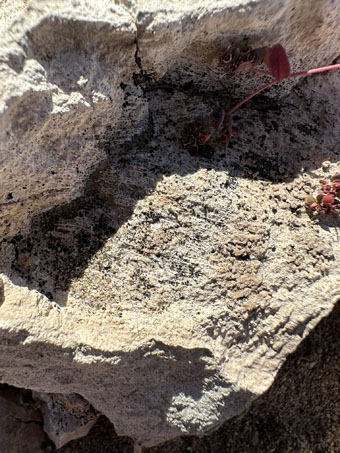
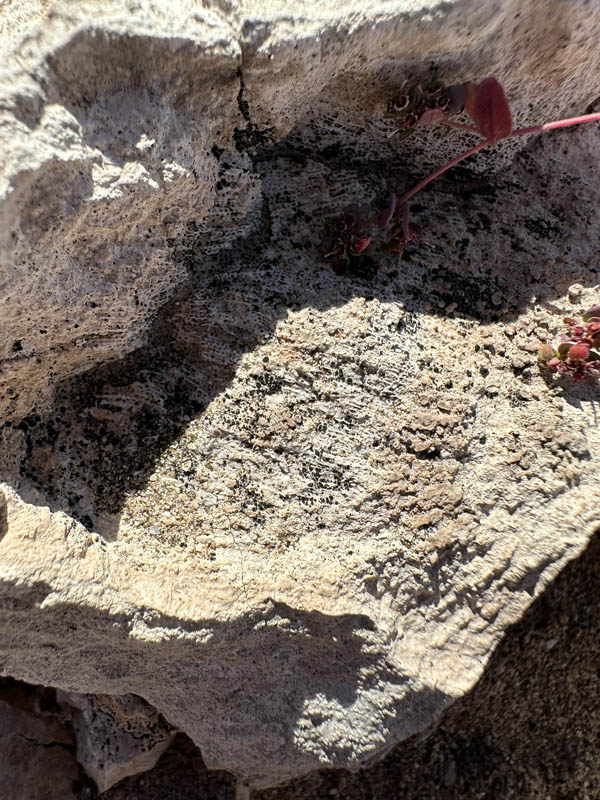
A piece of limestone about 30 cm D. I was curious about the holes and black dots.
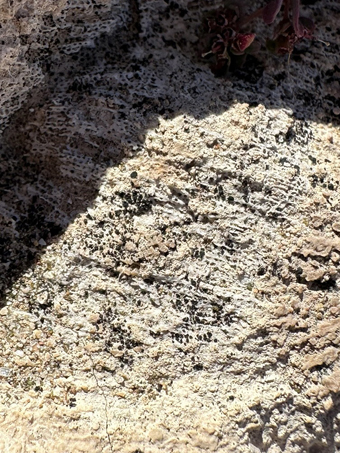
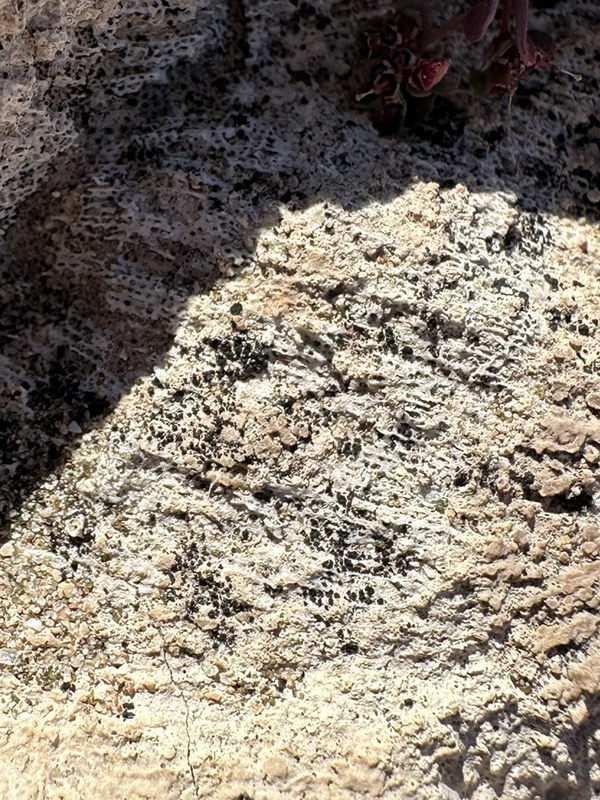
A closer look revealed the holes were the grain of the limestone & there were pinhead-sized black lichens.
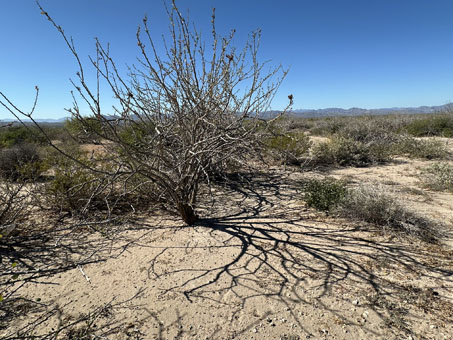
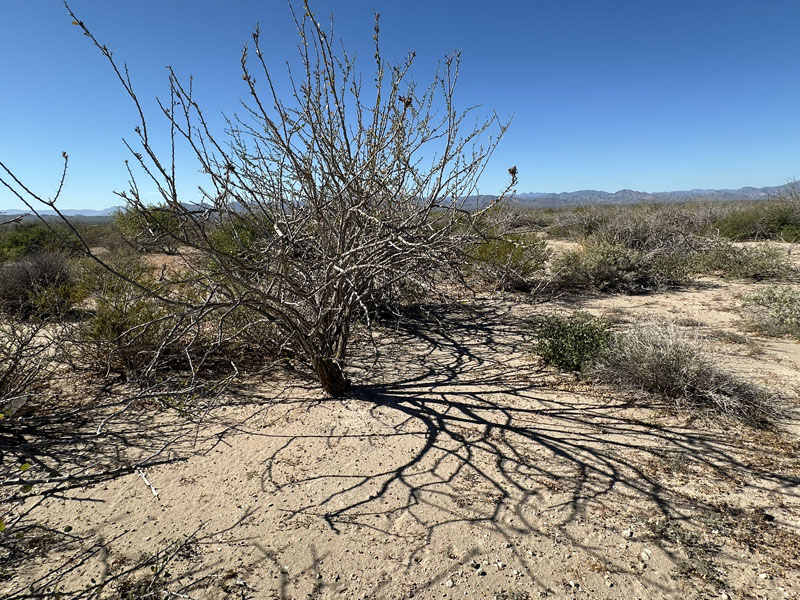
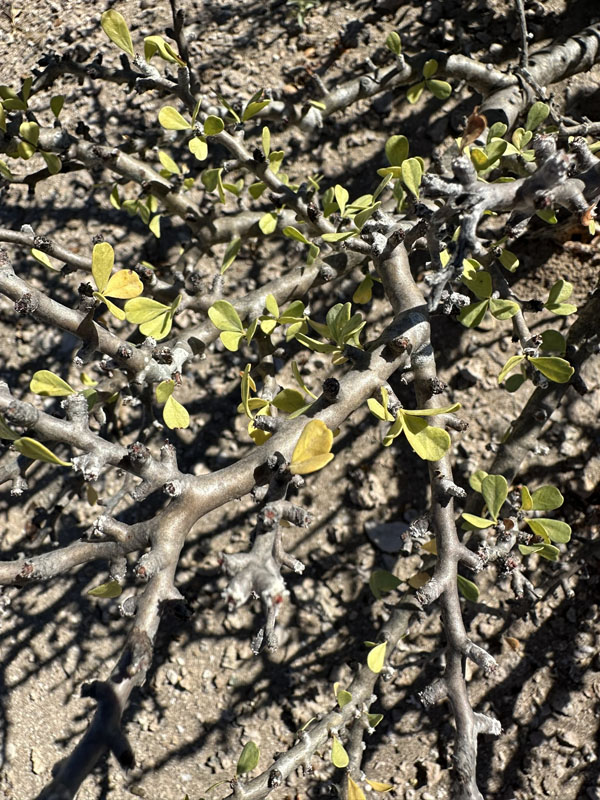
An interesting phenomenon on the exposed marinebed was that there were tall, upright Palo Adáns(Fouquieria diguetii) like this one...
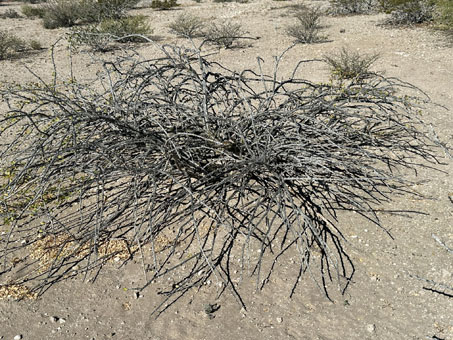
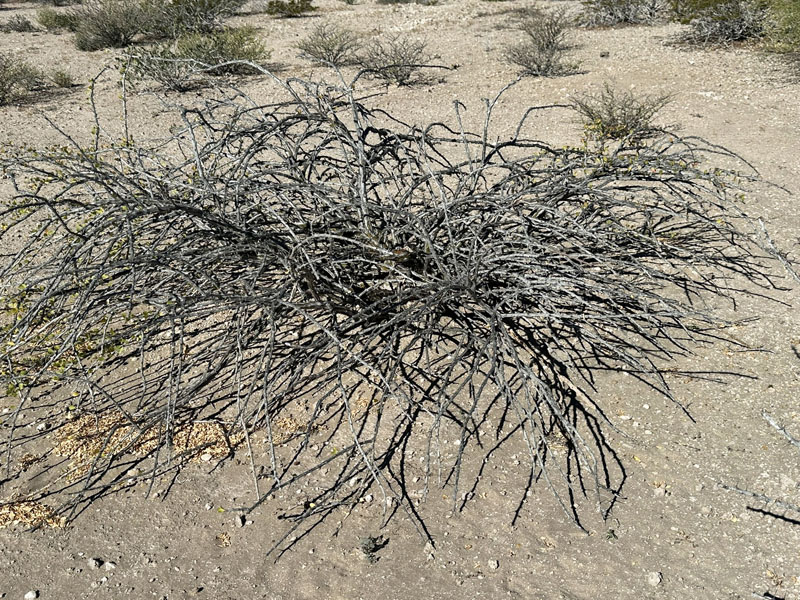
...and within just meters, there were (wind) prostrated ones like this. Other species showed this effect as well as the plant cover decreased.
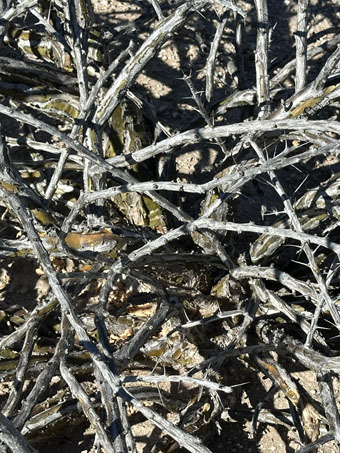
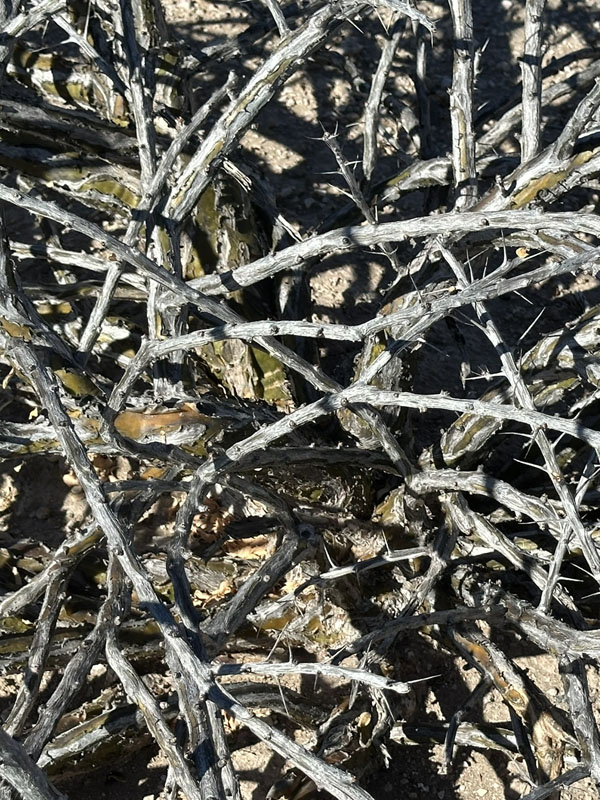
Branches of the prostrated Palo Adán.
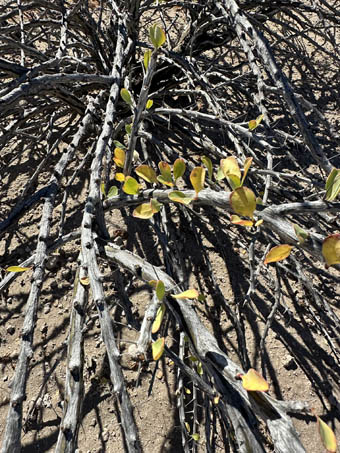
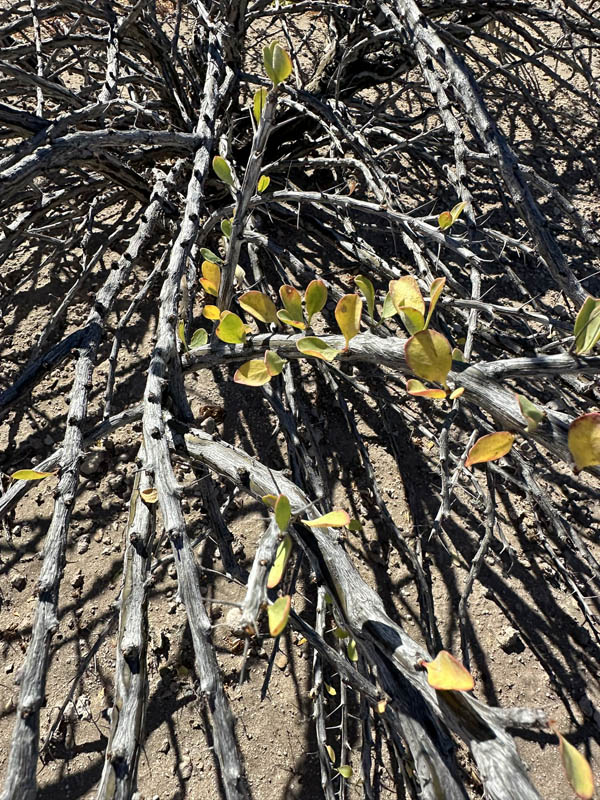
A prostrated Palo Adán with some leaves.
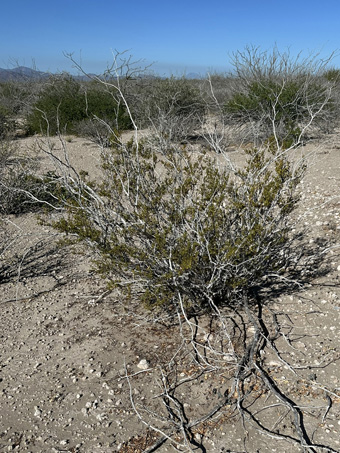
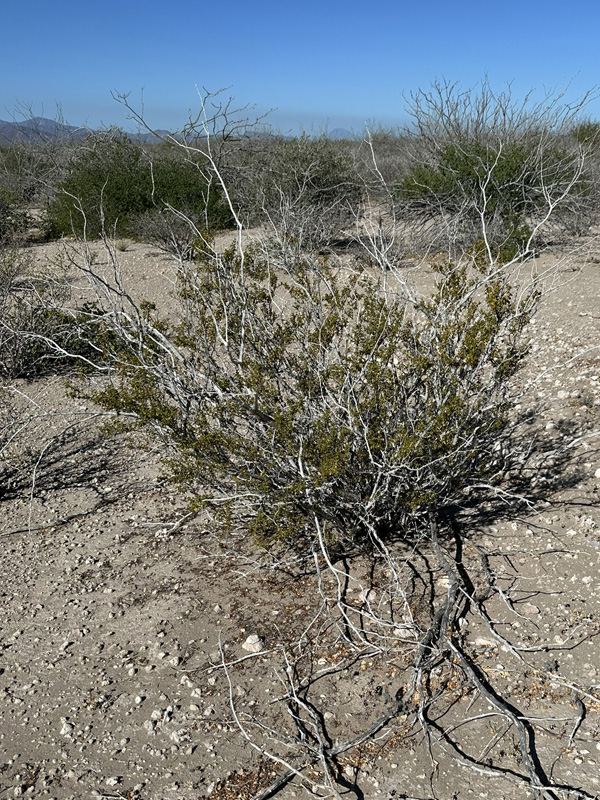
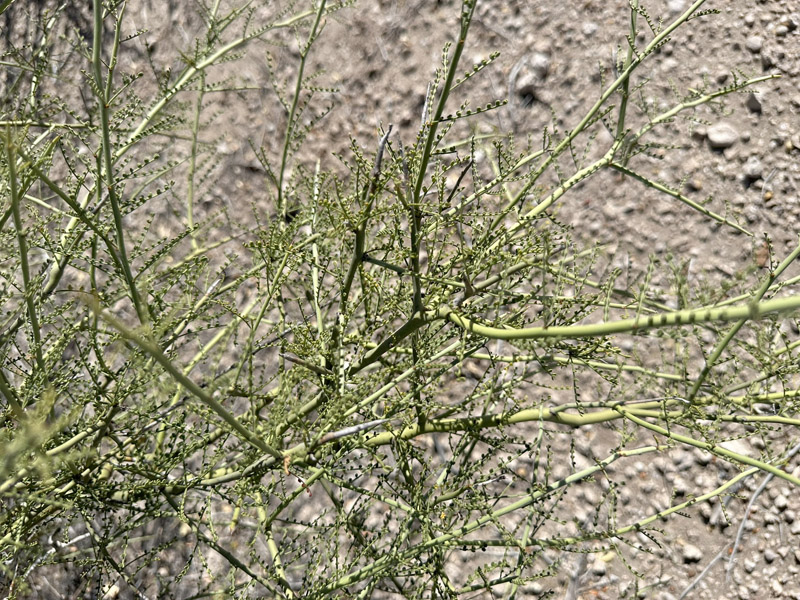
Creosotebush (Larrea tridentata) shedding branches.
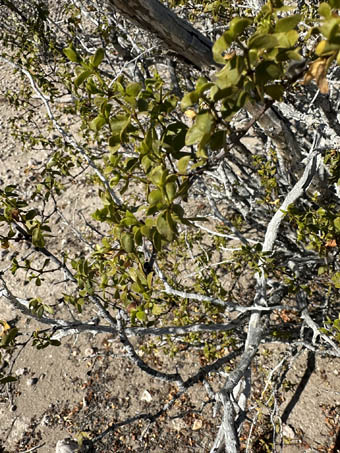
Closer view of Creosotebush leaves and branches.
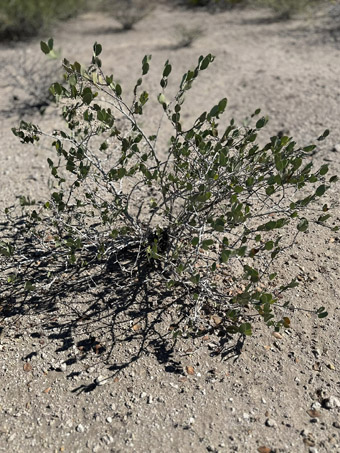
A very small, open Jojoba (Simmondsia chinensis).
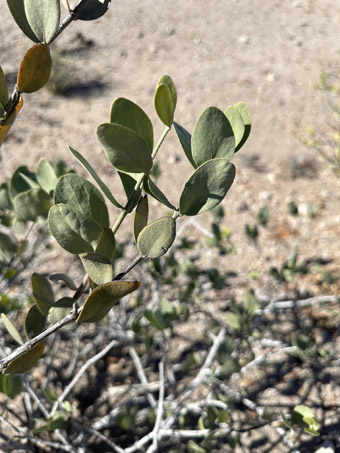
Jojoba's leaves are vertically-oriented & leathery.
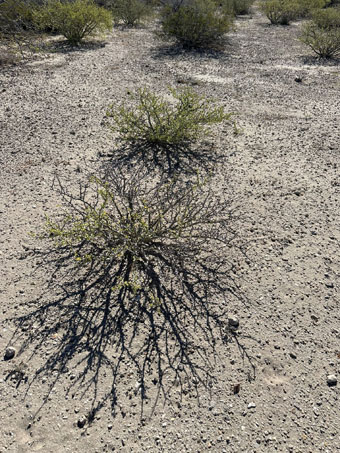
Low, prostrating Limberbush (Jatropha cuneata).
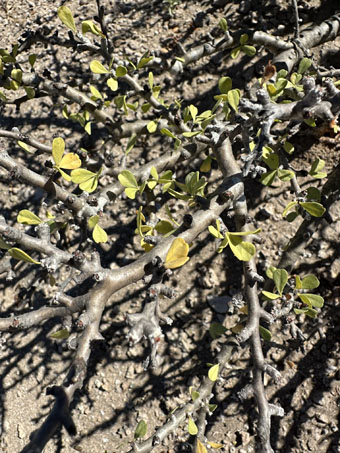
Closeup of limberbush with its wedge-shaped leaves.
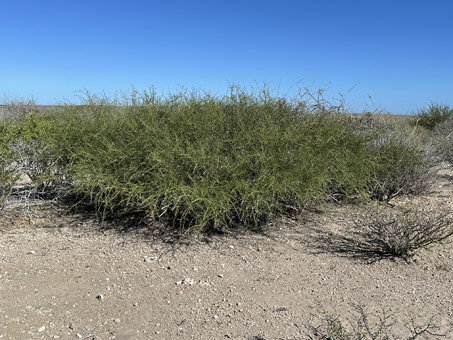
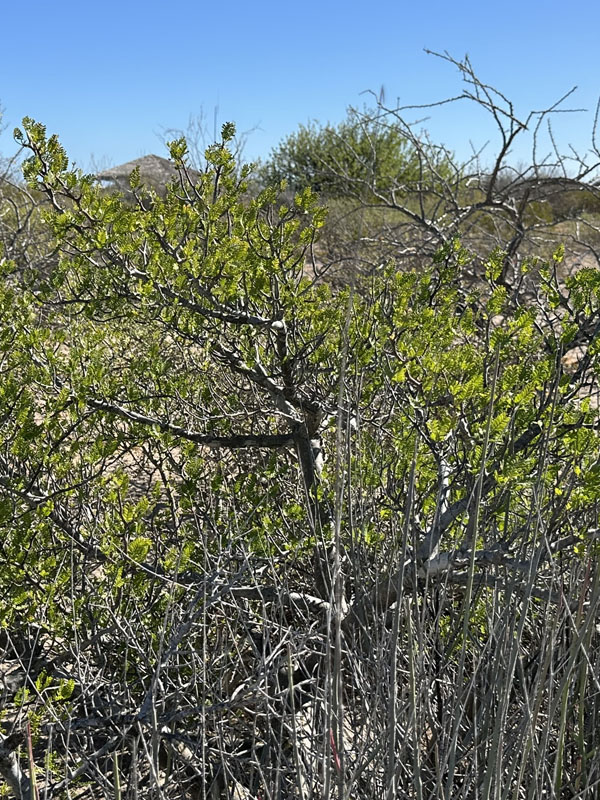
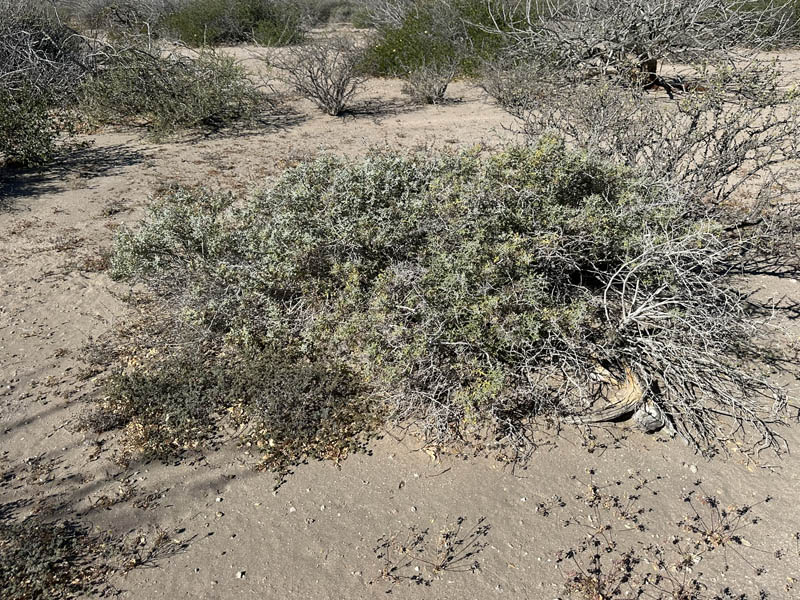
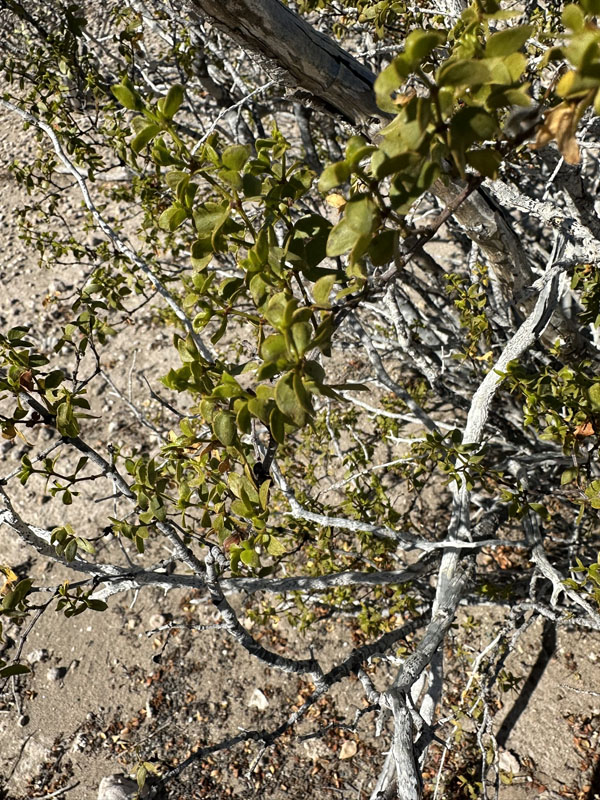
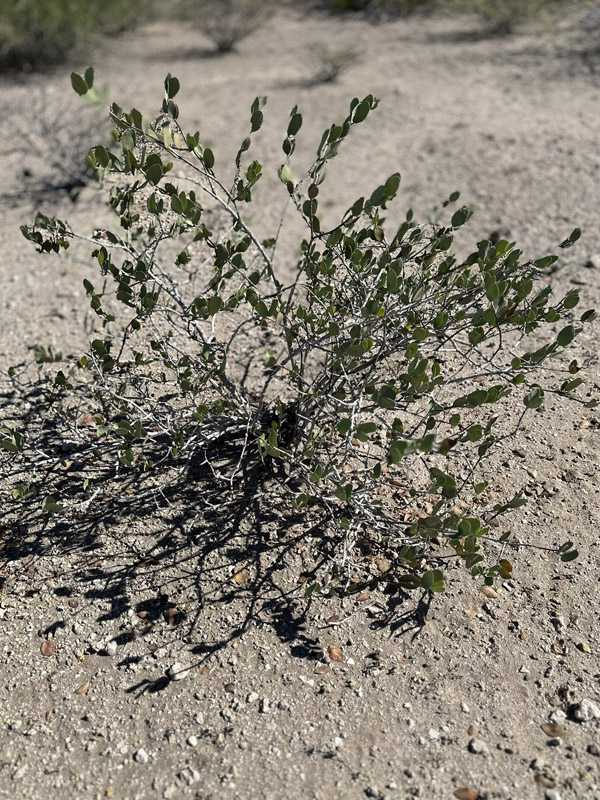
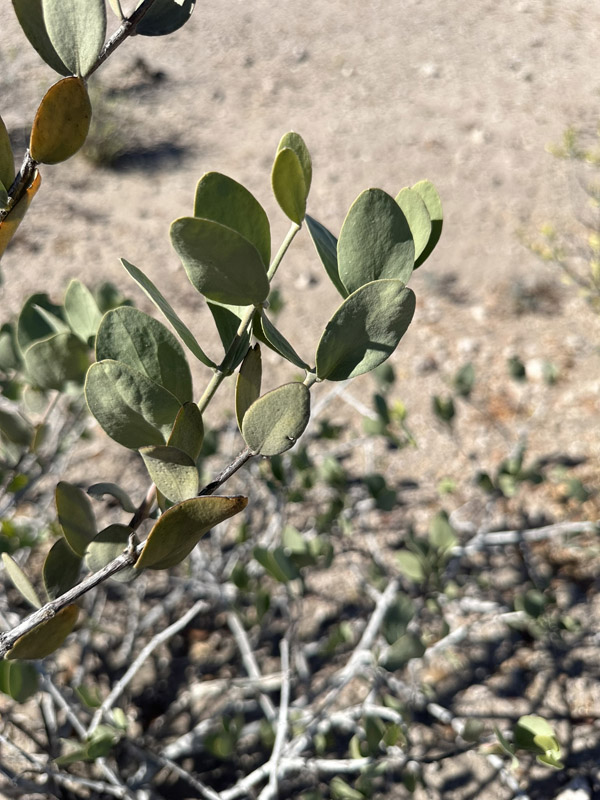
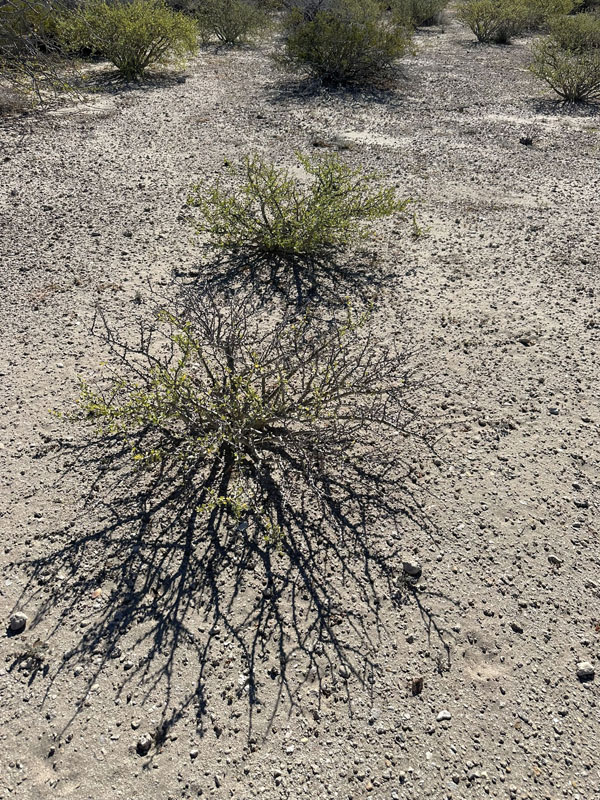
Prostrated Little-leaf Palo Verde, here appearing more like a shrub at just 1.5 m H, but 4-5 m W.
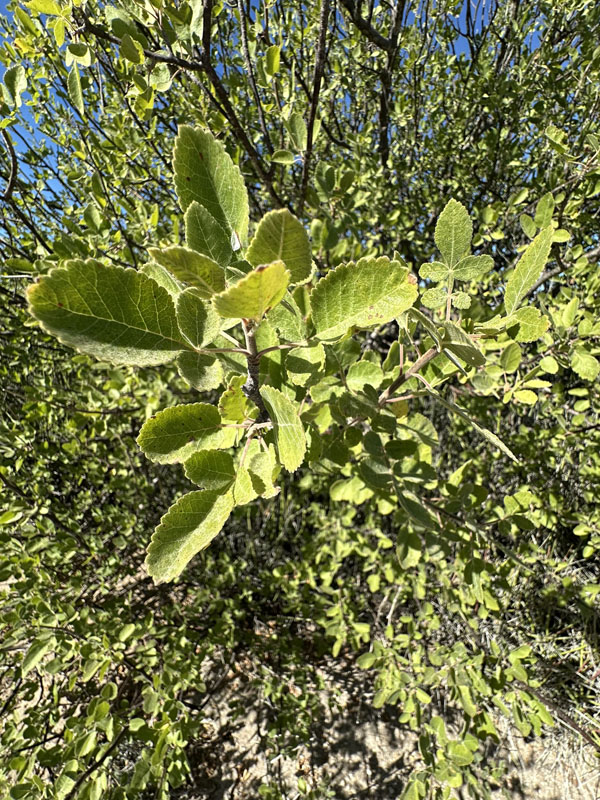
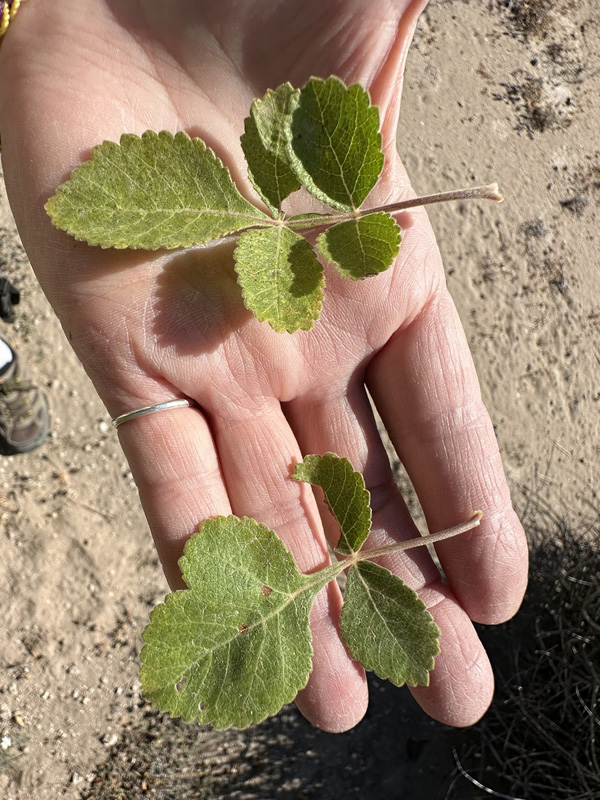
The Little-leaf Palo Verde looked so odd compared to other nearby individuals that I had to verify its ID up close.
We´ve reached the end of this month's post. So many plants, so little time... Until next time, hasta pronto...see you soon.
Debra Valov — Curatorial Volunteer
For a full inventory list of this month's plants (family, latin name and common names in both English and Spanish as well as links to photos from previous posts or my iNaturalist observations), visit this page.
References and Literature Cited
Rebman, J. P., J. Gibson, and K. Rich, (2016). Annotated checklist of the vascular plants of Baja California, Mexico. Proceedings of the San Diego Society of Natural History, No. 45, 15 November 2016. San Diego Natural History Museum, San Diego, CA. Full text available online.
Rebman, J. P and Roberts, N. C. (2012). Baja California Plant Field Guide. San Diego, CA: Sunbelt Publications. Descriptions and distribution.
Sawers, K. C. (2025). Plant Guide for Fairyduster (Calliandra eriophylla). USDA-Natural Resources Conservation Service, Tucson Plant Materials Center. Tucson, Arizona. Accessed 4-Apr-2026.
Valov, D. (2020). An Annotated Checklist of the Vascular Plants of Mulegé, Baja California, Mexico. Madroño 67(3), 115-160, (23 December 2020). https://doi.org/10.3120/0024-9637-67.3.115
Wiggins, I. L. (1980). The Flora of Baja California. Stanford University Press. Keys and descriptions.